Ripasso vs Amarone: Which Valpolicella Wine Should You Choose?
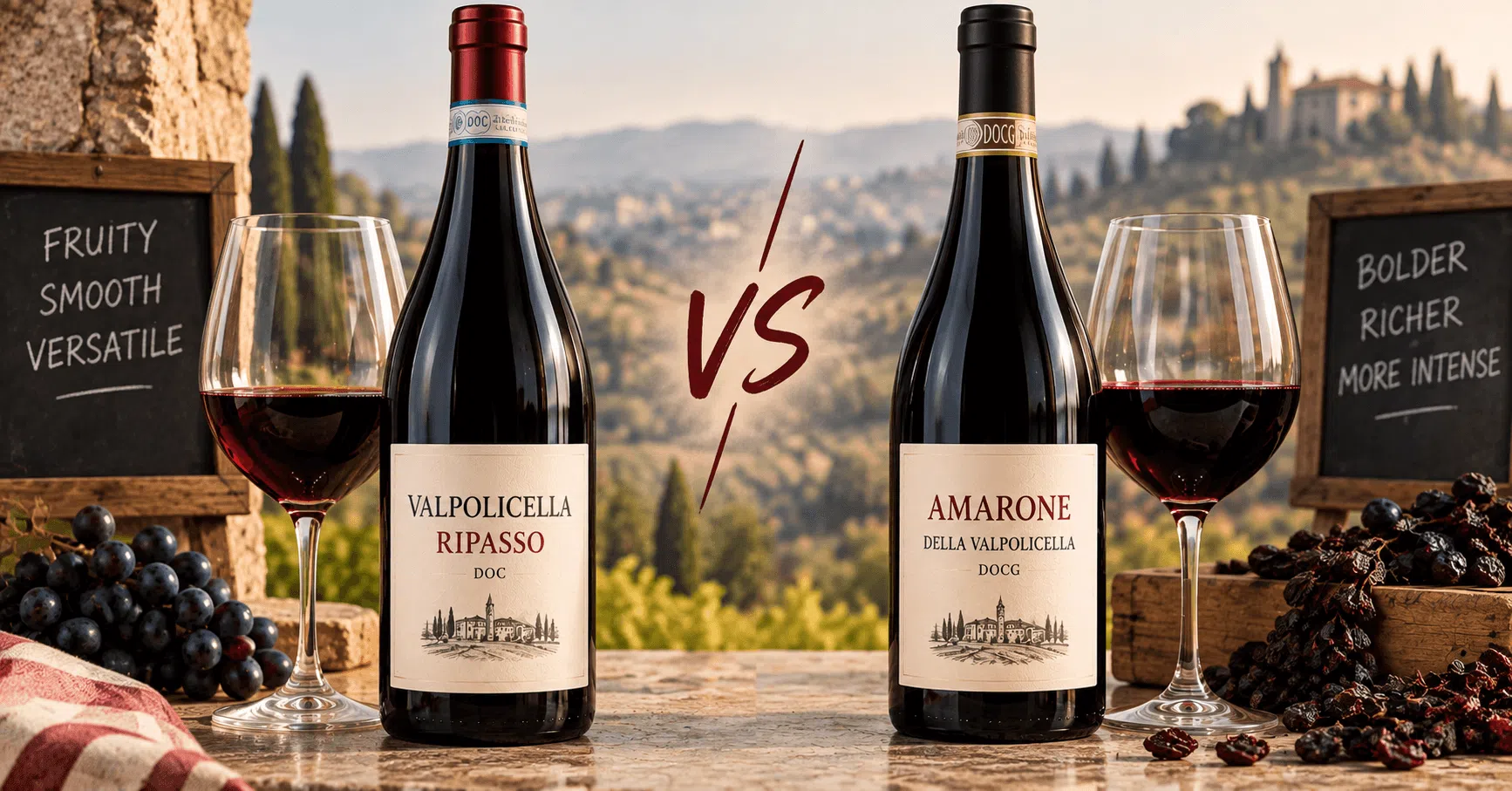
Ripasso and Amarone both come from Valpolicella in Veneto. Both lean on the same traditional grapes, mainly Corvina, Corvinone, and Rondinella. They can sit right next to each other on a wine shop shelf and look equally Italian. They still hand you two completely different evenings.
One is richer than ordinary Valpolicella. The other is one of Italy’s most powerful red wines. So which one should you buy?
Short version: Ripasso for a fuller, flexible red with real value. Amarone when you want concentration, warmth, and a wine that becomes the whole event rather than a companion to it. The longer version comes down to how each one gets made.
The Basic Difference
Ripasso begins as a young Valpolicella. It then gets refermented in contact with the grape pomace left over from Amarone production. Amarone begins with grapes dried before fermentation ever starts, a process called appassimento. It removes water and concentrates flavor, sugar, and structure all at once. I’ve gone into exactly how that Ripasso process works, and what the finished wine tastes like, in a piece of its own. That single difference in method is what creates two such different wines.
| Feature | Valpolicella Ripasso | Amarone della Valpolicella |
|---|---|---|
| Main method | Second fermentation on Amarone pomace | Grapes dried before fermentation |
| Style | Rich, fresh, medium to full-bodied | Powerful, concentrated, full-bodied |
| Alcohol | Usually moderate to high | Usually high |
| Price | More accessible | Usually considerably more expensive |
| Best occasion | Dinner, pasta, roast meat | Slow meals, special occasions, rich dishes |
Amarone’s own method is worth a beat on its own. The grapes go into well-ventilated drying rooms called fruttai for roughly 90 to 120 days. They slowly lose water there before anyone even thinks about fermenting them. Ripasso never dries a harvest at all. It just borrows richness secondhand, through that second fermentation, without paying Amarone’s full cost in time or money. Ripasso borrows. Amarone builds its entire identity around the drying room.
What Amarone Tastes Like
Amarone is broader, warmer, and considerably more concentrated than Ripasso. Expect dried cherry, black plum, raisin, and fig up front, with chocolate, coffee, tobacco, and baking spice often underneath.
Here’s the part that trips people up: despite that ripe, almost jammy impression, Amarone is a genuinely dry wine. The grapes dry before fermentation, but the wine ferments until nearly all that concentrated sugar becomes alcohol. That’s why Amarone can taste almost sweet while staying technically dry. It’s also why it can feel powerful even on a bottle with an understated label. The drying concentrates more than flavor. It concentrates alcohol, texture, and sheer intensity.
As for what Ripasso itself tastes like, I’ve covered that properly already, so I won’t repeat the list here. What matters for this comparison is simpler: Ripasso stays fresher and lighter than Amarone, even at its richest.
Is Ripasso Really Cheaper
Usually, yes, and the reason is entirely production. Amarone demands careful grape selection, dedicated drying space, and months of appassimento. Longer aging adds to the bill too, and it all shows up on the price tag eventually.
But price isn’t a quality ranking. A disappointing Amarone is still disappointing. A well-made Ripasso can be far more enjoyable than an expensive Amarone overloaded with alcohol and oak. Sometimes that expensive bottle is chasing prestige it hasn’t quite earned yet. For more bottles that punch above their price, I’ve written about some of the best cheap Italian wines that taste far more expensive than they are.
Which One Goes With Dinner
Ripasso handles most of what an ordinary week throws at it. Meat ragù, lasagna, mushroom risotto, roast pork, grilled sausages, pizza with real toppings, aged cheeses, all of it. Enough structure for rich food, enough acidity to stop the meal feeling heavy. Tagliatelle al ragù, pappardelle with wild boar, anything built around a proper sauce. Ripasso keeps up without making a production of it.
Amarone wants bigger stakes: braised beef, beef cheeks, game, osso buco, a genuinely slow-cooked stew. Maybe dark chocolate at the very end, if the dessert isn’t sweeter than the wine. It can work with pasta too. But only pasta that’s been simmering for hours and contains enough meat to require legal representation.
Don’t open Amarone next to a delicate plate of grilled fish and expect a nice conversation. The wine will give a long speech while the fish quietly disappears. When I’m choosing between the two for a normal Tuesday, I reach for Ripasso every time. Amarone is wonderful. It also shows up with more confidence than most dinners are asking for.
For Italian red and pasta pairing more broadly, I’ve gone into that too, in my guide to pairing Chianti with pasta.
So Which One Should You Buy
If you’re new to Valpolicella’s bigger reds, Ripasso is the easier step up. The same goes if you usually drink Chianti, Montepulciano d’Abruzzo, or Cabernet Sauvignon. Real richness, none of Amarone’s full intensity, more flexible with whatever’s genuinely on the table.
Buy Ripasso when you want good value, you’re serving pasta or roast meat, you prefer balance over sheer power, or you’re pouring for a table with mixed tastes and don’t want the wine dominating the conversation. Buy Amarone when it’s a genuine occasion, the dish is rich and slow-cooked, you already love bold high-alcohol reds, and you’re prepared to pay for a bottle that’s part of the event, not just background to it.
For Ripasso, look for Valpolicella Ripasso DOC on the label. For Amarone, look for Amarone della Valpolicella DOCG. Beyond that: check the producer, the vintage, the alcohol level, and whether the price genuinely matches what’s in the bottle. Be suspicious of anything that’s clearly been sitting under harsh shop lighting or next to a heater. Wine doesn’t improve because it spent three years under fluorescent bulbs. If you’re shopping blind, my guide to choosing Italian wine in a supermarket covers the traps worth avoiding.
The Actual Verdict
They’re not rivals where one wins. They’re different answers to different questions. If you’re genuinely unsure, choose Ripasso, it’s more forgiving, more versatile, and far less likely to overwhelm the meal. Save Amarone for when you genuinely want Amarone, not because the label looks impressive or because someone told you the most expensive bottle in the shop must be the best one.
Wine isn’t a weightlifting competition. Sometimes the smarter bottle is the one that knows when to speak and when to let dinner take the lead.
Quick Answers
Is Ripasso the same as Amarone? No. Ripasso is a young Valpolicella refermented on Amarone’s leftover grape skins. Amarone is made from grapes dried for months before fermentation even starts, which makes it more powerful and considerably more expensive.
Is Ripasso cheaper than Amarone? Usually, yes. Amarone’s drying, aging, and storage costs all add up in a way Ripasso’s production simply avoids.
Which is better for pasta? Ripasso, for most dishes. It has the freshness tomato sauce needs and enough body for meat or mushrooms. Amarone only works with something rich and slow-cooked enough to match it.
Which wine should a beginner try first? Ripasso. Real richness without Amarone’s full intensity, and far more flexible with everyday food.
Salute.
Continue Exploring
- What Is Ripasso Wine? How Valpolicella’s Richer Red Is Made
- Best Cheap Italian Wines That Taste Expensive (Top Picks Under €20)
- What Goes With Chianti? The Best Food and Pasta Pairings
- How to Choose Italian Wine in a Supermarket
Enjoy wine without the snobbery?
Make The Finest Italian Wine one of your Preferred Sources on Google.
Add The Finest Italian Wine to Preferred SourcesDiscover more from The Finest Italian Wine
Subscribe to get the latest posts sent to your email.