
Why Do Wine Bottles Have a Dent in the Bottom? Here’s the Real Reason
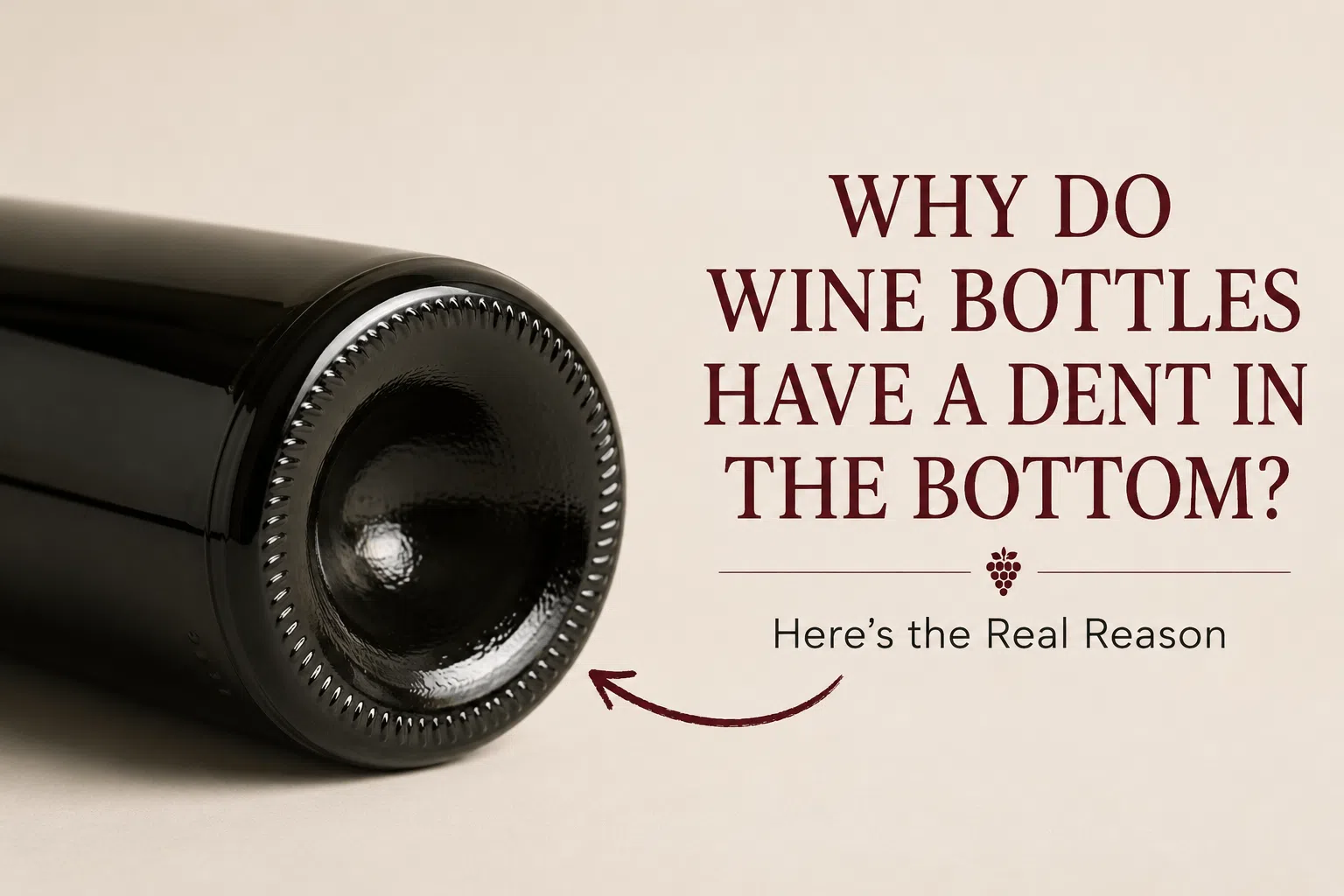
Here’s an experiment for your next trip to the wine shop. Pick up two bottles that look roughly the same size and shape. Turn them both upside down. If one has a deeper dent in the bottom than the other, you are, in a very literal sense, holding less wine.
Same 750ml on the label. Same shelf price range, sometimes. But that dent is glass pushed up into the space where your wine would otherwise be, and the deeper it goes, the more space it steals. Nobody tells you this when you’re standing there weighing up two bottles by how “substantial” they feel in your hand.
That dent has a proper name. It’s called a punt, and it turns out to be one of the most quietly dishonest little design features in the entire wine industry — not because anyone’s lying to you outright, but because almost nobody bothers explaining what it’s actually doing.
What is a wine bottle punt, and why does it exist?
Here’s where I have to be honest with you: nobody fully agrees.
Before machines took over, every wine bottle was shaped by a glassblower, and the process left a rough, uneven seam at the base. Pushing that seam up into a punt solved a real, practical problem — it gave the bottle a flatter, more stable base to actually stand on, and it removed a rough point of glass that could otherwise chip or cut someone handling it.
That part, most sources agree on. Where the story gets murkier is everything that came after. Some wine historians point to the punt adding structural strength to handle pressure, which matters enormously for sparkling wine and barely at all for most still wine. Others suggest it simply became habit, carried forward long after the original glassblowing problem stopped existing. There’s even an old, slightly implausible tavern legend about bartenders puncturing the bottom of empty bottles with a spike so nobody could sneak a refill and pass it off as a fresh one — a fun story, though not one I’d bet real money on being true.
The honest answer is that the punt likely solved several small problems at once, and outlived every single one of them.
Does a deeper punt mean better wine?
No, and this is worth saying plainly rather than hedging about it.
Once bottles moved to machine manufacturing, the original structural reason for a punt mostly disappeared for still wines. What didn’t disappear was the feeling a deep punt gives you in your hand — heavier, more substantial, more “serious.” Producers noticed people associated that feeling with quality, and some kept exaggerating the punt specifically because it sells the illusion of a premium bottle, regardless of what’s actually inside it.
Plenty of exceptional wines have a modest punt or none at all. Plenty of forgettable, mass-produced bottles have a deep, dramatic one purely because that’s the mould their bottle supplier happened to offer. The punt tells you something about the bottle’s design budget. It tells you nothing about what’s in the glass.
Wait, so a deeper punt actually means less wine?
Exactly, and this is the part almost nobody says loudly enough.
A punt is glass, pushed upward into the interior of the bottle. That glass occupies volume that would otherwise hold wine. Two bottles can carry the same 750ml on the label and look nearly identical standing side by side on a shelf, while one quietly has more glass and less liquid inside it, purely because its punt goes deeper.
Nobody’s technically lying here — the label’s still accurate, the 750ml is still 750ml. But the next time a bottle feels unusually heavy and “premium” in your hand, know that some of that heft might genuinely be glass standing in for wine, not evidence of anything happening inside the bottle worth paying extra for.
Does the punt actually matter for Champagne?
Here’s the one place the punt earns its keep, and it’s worth giving credit where it’s due.
Sparkling wine sits under real pressure inside the bottle — commonly two to three times the pressure in a car tyre, occasionally compared to the tyre on a double-decker bus. That’s a genuinely serious amount of force for a glass bottle to contain safely. A deep punt helps distribute that pressure more evenly across the base, reducing the risk of the bottle failing under stress.
So for Champagne, Cava, and Prosecco, a pronounced punt isn’t about impressing you at the shelf. It’s doing an actual structural job. This is the rare case where the dramatic-looking version of the punt and the functionally necessary version happen to be the same bottle.
Does the punt catch sediment when you pour?
Only a little, and less than the popular version of this story suggests.
Older reds do develop natural sediment as they age, and the punt’s shape can help keep some of that sediment settled toward the edge rather than swirling freely. But the detail most retellings leave out is that sediment is mostly caught by the curve of the bottle’s shoulder during a careful pour, not by the dent at the base. The punt gets credit for a job that’s mostly being done a few inches higher up the bottle.
If you’re actually worried about pouring sediment into someone’s glass, decant the wine or pour slowly and stop before the last inch. The punt is a minor supporting player here, not the main event.
Is there a real reason sommeliers put their thumb in the punt?
Yes, and it’s the most straightforwardly practical use the punt still has today.
Resting a thumb in the dent while gripping the base gives a steadier, more secure hold, especially with a heavier bottle or an awkward pour. It doesn’t affect the wine in the slightest. It just makes a confident, one-handed pour easier to pull off in front of a table of people watching you do it.
Is the punt disappearing from modern wine bottles?
Increasingly, yes, and for a genuinely practical reason this time.
More glass means a heavier bottle, and a heavier bottle means higher shipping costs and a larger carbon footprint per case moved around the world. A growing number of producers, especially ones leaning into sustainable packaging, have started using flatter-bottomed bottles that use noticeably less glass. It’s a small, unglamorous shift, but it’s an honest one: less glass, less weight, less environmental cost, and no actual loss of anything in the glass itself.
Funny enough, that’s the same shift we’ve already seen with wine closures. It’s the same story as the screw cap versus cork question — a wine world slowly, quietly choosing function over performance, one small design decision at a time.
So what should you actually take from all this?
Stop reading the dent in the bottom of a bottle as a quality score, because it was never built to be one.
Next time you’re comparing two bottles by how weighty and impressive they feel in your hand, remember what you’re actually feeling: glass. Sometimes structurally necessary glass, sometimes purely decorative glass standing in for wine that isn’t there. Either way, the only real way to know what’s worth your money is still the same one it’s always been — what’s in the glass once it’s poured, not what your palm felt while you were still deciding.
Read our guide to wine bottles and sizes.
FAQ
What is the dent in the bottom of a wine bottle called? It’s called a punt. It originated from the hand-blown glassmaking process, which left an uneven seam at the base that glassblowers pushed inward to create a flatter, more stable bottom.
Does a deeper punt mean the wine is better quality? No. A deep punt was historically tied to certain premium bottling styles, but today it has no reliable connection to wine quality. Plenty of excellent wines have shallow or no punt at all, while plenty of ordinary wines have a deep one purely as a design choice.
Does a deeper punt mean you get less wine? Yes, technically. A punt is glass pushed into the interior of the bottle, displacing volume that would otherwise hold wine. Two bottles with the same 750ml label can have different amounts of actual liquid inside depending on how deep the punt goes.
Why do Champagne bottles have such a deep punt? Sparkling wine is bottled under significant internal pressure, often several times higher than a car tyre. A deep punt helps distribute that pressure evenly across the base, making the bottle structurally stronger and less likely to fail.
Does the punt catch wine sediment? Only partially. Most sediment is actually caught by the curved shoulder of the bottle during a careful pour, not by the punt itself. Decanting or pouring slowly does more to keep sediment out of your glass than the punt does.
Enjoy wine without the snobbery?
Make The Finest Italian Wine one of your Preferred Sources on Google.
Add The Finest Italian Wine to Preferred SourcesDiscover more from The Finest Italian Wine
Subscribe to get the latest posts sent to your email.




One Comment