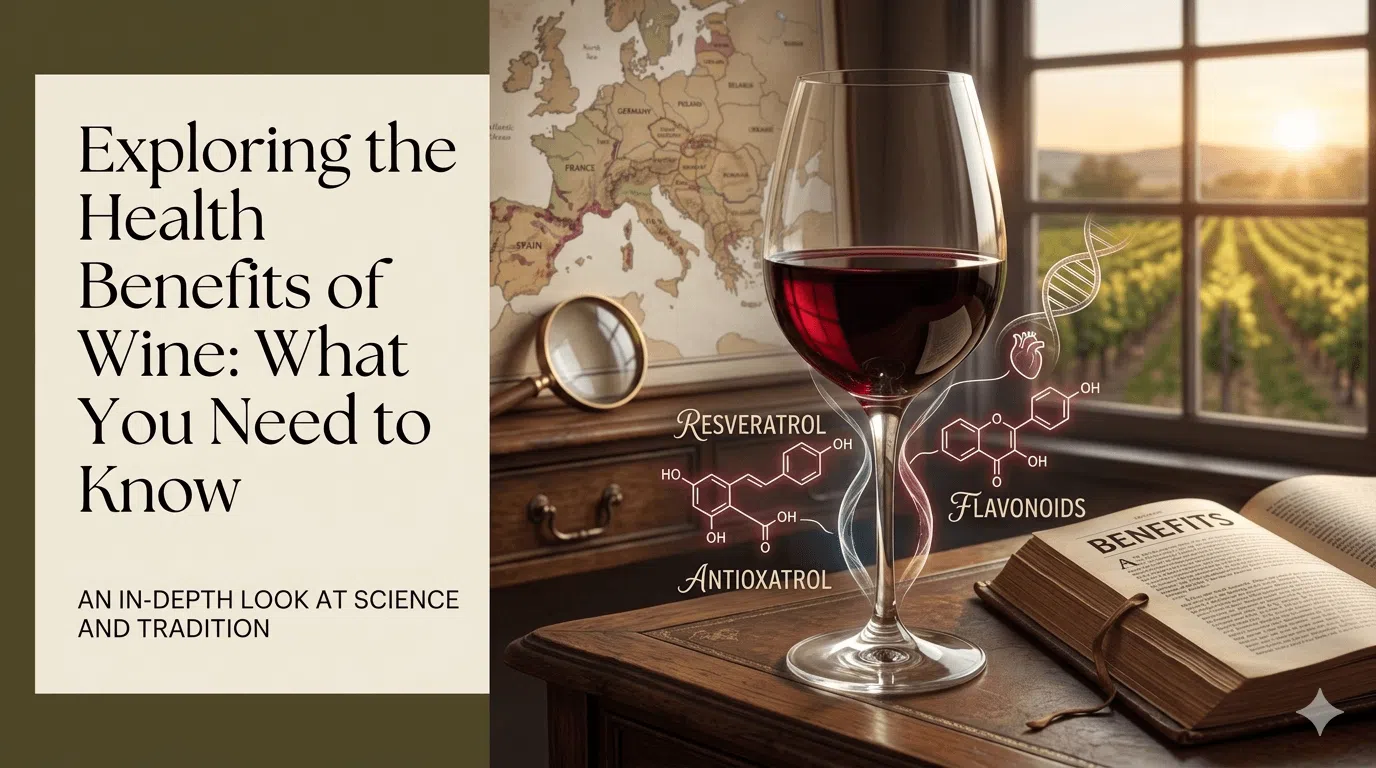
Exploring the Health Benefits of Wine: What You Need to Know
Wine is one of those topics where everyone suddenly becomes a nutrition expert after two glasses.
One person says it’s “good for the heart.”
Another says it’s basically sugar in disguise.
Someone else will confidently call it a “Mediterranean health secret” like it’s a prescription.
And honestly, most of these takes are doing too much.
So let’s strip it down.
First things first: wine is not a health product
This is where I always get a bit cautious with the conversation.
Wine is not medicine.
It is not a wellness hack.
It is not something you start drinking for benefits.
It is alcohol.
And alcohol always comes with trade-offs — no matter how romantic the bottle looks or how many studies get quoted online.
So the real question is not: “Is wine healthy?”
The real question is: “What actually happens when wine is part of a lifestyle?”
Why people even believe wine has benefits
This idea didn’t come out of nowhere.
It mainly comes from compounds naturally found in grapes:
Polyphenols –
Plant compounds linked to antioxidant activity.
Resveratrol –
The famous one everyone mentions when wine comes up in health conversations.
These are associated (in studies, not guarantees) with:
- inflammation reduction
- cardiovascular markers
- cellular protection mechanisms
But here’s the part people skip:
You can get these compounds from:
- grapes
- berries
- nuts
- vegetables
Without the alcohol side effects attached.
So wine is not the source of “health benefits” — it’s just one possible carrier.
Red wine vs white wine (the overused comparison)
Red wine gets all the attention because it’s fermented with grape skins, which increases polyphenol content.
White wine doesn’t go through the same process, so it generally contains fewer of those compounds.
But this is where people start overstating things.
Red wine is not “healthy.”
White wine is not “unhealthy.”
They are just chemically different versions of the same category: alcohol.
The uncomfortable part: what studies actually suggest
If we strip away headlines and look at the most consistent findings, moderate wine consumption is sometimes associated with:
- slightly improved HDL (“good”) cholesterol levels
- cardiovascular markers in certain populations
- patterns seen in Mediterranean-style diets
But here’s the catch no one likes:
These effects are heavily tied to lifestyle, not wine alone.
People in these studies often also:
- eat differently
- move more
- drink socially with food
- live slower-paced routines
Wine is often just sitting inside a bigger system, not driving the outcome.
The part people avoid talking about
This is where I’ll be blunt.
Even “moderate” alcohol consumption is linked to:
- increased long-term cancer risk (dose-dependent)
- sleep disruption
- liver stress over time
- dependency risk in vulnerable people
So if the conversation is honest, it has to include both sides.
Not just the romantic parts.
If you want the deeper breakdown
I already went into the more “headline claims” version of this topic in detail here:
👉 14 Surprising Health Benefits of Wine
https://thefinestitalianwine.com/14-surprising-health-benefits-of-wine/
That post walks through:
- the most commonly repeated health claims
- what people say wine “does” for the body
- where the science actually agrees
- and where things start getting exaggerated
Think of it as the myth list.
This article is the reality check before the list even starts.
They work better together than separately.
So is wine good for you?
The honest answer is boring, but true:
Wine is not good or bad by default.
It depends on:
- how much
- how often
- why you’re drinking it
- and what your overall lifestyle looks like
A glass of wine with food, occasionally, in a balanced life?
That sits in a very different category from regular drinking without context.
Final thought (the part people usually ignore)
Wine doesn’t become “healthy” just because it contains antioxidants.
And it doesn’t become “bad” just because it contains alcohol.
It sits in the middle — and the middle is always where nuance lives, even if it’s less exciting than headlines.
So instead of forcing wine into a health narrative it doesn’t fully belong to, it makes more sense to treat it for what it is:
A cultural drink that can sit comfortably in a balanced lifestyle — but doesn’t replace one.
Enjoy wine without the snobbery?
Make The Finest Italian Wine one of your Preferred Sources on Google.
Add The Finest Italian Wine to Preferred SourcesDiscover more from The Finest Italian Wine
Subscribe to get the latest posts sent to your email.