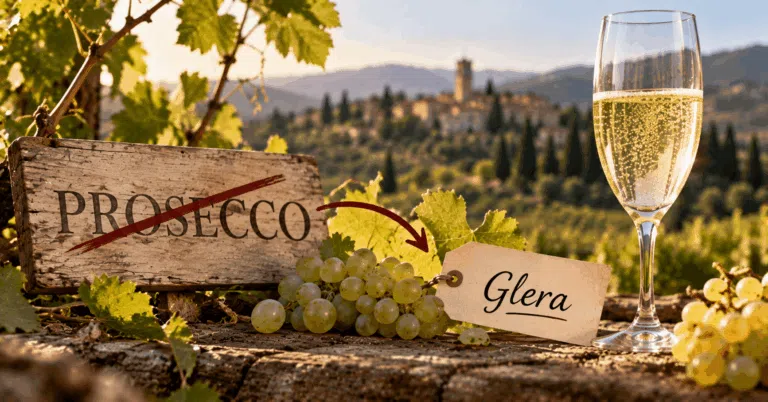
Stop Calling Prosecco “Italian Champagne” — Here’s What It Actually Is
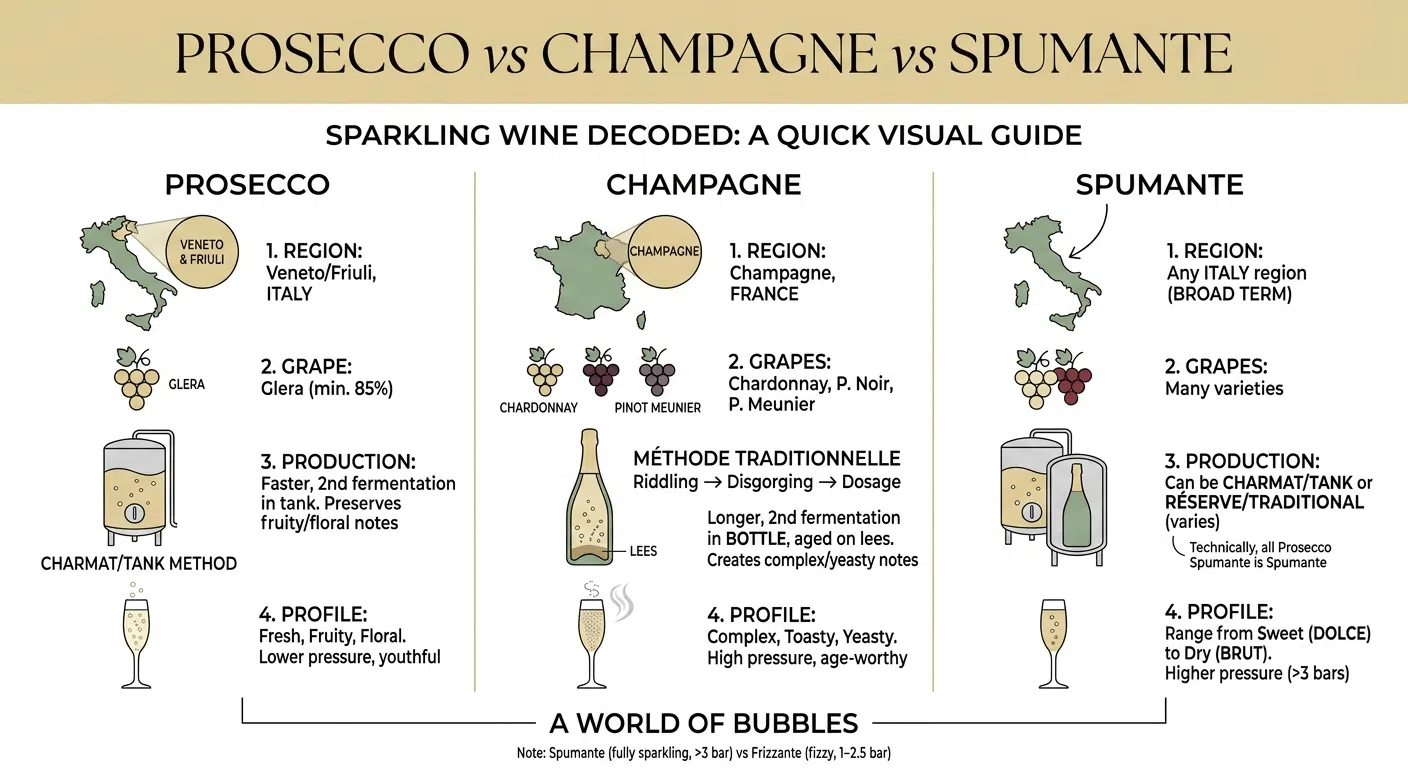
Prosecco vs Champagne vs Spumante
I have a small bone to pick, and it’s been sitting in my glass for a while now.
Every time someone hands me a glass of Prosecco and calls it “Italian Champagne,” a tiny part of me dies. Not dramatically. Just a little. The way you die a little when someone says “could of” instead of “could have.”
Years ago I wrote about the actual difference between sparkling wine and Champagne, and the short version still holds up perfectly. Champagne is a place. If it’s not from Champagne, France, it’s not Champagne, no matter how many bubbles it’s got or how fancy the bottle looks. That post covers the legal basics in about ninety seconds of reading.
This post is the sequel nobody asked for but everyone needs. Because once you understand that Champagne is a place and not a personality trait, the next question is obvious. So what is Prosecco then? And what on earth is Spumante? Is that a third thing? A typo? A region I’ve never heard of?
Let’s sort this out properly, glass in hand.
Champagne: The One That Plays By Its Own Rules
We covered the basics already, Champagne can only be Champagne if it comes from the Champagne region in France. But there’s more going on under the hood than just geography.
Champagne uses what’s called the traditional method, where the second fermentation, the one that creates all those bubbles, happens inside the actual bottle you’re going to drink from. That wine then sits quietly with its spent yeast for months, sometimes years, slowly building those toasty, bready, slightly nutty notes that make good Champagne taste like good Champagne.
It’s slow. It’s fussy. It requires patience most of us don’t have for anything in life, let alone a beverage. And that patience is exactly why it costs what it costs.
Prosecco: Not Trying to Be Champagne, Thank You Very Much
Here’s where people get it twisted. Prosecco isn’t a cheaper, lazier attempt at Champagne. It was never auditioning for that role.
Prosecco comes from Veneto and Friuli-Venezia-Giulia in northeastern Italy, made mostly from the Glera grape, and it uses a completely different process called the Charmat method. Instead of fermenting inside individual bottles, the second fermentation happens in big steel tanks. Faster, cheaper, and built for an entirely different goal.
That goal is freshness. Prosecco wants to taste like green apple and pear and sunshine, and it wants you to drink it now, not in 2031. It is not trying to be complex. It is trying to be delicious on a Tuesday, and it succeeds constantly.
Comparing the two and declaring a winner is a bit like judging a sprinter against a marathon runner and acting shocked they trained differently. They were never running the same race.
So calling it “Italian Champagne” is a bit like calling espresso “Italian filter coffee.” Technically both are coffee. Emotionally, spiritually, and structurally, they are doing completely different jobs.
Spumante: The Word Doing Way Too Much Heavy Lifting
Now for the one that confuses literally everyone, myself included, before I actually looked into it properly.
Spumante is not a wine. It is not a region. It is not a grape. It simply means “sparkling” in Italian. That’s the whole definition. Any sparkling wine made anywhere in Italy, from almost any grape, can technically wear the label Spumante.
So here’s the relationship that actually matters. Prosecco can absolutely be a Spumante, and most of it is. But Spumante is most definitely not always Prosecco.
A few other wines proudly wearing the Spumante badge:
Franciacorta, from Lombardy, made using the same patient bottle fermentation method as Champagne, with grapes like Pinot Noir, Pinot Bianco, and Chardonnay. Often called Italy’s most serious answer to Champagne, and priced like it knows it.
It is a category label, not an identity.
So:
Prosecco can be Spumante
Franciacorta is Spumante
Asti Spumante is literally in the name.
Three different wines. Three different regions. Three different occasions and price tags. All of them, technically, Spumante. So when someone tells you “it’s a Spumante” like that’s a useful piece of information, gently remind them that telling you “it’s a red wine” carries roughly the same amount of detail.
It’s like walking into a restaurant and being told, “it’s food.”
Technically correct. Practically useless.
Prosecco vs Champagne vs Spumante (now that we’ve cleared the noise)
Let’s put everything in context.
Champagne
- From Champagne, France
- Traditional bottle fermentation
- Complex, toasted, layered
- Built for aging and prestige
Prosecco
- From Veneto & Friuli, Italy
- Tank fermentation (Charmat method)
- Fresh, fruity, light
- Built for immediate enjoyment
Spumante
- Italian category meaning “sparkling wine”
- Includes multiple styles and methods
- No single taste profile
So when someone says “it’s basically Champagne,” what they’re really saying is:
“I see bubbles and I stopped thinking.”
So Which One Do You Actually Order?
Depends entirely on the moment.
Casual toast on a Saturday afternoon, nothing too serious? Prosecco. Every time.
Want to impress someone or just sit with something a bit more layered? Franciacorta is the move, and most people outside Italy have never even heard of it, which makes you look very informed for very little effort.
Dessert on the table and a sweet tooth involved? Asti Spumante.
And Champagne? Champagne is for the moments where the name on the label is doing half the talking. Sometimes the occasion wants the ritual as much as it wants the wine. Nothing wrong with that.
None of them are trying to replace the others.
They are not competitors. They are moods.
The Bottom Line
None of these wines are actually competing with each other, despite what every confused dinner conversation suggests. Champagne built its name on patience. Prosecco built its name on joy and not taking itself too seriously. Spumante isn’t even in the race, it’s just the stadium they’re all playing in.
So next time someone hands you a glass of Prosecco and calls it basically Champagne, you now know exactly what to correct them on. Gently. Kindly. Maybe with a small, knowing smile over the rim of your glass.
Need the quick legal basics first? Start with The Difference Between Sparkling Wine and Champagne. Then come back here for the part where it actually gets interesting.
And if you’re in the mood for more myth busting, check out 3 Italian Wine Facts That Will Change How You Order in a Restaurant.
#Prosecco #Champagne #Spumante #ItalianWine #Franciacorta #WineFacts
Enjoy wine without the snobbery?
Make The Finest Italian Wine one of your Preferred Sources on Google.
Add The Finest Italian Wine to Preferred SourcesDiscover more from The Finest Italian Wine
Subscribe to get the latest posts sent to your email.