3 Italian Wine Facts That Will Change How You Order in a Restaurant
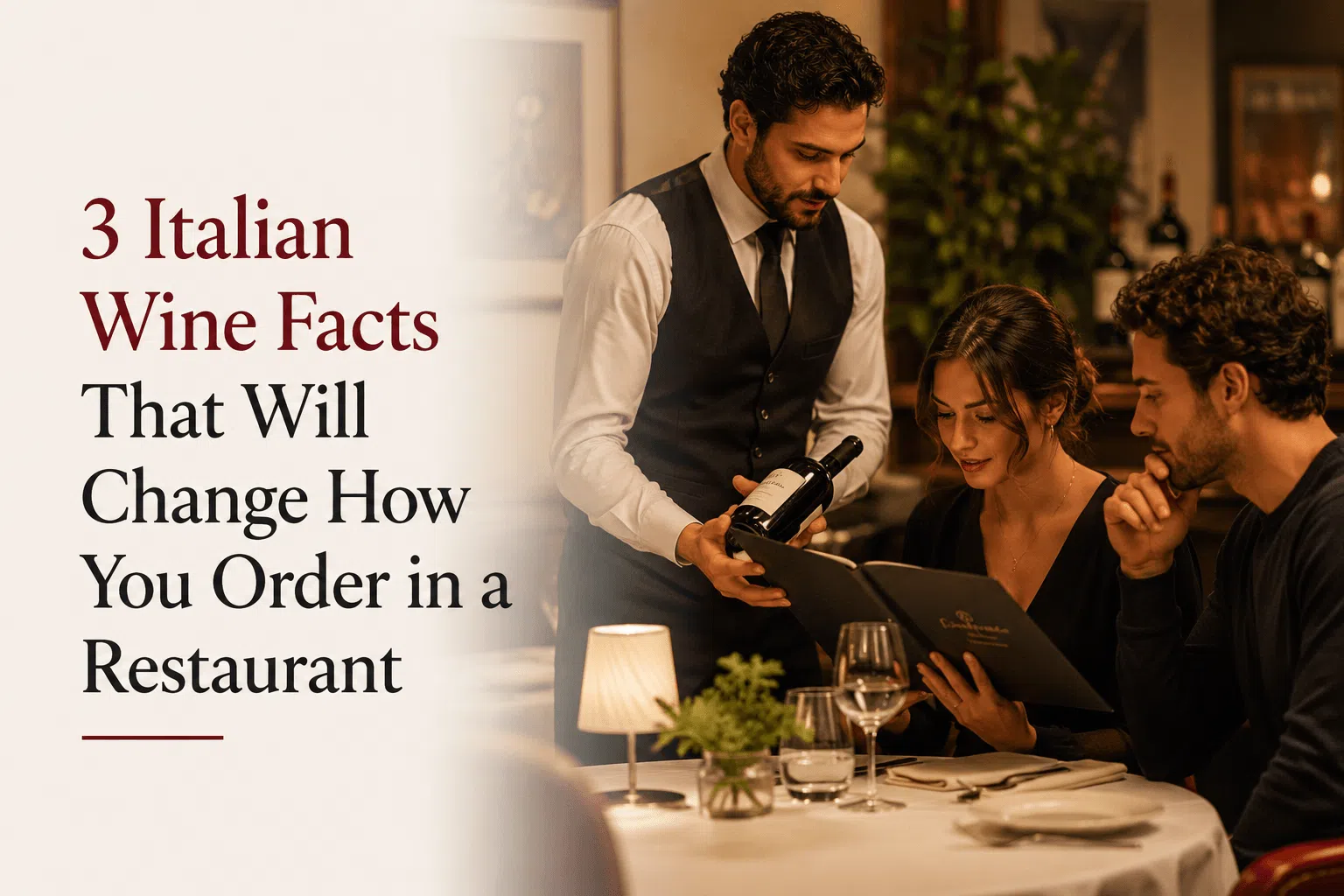
You’ve probably been ordering wine in Italy the hard way. Don’t worry, so has almost everyone.
Here’s how it usually goes. A tourist grabs the wine list, scans it for familiar names like Merlot, Chardonnay, or Pinot Grigio, finds none of them, and quietly starts sweating. A few seconds later, they either point at a random bottle or ask for “the house wine” and hope for a miracle.
Meanwhile, the table next to them, locals obviously, order in about three seconds, get something brilliant, and don’t even blink at the menu.
So what do they know that you don’t?
A lot, actually. Let’s fix that.
1. Italians Don’t Order Wine by Grape. They Order by Place.
This is the part that confuses almost everyone.
In most of the wine-drinking world, you think in grapes. I feel like a Merlot tonight. Maybe a Sauvignon Blanc. Simple enough.
In Italy, that’s not really how it works. People order by region, not grape. So instead of asking for “a Sangiovese,” you ask for “un Chianti” — and that one word already tells the waiter everything they need to know, because Chianti basically is Sangiovese, grown in a specific patch of Tuscany, made under a very specific set of rules. The grape matters. The place matters more.
This is actually the reverse of how it works in places like the US, Australia, or South Africa, where the grape gets top billing on the label and the region is an afterthought. In Italy, the order is flipped. Place first. Grape, if it shows up at all, comes second.
So next time you’re at a restaurant in Tuscany, don’t spend five minutes hunting for grape names like you’re solving a puzzle. Just say “un bicchiere di Chianti, per favore” and watch how fast it shows up.
🍷 Stop thinking like a grape detective. Start thinking like someone ordering by postcode.
2. The Unlabeled Carafe on the Table Might Be the Smartest Thing You Drink All Night
If a small jug of wine shows up with no label, no fancy name, and no dramatic backstory — don’t panic.
That’s vino della casa, the house wine. And in a huge number of Italian trattorias, it’s not a cheap fallback for confused tourists. It’s often wine made by the restaurant’s own family, or sourced from a local producer down the road. Basically, it’s the wine version of “this is what we drink at home, and it’s good.”
Here’s the funny part. House wine usually falls under Italy’s most relaxed classification, Vino da Tavola (VdT) — the lowest tier of the country’s four-level system, below IGT, DOC, and DOCG. On paper, it sounds like the bare minimum. The only real rule is that it has to be made somewhere in Italy.
In real life, it’s often fresh, local, cheap, and dangerously easy to drink with pasta. Sometimes the wine that looks the least impressive on the table is the one that disappears the fastest.
So no, the plain carafe isn’t a red flag. Sometimes it’s the best deal in the building.
🥂 Try it: ask “Qual è il vino della casa?” and see what shows up. You’ll usually be glad you did.
3. The Strictest Label Doesn’t Always Mean the Best Wine
This one messes with people who love rules.
Italy has four wine classifications, loosest to strictest: VdT (table wine), IGT, DOC, and DOCG — the last requiring specific grapes, specific zones, and government-tested standards. Naturally, you’d assume DOCG sits at the top and everything else is “lesser.” Wine, as it turns out, doesn’t always play along.
The best example is the Super Tuscans. Wines like Sassicaia and Tignanello broke from traditional Chianti rules in the 1970s by blending in grapes like Cabernet Sauvignon and Merlot — grapes that weren’t permitted under the strict DOCG regulations at the time. Because they didn’t follow the rulebook, they got demoted to the much more relaxed IGT classification.
And then they became legends. Critics loved them. Collectors hunted them down. The rules said they shouldn’t be special. The wine disagreed, loudly, and has been disagreeing ever since.
So yes, the label tells you about origin and regulation. It doesn’t tell you how good the wine actually is. Some of Italy’s greatest bottles are technically “less official” than the cheap ones sitting right next to them on the shelf.
🍇 DOCG means the wine followed the rulebook. It doesn’t mean the rulebook won the argument.
One Last Thing
This isn’t about memorising wine law or trying to sound fancy at dinner. If anything, it’s the opposite.
The more time you spend with Italian wine, the more you realise locals aren’t ordering with more knowledge than tourists, they’re ordering with less anxiety. They ask for the place. They trust the unlabeled carafe. They don’t assume the fanciest label automatically wins.
So next time you’re sitting in front of a wine list that looks like it was written by a very serious grape lawyer — relax. Ask for the region. Try the house wine. Don’t let a missing gold seal talk you out of a good bottle.
That might be the most Italian thing you do on the entire trip.
Which one surprised you most? Tell me in the comments, and if you know someone heading to Italy soon, send them this before they order wine like it’s a pop quiz.
#ItalianWine #WineFacts #WineTravel #VinoDellaCasa #SuperTuscan
Enjoy wine without the snobbery?
Make The Finest Italian Wine one of your Preferred Sources on Google.
Add The Finest Italian Wine to Preferred SourcesDiscover more from The Finest Italian Wine
Subscribe to get the latest posts sent to your email.