What Is Ripasso Wine? How Valpolicella’s Richer Red Is Made

Ripasso is what happens when Valpolicella decides it wants a little more drama.
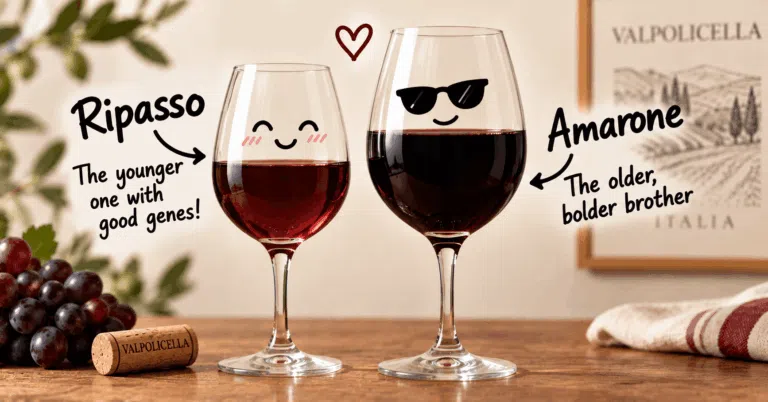
Regular Valpolicella is bright, fresh, full of sour-cherry energy. Amarone is richer, warmer, and considerably more intense. Ripasso sits comfortably between the two. It carries more body and depth than ordinary Valpolicella. It’s usually easier to drink and less expensive than Amarone, too, which makes it one of the more genuinely useful Italian reds to know.
What Is Ripasso Wine, Exactly
Valpolicella Ripasso is a red wine from the Veneto region of northern Italy. It begins life as a young Valpolicella. Then it gets fermented a second time on the grape skins and other solid remains left over from making Amarone or Recioto della Valpolicella.
The name explains the method. Ripasso means “repassed,” or “passed over again.” The young Valpolicella literally passes over the pomace left behind after Amarone production, and that contact triggers a second fermentation. The result gives the wine noticeably more color, body, alcohol, and texture. Dark-fruit flavor comes with it too, along with real spice and complexity it didn’t have before. It’s still Valpolicella underneath, just with the volume turned up.
How Ripasso Gets Made
Ripasso starts with grapes from the Valpolicella area, mainly Corvina, Corvinone, and Rondinella. Those grapes become a young Valpolicella wine first. It’s usually fresh, light to medium-bodied, and full of bright red-fruit flavor at this stage.
Then comes the Ripasso step. The young wine gets placed in direct contact with the pomace left after Amarone or Recioto production. Pomace is the mixture of grape skins, seeds, and other solid material left over after pressing. Those skins still hold real flavor, color, tannin, and sometimes fermentable sugar. So when the young Valpolicella meets them, fermentation starts again. That second fermentation gives Ripasso extra weight and complexity without requiring the whole harvest to go through the long grape-drying process Amarone demands.
That’s the genuinely clever part. Ripasso borrows some of Amarone’s richness without asking you to pay Amarone’s full bill.
What Ripasso Tastes Like
Ripasso usually carries more depth than basic Valpolicella while still holding onto real freshness. Depending on the producer, you’ll find sour cherry, ripe plum, and blackberry up front. Sometimes there’s dried cherry, vanilla, baking spice, cocoa, herbs, or earth underneath, depending on vintage, oak aging, and exactly how much the Amarone pomace influenced the final wine.
A good Ripasso shouldn’t taste like a fruit smoothie with an Italian passport. It should have real balance: ripe fruit alongside real acidity, richness without heaviness. Warmth and structure matter too, but not a mouthful of oak trying to prove it went to university. Compared with ordinary Valpolicella, Ripasso should read fuller and darker. Compared with Amarone, it should read fresher and less powerful.
Is Ripasso Sweet
This is one of the most common misunderstandings about the wine, and it’s worth clearing up directly. Ripasso is usually not a sweet wine.
It’s a dry red. It can taste richer, warmer, and fruitier than ordinary Valpolicella, though. The dried-fruit character and higher alcohol create an impression of sweetness even when the wine’s real residual sugar is very low. Think of the difference between ripe cherries and cherry syrup. That’s roughly the gap between what Ripasso should taste like and what people sometimes assume it tastes like. Some bottles do feel softer or more generous than others, particularly with more oak or higher alcohol. But rich and sweet aren’t the same thing here. If you want a genuinely sweet wine from this same corner of Veneto, Recioto della Valpolicella is the one to look for, not Ripasso.
Ripasso vs Valpolicella vs Amarone
The real differences between these three wines come down to production method and resulting style.
| Wine | Style | Typical character |
|---|---|---|
| Valpolicella | Fresh and lighter | Sour cherry, herbs, bright acidity |
| Valpolicella Ripasso | Fuller and richer | Darker fruit, spice, more texture |
| Amarone | Powerful and concentrated | Dried fruit, chocolate, warmth |
Regular Valpolicella is usually the fresher, more relaxed choice. It’s the bottle you open when you don’t want a red wine taking over the entire evening. Ripasso brings more concentration and texture, and suits richer food and colder evenings better. If ordinary Valpolicella is wearing a linen shirt, Ripasso put on a jacket. That doesn’t make Ripasso automatically better. Sometimes freshness is exactly what a meal needs. A simple Valpolicella genuinely is the better choice with a light lunch or delicate pasta. Ripasso is for when you want the same family resemblance with real extra weight behind it.
What Pairs With Ripasso
Ripasso is a genuinely practical food wine because it combines real richness with real acidity. It works especially well with pasta in ragù, lasagna, sausage pasta, and mushroom risotto. Roast pork, braised beef, grilled sausages, aged cheeses, and cured meats like salami all suit it too. Its fruit and acidity get along with tomato-based sauces. Its fuller texture stands up to meat, mushrooms, and rich gravies just as well. I’ve gone into this kind of matching more broadly in my guide to Italian wine and food pairing if you want the wider picture beyond just Ripasso.
It’s not my first choice next to delicate seafood, light salads, or very subtle vegetable dishes. Those generally want a fresher white or a lighter red instead.
Is Ripasso Good Value
This is where Ripasso becomes genuinely interesting to me. Amarone can be wonderful, but it isn’t always practical. It costs more, feels heavier, and can dominate a casual meal without much effort. Basic Valpolicella is fresh and enjoyable, but sometimes you want more depth than it’s built to give you.
Ripasso fills exactly that gap. It offers real concentration beyond ordinary Valpolicella without demanding the price or the ceremony that usually comes with Amarone. That makes it a strong pick when you want an Italian red with genuine personality but don’t want to treat the bottle like a museum exhibit. It’s the same instinct behind the cheap Italian wines that taste far more expensive than they are, just applied to a slightly different price bracket. I’ve written separately about Valpolicella’s own current relationship with supply and demand, including why the region has been holding back part of its harvest, if you want the bigger picture behind these wines right now.
The Final Sip
Ripasso is the middle child of the Valpolicella family, but it’s not the forgettable one. It carries Valpolicella’s freshness, some of Amarone’s richness, and enough flexibility to work with genuinely everyday Italian food.
Reach for it when you want a fuller red for dinner, more depth than basic Valpolicella offers, less intensity and expense than Amarone demands, or a dry wine built on ripe fruit and real spice rather than sugar. It’s rich, food-friendly, and usually easy to enjoy without ceremony. Ripasso may not be the loudest wine in the room, but it’s often the one still standing once the dramatic bottles have finished talking.
Quick Answers
Is Ripasso wine sweet? No, it’s a dry red. The dried-fruit character and higher alcohol can create an impression of sweetness, but actual residual sugar is usually very low.
What’s the difference between Ripasso and Valpolicella? Ripasso goes through a second fermentation on Amarone or Recioto pomace, giving it more body, color, alcohol, and complexity than standard Valpolicella, which skips that step entirely.
Is Ripasso the same as Amarone? No. Ripasso sits between standard Valpolicella and Amarone in both intensity and price. It borrows some of Amarone’s richness through contact with its pomace, without going through Amarone’s full grape-drying process.
What food goes well with Ripasso? Richer, saucier dishes work best, pasta with ragù, lasagna, mushroom risotto, roast pork, braised beef, and aged cheeses. It’s less suited to delicate seafood or light salads.
Salute.
Continue Exploring
- Why Is Valpolicella Holding Back Its Own Wine?
- The Complete Guide to Amarone — The Wine That Was Never Supposed to Exist
- Perfect Italian Wine & Food Pairings Guide
- Best Cheap Italian Wines That Taste Expensive (Top Picks Under €20)
- Best Italian Wines Under €20 in 2026
Enjoy wine without the snobbery?
Make The Finest Italian Wine one of your Preferred Sources on Google.
Add The Finest Italian Wine to Preferred SourcesDiscover more from The Finest Italian Wine
Subscribe to get the latest posts sent to your email.