Italy Has Hundreds of Wine Grapes. So Why Do We Keep Drinking the Same Few?
Here’s something that should bother you a little. Italy has hundreds of wine grape varieties, and most of us rotate between about five. Meanwhile, the lesser-known Italian grapes sit on shelves wondering what they did wrong. Pinot Grigio gets the supermarket aisle, Prosecco gets the party, and a poor Timorasso can’t even get its name pronounced.
The good news is that the story behind this is full of “wait, really?” moments. The grape in your Prosecco isn’t called Prosecco. The most planted Italian grapes aren’t the famous ones. And some of Italy’s best-loved wines don’t tell you the grape at all. Let’s go through them, then I’ll point you to five grapes that deserve your next bottle.
Quick Facts
- Italy’s national catalogue lists more than 600 grape varieties, and almost all of them count as native to Italy
- Prosecco hasn’t been a grape name since 1 January 2010. The grape is Glera
- Catarratto, a Sicilian white most people haven’t heard of, covers more vineyard land than Pinot Grigio or Glera
- Many famous Italian wines are named after places, not grapes, so you may be drinking the same grape under different names
- Five lesser-known grapes worth trying: Timorasso, Pecorino, Pelaverga, Susumaniello and Schioppettino
Wait, Prosecco Isn’t a Grape?
Quick test: what grape is Prosecco made from? If you said “Prosecco”, you’re in excellent company, and also out of date. An order from Italy’s agriculture minister in July 2009 changed the rules. From 1 January 2010, Prosecco stopped being the name of a grape and became only a protected place name. The grape is now called Glera, and the wine must be at least 85% Glera, with limited amounts of other authorised grapes allowed.
This was a clever move. Prosecco is a name everybody already knows, and now only wine from the right place can use it. Imagine launching a sparkling wine from a grape nobody at the table has heard of. It might be wonderful, but you’re starting from zero. Prosecco never has to introduce itself.
The Most Planted Grapes Aren’t the Famous Ones
Ask someone for Italy’s most important grape, and they’ll say Sangiovese, Nebbiolo or Pinot Grigio. Here’s how some of Italy’s biggest grapes look by vineyard area, using Unione Italiana Vini figures (from 2015, so treat them as a guide):
| Grape | Hectares planted |
|---|---|
| Sangiovese | 53,865 |
| Trebbiano | 42,144 |
| Catarratto | 32,222 |
| Montepulciano | 27,434 |
| Glera | 26,571 |
| Pinot Grigio | 24,501 |
Read that again. Catarratto, a Sicilian white you almost never see on a menu, covers more land than Glera or Pinot Grigio. And Nebbiolo, the grape behind Barolo and Barbaresco, covered only about 5,500 hectares in 2010 data. That’s a fraction of anything in this table. A grape can be a global celebrity without taking up much ground, and another can cover thousands of hectares while staying a stranger to people who drink Italian wine every week.
Half Your Favourite Wines Don’t Tell You the Grape
Here’s why the whole thing feels confusing. Italy usually names wines after places, so the grape hides behind the label:
| On the label | The grape |
|---|---|
| Barolo and Barbaresco | Nebbiolo |
| Brunello di Montalcino | Sangiovese |
| Vino Nobile di Montepulciano | Sangiovese |
| Montepulciano d’Abruzzo | Montepulciano |
| Gavi | Cortese |
| Soave | Garganega (mostly) |
| Prosecco | Glera |
Look at the Montepulciano rows. One is a town in Tuscany and the other is a grape in Abruzzo, which is exactly the confusion I untangled in Montepulciano d’Abruzzo vs Vino Nobile di Montepulciano: Same Name, Completely Different Wine. It’s no wonder people stick with the bottles they understand. But once you spot the grape behind a famous name, a wine list stops looking like a pile of Italian towns and starts revealing connections.
Some of These Grapes Nearly Disappeared
Here’s the part that makes you wince. During the years when the industry chased big yields and consistency, many traditional grapes came under pressure. A difficult variety with a tiny harvest isn’t attractive to a grower trying to earn a living. Several of the grapes below were close to extinct.
In Campania, Antonio Mastroberardino refused pressure to switch to more commercial grapes and replanted local ones, including Fiano and Greco. I told that story in Aglianico Was Ancient Before Barolo Had a Name. Pecorino was nearly extinct by the mid-20th century, and Schioppettino was almost wiped out when phylloxera hit in the late 19th century. If nobody had bothered, we’d be drinking a lot less interesting wine today.
Five Lesser-Known Italian Grapes Worth Trying Instead of Your Usual Bottle
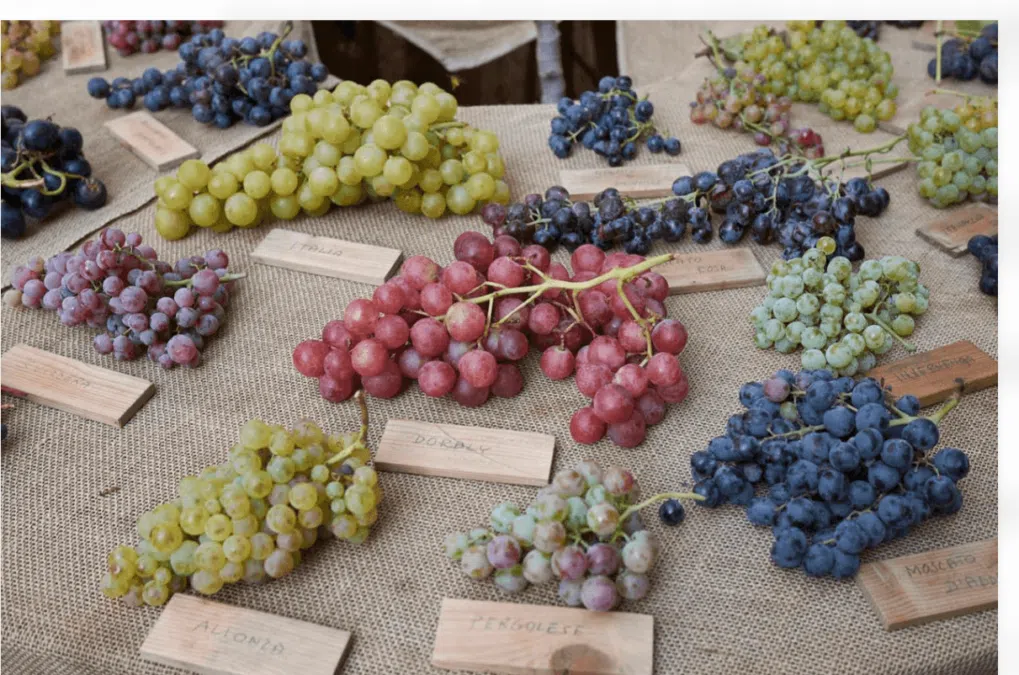
I’m not telling you to break up with Pinot Grigio or Chianti. That would be dramatic. But each of these five has a story that makes it worth a try:
| Grape | Colour | Where | Look for | Try it if |
|---|---|---|---|---|
| Timorasso | White | Piedmont | Colli Tortonesi Timorasso or Derthona | You like fuller whites with depth |
| Pecorino | White | Abruzzo and Marche | Offida Pecorino DOCG | You like crisp whites with character |
| Pelaverga | Red | Piedmont | Verduno Pelaverga DOC | You like fragrant, lighter reds |
| Susumaniello | Red | Puglia | Susumaniello from Brindisi or Salento | You like southern reds but not Primitivo |
| Schioppettino | Red | Friuli | Colli Orientali Schioppettino di Prepotto | You like aromatic, peppery reds |
1. Timorasso: The White With a Roman Name
Timorasso grows around Tortona in Piedmont, and many producers label it Derthona, the ancient Roman name for the town. Tasters have compared it to a Chenin Blanc for its volume and a great Riesling for its austere longevity. Expect lemon, grapefruit and a salty, savoury edge, and the good ones age well. It’s a white you don’t forget five minutes after drinking.
2. Pecorino: Yes, Like the Cheese
Yes, it’s a grape. Yes, it’s also a cheese. No, the wine isn’t made from cheese. The name probably comes from the Italian word for sheep, because flocks grazed on the early-ripening bunches. The grape began in Marche, but Abruzzo now grows the most. Expect high acidity with citrus, green apple and a saline finish. Look for Offida Pecorino DOCG.
3. Pelaverga: A Whole DOC on 18 Hectares
Verduno Pelaverga, made from Pelaverga Piccolo, has been a DOC since 1995, and the Strada del Barolo puts the whole denomination at only about 18 hectares. That’s tiny. The wines show violet, currant and white pepper, and it doesn’t arrive with ferocious tannins or instructions to wait ten years. Sometimes you want a Piedmont red that doesn’t feel like a job interview.
4. Susumaniello: The Little Donkey of Puglia
Everyone knows Primitivo from Puglia, but Susumaniello is the neighbour worth meeting. The name points to a little donkey, and one folk theory says young vines carry a crop heavy enough to load one. For years it was just a blending grape, and solo bottlings only started in the late 1990s. Expect medium to full-bodied reds with berry fruit and sweet spice.
5. Schioppettino: A Name That Sounds Like Trouble
Schioppettino comes from Friuli, especially around Prepotto, and is also called Ribolla Nera. Nobody agrees on the name. One explanation is that its acidity made the wine crackle and fizz after bottling. Expect wild berries and a peppery spice. The Schioppettino di Prepotto sub-area earned recognition in 2008, after the grape nearly vanished.
Are Lesser-Known Grapes Better?
Not automatically, and some famous wines are famous for good reasons. Popularity tells you how many people know a wine, not whether you’ll enjoy it more than every alternative. If you want to explore on a budget, Best Italian Wines Under €20 in 2026 (Top Affordable Picks You’ll Love) is a good starting point. Just don’t assume obscure means cheap, because small production can push prices up.
Frequently Asked Questions
How many wine grape varieties does Italy have? Hundreds. WineNews reported in 2021 that the national catalogue holds more than 600, and almost all of them count as native to Italy.
What grape is Prosecco made from? Glera. Since 2010, Prosecco has been a protected place name, and the wine must be at least 85% Glera.
What is the most widely planted wine grape in Italy? Sangiovese, based on Unione Italiana Vini area figures.
What are five lesser-known Italian grapes worth trying? Timorasso, Pecorino, Pelaverga, Susumaniello and Schioppettino.
Why do Italian labels show places, not grapes? Italian rules protect place names, so producers put Barolo or Gavi on the label and leave the grape in the small print.
One Last Thing
The more I dig into Italian wine, the more I find “wait, really?” hiding behind the famous names. Italy’s story is much bigger than its best-known bottles, and somewhere there’s probably a grape you’ve never heard of making exactly the wine you’d love.
So tell me: what’s the most surprising thing you’ve learned about Italian wine? And which of these five are you trying first? Leave it in the comments.
— Kelly 🍷
#ItalianWine #ItalianGrapes #Timorasso #WineDiscovery
Continue Reading
- Montepulciano d’Abruzzo vs Vino Nobile di Montepulciano: Same Name, Completely Different Wine
- Aglianico Was Ancient Before Barolo Had a Name
- Best Italian Wines Under €20 in 2026 (Top Affordable Picks You’ll Love)
Sources
- WineNews: From Sangiovese to Bellone, the biodiversity of Italian native grape varieties
- Italy’s Finest Wines: the 20 most planted grapes in Italy (UIV 2015 data) (in Italian)
- Wikipedia: Prosecco
- The Drinks Business: Derthona, the new old Italian white protagonist
- Strada del Barolo: Verduno Pelaverga DOC
- Cividale.com: Schioppettino
- Vinorandum: Susumaniello
- Wine with Seth: Pecorino
Enjoy wine without the snobbery?
Make The Finest Italian Wine one of your Preferred Sources on Google.
Add The Finest Italian Wine to Preferred SourcesDiscover more from The Finest Italian Wine
Subscribe to get the latest posts sent to your email.