Why Is Ripasso Called “Baby Amarone”? The Truth Behind the Nickname
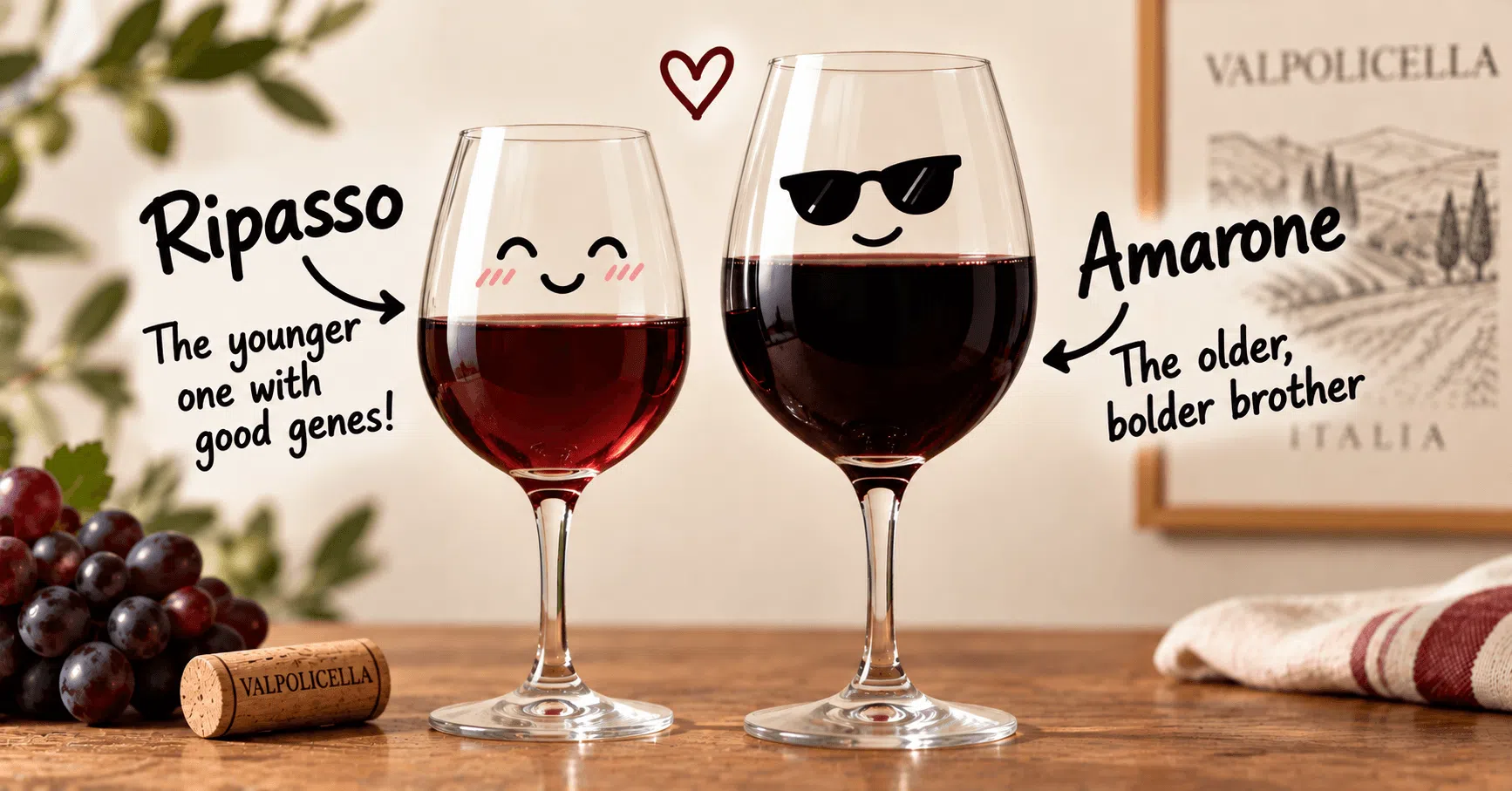
Ripasso is often called “baby Amarone.”
I’ll be honest: I can’t remember anyone saying this to me at a table or in a wine shop. This nickname shows up constantly in wine writing and almost nowhere else. That’s exactly why I wanted to dig into where it comes from, rather than just repeat it.
It’s a catchy nickname. It’s also only partly accurate.
Ripasso is richer than ordinary Valpolicella, often more affordable than Amarone, and made using the grape skins left behind during Amarone production. That explains the comparison.
But Ripasso is not a smaller Amarone. It’s its own wine, with its own personality, and frankly it deserves better than being introduced as Amarone’s younger sibling forever.
Where the Nickname Comes From
Ripasso begins as ordinary Valpolicella. The young wine is then refermented on the grape pomace left over after Amarone production. That second fermentation adds more colour, body, alcohol, tannin and darker fruit than the base wine had on its own.
Because it borrows some of those qualities from the Amarone process, people started calling it “baby Amarone.” The name is easy to understand.
It’s also a little lazy.
Ripasso Isn’t a Miniature Amarone
The biggest difference between the two wines is how the grapes are treated. It happens well before either wine sees a fermentation tank.
Amarone starts with grapes dried before fermentation, a traditional process called appassimento. After harvest, selected grapes go into well-ventilated drying rooms called fruttai, where they lose water over several weeks or months while their sugars, flavours and structure concentrate. Amarone is not shy. It does not enter the room quietly, sit in the corner and wait to be noticed. It arrives with a speech prepared.
Ripasso skips all of that. It starts as a finished young Valpolicella, which is then passed over Amarone’s leftover pomace for a second fermentation, never going through appassimento itself. It just spends some time near the wine that did.
That distinction matters more than the nickname suggests. Ripasso picks up real richness from contact with the pomace, but it doesn’t inherit the full concentration that months of drying gives Amarone. Calling it “baby Amarone” is a bit like calling a compact car a baby racing car: you understand the comparison, but you shouldn’t expect the same engine.
You’re not buying a smaller version of the same wine. You’re buying a different one.
Does Ripasso Taste Like Amarone?
It can share some of the same notes, dried cherry, spice, dark fruit, but the overall experience is different. Ripasso usually keeps more of the acidity and freshness that makes basic Valpolicella good with food, while Amarone trades freshness for weight and power.
If Amarone is a slow-cooked beef stew, Ripasso is the well-made pasta dish you can finish on a Tuesday without a nap after.
Is Ripasso Sweet?
No. Ripasso is a dry red wine. It can taste ripe and rich because of its fruit character and the extra body it picks up from the Amarone pomace. That’s not the same thing as residual sugar.
Think of the difference between fresh ripe cherries, cherry jam and cherry syrup. Ripasso may suggest the first two. It should never taste like the third. If you want a genuinely sweet red from Valpolicella, that’s Recioto della Valpolicella, a different wine entirely.
Why the Nickname Stuck
“Baby Amarone” survives because it does three jobs in two words. It tells you Ripasso is richer than ordinary Valpolicella, that it’s related to Amarone, and that it’s usually the cheaper of the two. For someone standing in front of a wine shelf with thirty seconds to decide, that’s genuinely useful shorthand.
But a wine is more than its nearest famous relative. Ripasso isn’t a failed Amarone, a leftover, or a bargain imitation. It’s a separate style built around its own balance of fruit, freshness, warmth and texture. Choose it on those terms, not as a discount version of something else.
For the full breakdown of how the two wines compare on price, food pairing and which to buy, Ripasso vs Amarone covers that in detail.
The Honest Verdict
Ripasso is called “baby Amarone” because it borrows real richness from contact with Amarone’s pomace. That comparison is useful, but incomplete: it’s a different production method entirely, not a smaller dose of the same one.
Choose Amarone when you want the wine to become the occasion. Choose Ripasso when you want the wine to make dinner better.
And if someone calls Ripasso “baby Amarone” at the table, you don’t need to correct them dramatically. Just remember that the so-called baby may be the more sensible adult in the room.
Salute.
Kelly’s Wine Note
Ripasso and Amarone are both made in Valpolicella, Veneto, typically from Corvina, Corvinone and Rondinella. Amarone is produced from grapes dried through appassimento before fermentation. Ripasso is a finished young Valpolicella refermented on the leftover pomace from Amarone production, a distinct process rather than a smaller-scale version of drying.
Quick Questions
Does Ripasso taste like Amarone?
They can share some flavours, dried cherry and dark fruit among them, but Ripasso keeps more freshness and acidity, while Amarone is fuller, warmer and more concentrated.
Is Ripasso a cheaper Amarone?
Not exactly. It’s usually less expensive because it skips the drying and extended ageing Amarone requires, but the price difference comes from a different production process, not from being a smaller version of the same wine.
Is Ripasso a sweet wine?
No, Ripasso is dry. Its rich, ripe character comes from fruit concentration and alcohol, not residual sugar. Recioto della Valpolicella is the genuinely sweet wine from this region.
Continue Exploring
- Ripasso vs Amarone: Which Valpolicella Wine Should You Choose?
- Fun and Interesting Facts About Italian Wines
Enjoy wine without the snobbery?
Make The Finest Italian Wine one of your Preferred Sources on Google.
Add The Finest Italian Wine to Preferred SourcesDiscover more from The Finest Italian Wine
Subscribe to get the latest posts sent to your email.