Classico, Riserva, Superiore: What They Really Mean on a Wine Label
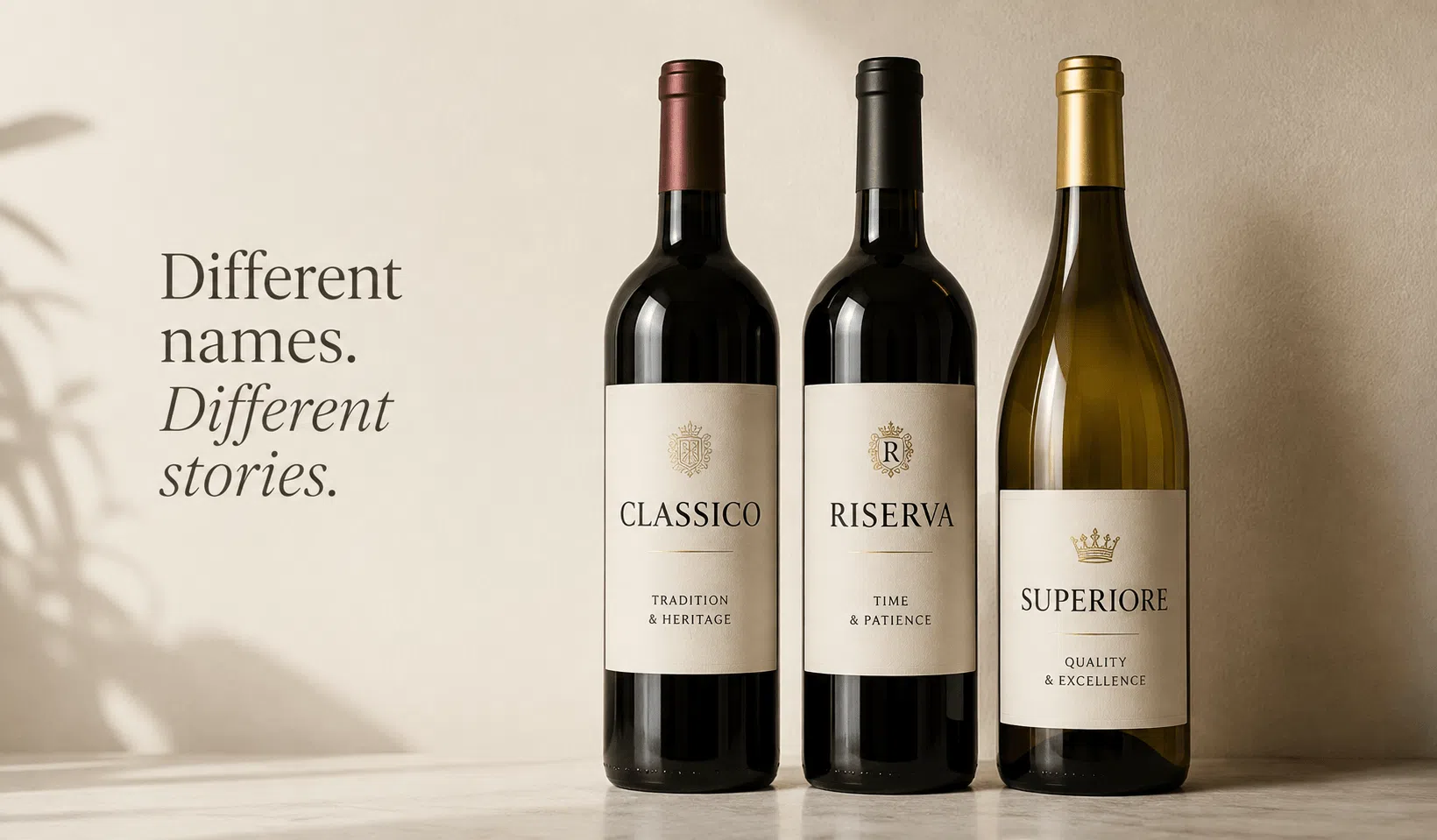
You’ve done this. Stood in front of two nearly identical bottles — same region, same grape, same price — except one says Riserva. And you picked the Riserva, because obviously that’s the upgrade. Wine’s version of paying extra for legroom.
I did this for years before I actually looked into what the word means. Turns out I wasn’t wrong to notice it. I was wrong about what it was telling me.
Classico, Riserva, and Superiore show up constantly on Italian labels, and almost nobody buying wine knows what any of them are really doing there. Not because it’s complicated — it isn’t — but because nobody explains it in a shop, and all three words sound like flattery rather than law. They’re not flattery. They’re regulation, dressed up in nicer clothes.
Here’s what each one is really saying.
The One That’s Just Bragging About Its Address
Classico tells you where the grapes came from. Nothing about how good the wine turned out.
Specifically, it marks the historic core of a region — the original patch of hillside, before the denomination expanded outward and started covering more ground under the same name. Chianti Classico is the older, smaller heart of Chianti. Soave Classico and Valpolicella Classico work the same way: the part of the map the whole region was named after, before more vineyards got added around the edges.
Think of it as the wine world’s version of insisting you liked the neighborhood before it got trendy. Classico just means this address came first. It says nothing about whether the wine inside is any good, because plenty of excellent bottles come from outside the Classico zone, and plenty of forgettable ones come from inside it.
The One That Means the Wine Was Patient. Not You.
Riserva means the wine spent longer aging before release than the standard version of that same wine requires.
How much longer is a local decision, not an Italy-wide one, which is exactly where people trip up. Barolo already has to age a minimum of 38 months before it’s even allowed to be sold as regular Barolo. Riserva pushes that out to 62 months — more than five years — before the bottle can carry that word. Other regions set their own separate thresholds entirely. The job Riserva is doing is the same everywhere: more time before you get to drink it. The actual number of months is decided locally, every time.
It’s not wine that went off to find itself. It just sat in a barrel a while longer before anyone let it out. And more time in barrel or bottle generally means more structure, more development, sometimes a noticeably different personality — but “different” and “better” aren’t the same word, whatever the label’s tone of voice is implying.
The One That Sounds Like It Deserves a Cape
Superiore is the one people misread hardest, because it sounds like the label is bragging on your behalf.
It’s really a specific set of stricter production rules stacked on top of the base version of a wine — commonly a higher minimum alcohol level, sometimes lower permitted yields, occasionally extra aging, depending on which denomination is doing the deciding. It’s a technical bar the wine had to clear, not an opinion anyone formed while tasting it.
Prosecco makes the clearest case for this. Prosecco Superiore DOCG comes specifically from the Conegliano Valdobbiadene hills — a smaller, steeper, more demanding growing area than standard Prosecco DOC — and has to meet meaningfully tighter rules to earn the name. It genuinely is a more serious wine than an everyday Prosecco DOC. But that’s because of where and how it was grown, not because “Superiore” is Italian for the good one.
What Italians Actually Do With All This
Ask an enoteca owner here which of two bottles is “better,” and half the time you won’t get an answer at all. You’ll get a shrug and a small pour of each, so you can decide for yourself.
“Better” just isn’t a category Italian wine culture trusts the way English-language wine writing does. Different, sure. Older, absolutely. Stricter, often. Better is something you’re expected to work out with your own glass, not something a label is legally permitted to promise you.
So What Do You Do With This at the Shop?
Classico narrows down where the wine is from. Not whether you’ll like it.
Riserva tells you it waited longer than its siblings. Which changes its character, not automatically its quality.
Superiore means it cleared a stricter, region-specific bar. A genuinely serious signal — but a technical one, not a verdict on taste.
None of the three words is lying to you. They’re just not saying what most people assume.
The Actual Lesson Here
Next time you spot one of these words on a bottle, you’ll know it isn’t a rating system, and it definitely isn’t showing off.
It’s Italian wine law, quietly doing its job in four syllables or fewer, waiting for someone to bother asking what it means.
Now you have.
Salute.
Continue Exploring
- Decoding the Italian Wine Label: What DOCG, DOC, and IGT Actually Mean
- The Complete Guide to Prosecco — Italy’s Most Joyful Wine
- How to Read Wine Labels: Part One – Common Features on Wine Labels
- How to Read Wine Labels: Part Two – Piecing the Clues Together
Enjoy wine without the snobbery?
Make The Finest Italian Wine one of your Preferred Sources on Google.
Add The Finest Italian Wine to Preferred SourcesDiscover more from The Finest Italian Wine
Subscribe to get the latest posts sent to your email.