Decoding the Italian Wine Label: What DOCG, DOC, and IGT Actually Mean
You are standing in a wine shop, staring at a wall of Italian bottles.
Beautiful names.
Beautiful labels.
And then suddenly, confusion.
One bottle says DOCG.
Another says DOC.
Another says IGT.
You pick one up and think:
“Am I supposed to know what these letters mean?”
If Italian wine labels sometimes feel like they come with their own secret language, you are not alone.
The good news?
You do not need a wine degree to understand them.
Every bottle already tells you a story. You just need to know what clues to look for.
The producer name.
The grape variety.
The region.
The vintage.
And those mysterious three letters that appear on many Italian bottles.
DOCG.
DOC.
IGT.
If you have ever wondered how to read an Italian wine label, I have already covered the basic clues you will find on a bottle in my guide on how to read wine labels and understand their common features.
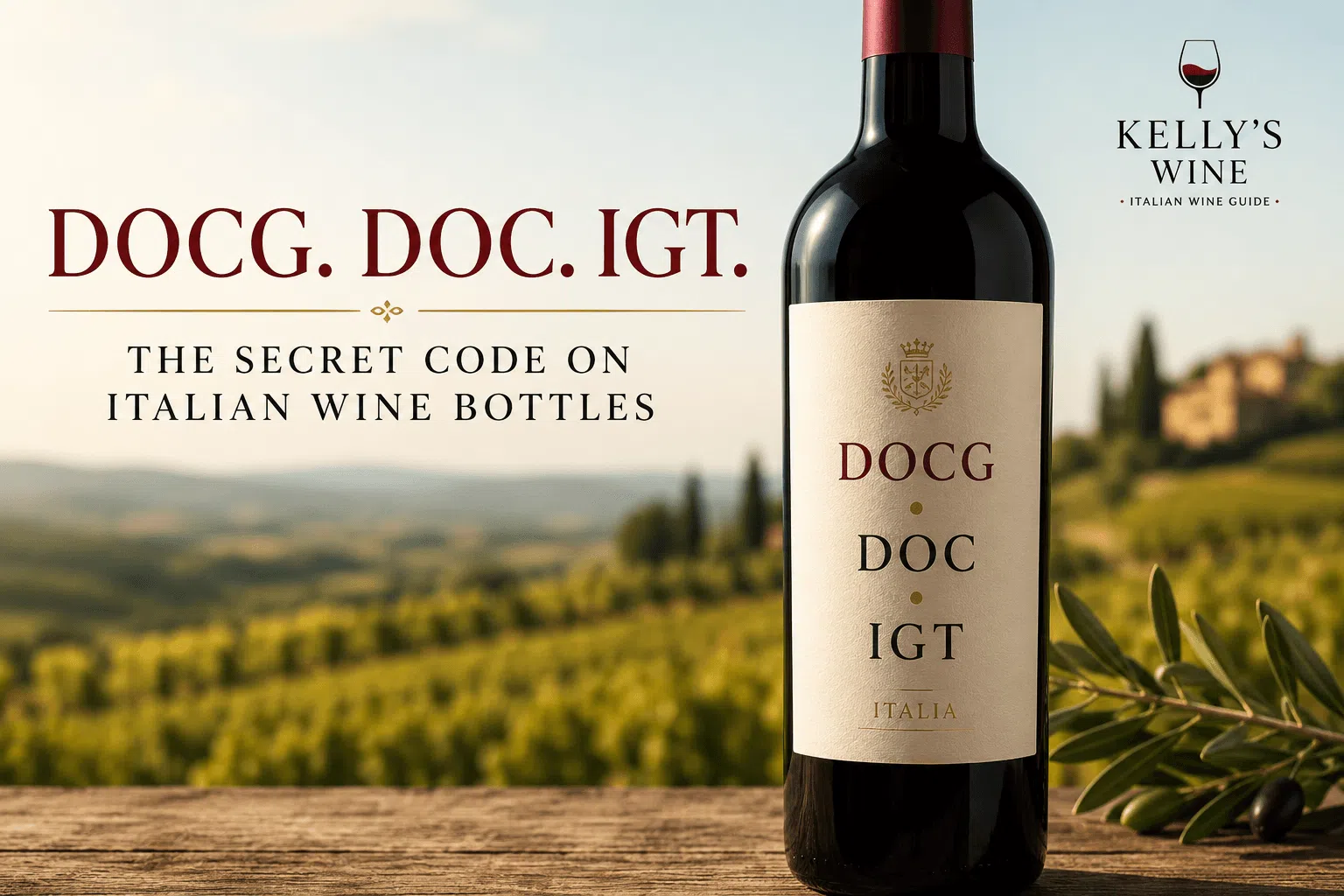
But today, we are going deeper into one specific part of the label:
| Classification | What It Means | Rules | Best For | Example |
| DOCG | Highest, guaranteed origin | Strictest (grapes, yield, aging) | Traditional, famous regions | Barolo, Chianti Classico |
| DOC | Controlled origin | Strict but slightly flexible | Classic, everyday regional wines | Valpolicella, Soave |
| IGT | Typical geographic indication | Most flexible | Modern, experimental wines | Super Tuscans (e.g., Sassicaia) |
The classification system that tells you about a wine’s origin, rules, and traditions.
Because these three little letters are not just decoration.
They tell a fascinating story about Italian wine.
What Do DOCG, DOC, and IGT Mean?
Before we break them down, let’s clear up one common misunderstanding.
Many people assume Italian wine classifications work like school grades:
DOCG = excellent
DOC = good
IGT = average
But wine is not that simple.
These letters do not measure how much you will enjoy the wine.
They tell you how strictly the wine follows certain production rules.
Think of them as a guide to the wine’s identity.
Where it comes from.
How it is made.
And how closely it follows the traditions of its region.
Now let’s decode them.
DOCG: Italy’s Most Regulated Wines
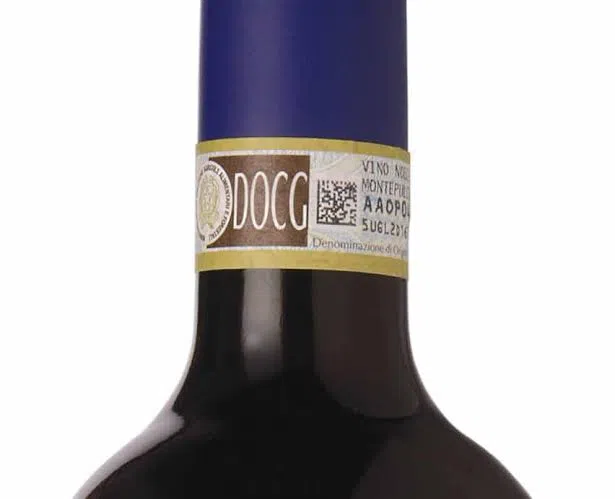
Denominazione di Origine Controllata e Garantita
Let’s start with the category that sounds the most intimidating.
DOCG.
This is Italy’s highest official wine classification.
A DOCG wine must follow strict rules about almost everything:
- Where the grapes are grown
- Which grapes can be used
- How much can be produced
- How the wine is made
- How long it must age
The idea is simple:
A bottle carrying a DOCG name should represent the traditional identity of that specific place.
The final letter — G — stands for Garantita, meaning guaranteed.
Before these wines reach consumers, they must pass official checks to ensure they meet the required standards.
Famous examples include:
- Barolo DOCG
- Brunello di Montalcino DOCG
- Chianti Classico DOCG
- Amarone della Valpolicella DOCG
When you buy DOCG, you are buying a wine deeply connected to its history.
But remember:
More rules do not always mean more enjoyment.
A wine can be highly regulated and still not be your personal favorite.
DOC: The Traditional Italian Classic
Denominazione di Origine Controllata
Now remove the G.
You have DOC.
This is the category where many classic Italian wines live.
DOC wines still follow strict regional rules, but they generally allow slightly more flexibility than DOCG.
A simple way to understand DOC is to think about Italian food.
Imagine a traditional dish from a specific region.
The ingredients matter.
The method matters.
The connection to the place matters.
Could someone change the recipe and create something delicious?
Of course.
But it would become something different.
That is the philosophy behind DOC wine.
A Valpolicella DOC should represent Valpolicella.
A Soave DOC should represent Soave.
A Montepulciano d’Abruzzo DOC should represent Abruzzo.
It is about protecting the personality of a place.
And often, DOC wines are where you find excellent bottles that give you a true taste of Italy without the higher price tag attached to some famous DOCG wines.
IGT: The Italian Wine Rebels
Indicazione Geografica Tipica
Now we reach the category that makes Italian wine history much more interesting.
IGT.
At first glance, it looks like the “lower” classification.
But this is where things get surprising.
Because some of Italy’s most famous wines are IGT.
Why?
Because IGT gives winemakers freedom.
They can experiment with:
- Different grape varieties
- New blends
- International grapes
- Modern techniques
And sometimes, creativity needs a little space.
The most famous example is the story of the Super Tuscans.
In the 1970s, some Tuscan winemakers wanted to create wines using grapes like Cabernet Sauvignon and Merlot.
The problem?
Italian wine rules were very strict.
Using those grapes meant their wines could not receive prestigious classifications.
So they broke away from the system.
They created wines that became incredibly successful around the world.
The result?
The wine world had to rethink what quality meant.
Eventually, the IGT category helped give these innovative wines recognition.
Sometimes, the rebels change the rules.
How Do You Choose Between DOCG, DOC, and IGT?
This is where many wine shoppers get stuck.
They look at the label and ask:
“Which one is the best?”
But the better question is:
“What kind of wine experience am I looking for?”
Choose DOCG if you want:
- Traditional wines
- Famous regions
- Classic expressions of Italian winemaking
Choose DOC if you want:
- Authentic regional wines
- Reliable everyday bottles
- A taste of local tradition
Choose IGT if you want:
- Creativity
- Modern styles
- Unexpected discoveries
And if you want to understand the other information hiding on the bottle — like grape names, producers, regions, and vintages — my guide on how to piece together all the clues on an Italian wine label will help you become much more confident when choosing your next bottle.
The Secret Behind Italian Wine Labels
The next time you see DOCG, DOC, or IGT on an Italian bottle, do not think of them as a simple ranking system.
They are not saying:
“This wine is good.”
“This wine is bad.”
They are telling you something much more interesting.
They are telling you about a place.
A tradition.
A set of rules.
Or sometimes, a winemaker brave enough to challenge those rules.
Because that is what makes Italian wine so fascinating.
It respects its history.
But it also leaves room for people who are willing to create something new.
And sometimes, the best stories come from both.
Salute!
Enjoy wine without the snobbery?
Make The Finest Italian Wine one of your Preferred Sources on Google.
Add The Finest Italian Wine to Preferred SourcesDiscover more from The Finest Italian Wine
Subscribe to get the latest posts sent to your email.