Scientists Studied Why You Swirl Wine. Seriously.
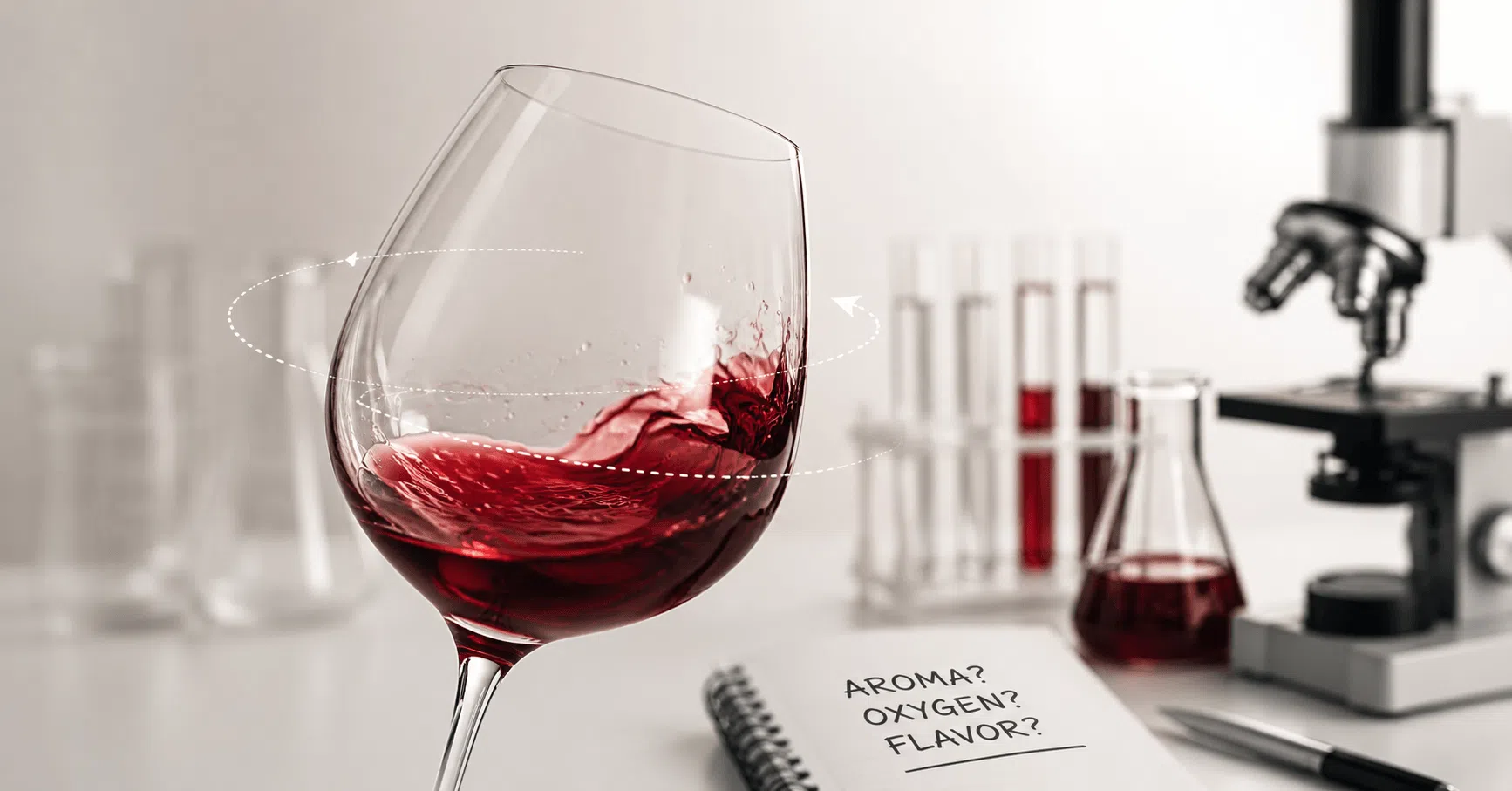
Somewhere in Lausanne, Switzerland, a team of fluid dynamicists spent years pointing high-speed cameras at glasses of wine. This was at one of the most serious engineering universities in Europe.
Not because they wanted an excuse to drink on the job. Nobody had ever properly explained what happens when you swirl a glass. That bothered them enough to build actual lab equipment around it.
I’ll be honest, when I first found this, I assumed it was a joke. A team of Swiss engineers, official funding, real lab time, all to explain a wrist motion. It isn’t a joke. It’s a real paper, published in a real physics journal. The findings ended up mattering for something you’d never guess: how pharmaceutical companies grow the cells used to manufacture medicine.
So no, swirling your wine is not pretentious theater. It’s one of the more scientifically legitimate things you’ll do with your hands all week, and somewhere in Switzerland there’s a lab that can prove it.
The Wave Nobody Had Bothered to Explain
Here’s what the researchers at École Polytechnique Fédérale de Lausanne found. When you swirl a glass, you’re not just sloshing liquid around. You’re generating a traveling wave that runs along the inside wall of the glass. That wave pulls liquid from the bottom to the top and from the center out to the edges as it moves.
Wine lovers have been doing this by instinct for centuries. Millions of dinners, millions of swirls, and it took until 2011 for anyone with a physics degree to check what was happening in the glass. A PhD student named Martino Reclari and his colleagues finally did it, using instruments sensitive enough to track the motion of the wave itself.
The technical term is orbital shaking. It sounds like something from a chemistry lab, mostly because it is one.
Where This Takes a Turn
This is the detail that made me sit up. The same wave motion that aerates your wine turned out to be useful for something completely unrelated. Growing cells for biopharmaceuticals.
Drug manufacturers need to grow huge batches of living cells in large tanks. Getting enough oxygen mixed evenly through that liquid without damaging the cells is a legitimately hard engineering problem. It turns out the gentle, efficient motion of a wine swirl does exactly that. Orbital shaking now gets used in real bioreactors. It mixes and oxygenates more effectively than the older stirred-tank method, and it’s gentler on the cells while it does it.
Somewhere there’s a biochemist who owes sommeliers a genuine debt of gratitude and has probably never once said thank you. A gesture people learned by copying waiters at dinner quietly ended up shaping how modern medicine gets manufactured. I don’t think anyone swirling a glass of Barolo has ever thought about that.
What Your Nose Is Doing That Your Tongue Can’t
Strip away the physics jargon and the practical effect is simple. Swirling spreads wine across more surface area inside the glass, which lets more of it interact with the air. That does two things at once.
It speeds up the release of aroma compounds that were sitting trapped in the liquid. Those are the esters and other volatiles that carry most of what you’d call flavor. It also introduces a small amount of oxygen, which softens tight, closed-off wines. That lets them open up faster than they would just sitting in the glass.
Here’s the part people forget. Most of what you experience as taste is really smell. Your tongue, left entirely to its own devices, can basically only report sweet, sour, salty, bitter, and a vague sense that something is either nice or a mistake. Everything more specific than that, cherry, leather, cut grass, vanilla, arrives through your nose. Swirling is mostly a tool for getting more of the wine’s aroma up where your nose can find it.
It Started as Due Diligence, Not a Performance
Before it was something people did at dinner to look sophisticated, swirling was a working tool. Merchants and early wine traders used it to judge a wine before buying it. They watched how it moved, how it clung to the glass, what that told them about body and condition.
Somewhere along the way, checking the engine before you bought the car turned into revving it for the neighbors. That’s worth remembering next time swirling feels like an affectation. It didn’t start as one. It started as due diligence, and the performance version came later, once enough people copied the gesture without knowing why it existed in the first place.
When to Skip It
One exception worth knowing. Don’t swirl sparkling wine. Swirling a flute of Prosecco is the wine equivalent of shaking a soda can to check if it’s still fizzy. The whole point is the bubbles, and an aggressive swirl knocks the carbonation out faster than you’d like. A very light swirl won’t hurt it, but save the full wrist motion for still wine.
For everything else, hold the glass by the stem, keep your elbow still, and rotate your wrist in small circles. If you’d rather keep the glass on the table while you do it, that works too, and it’s the steadier option if you’re still building confidence with the motion. Worth knowing too: the glass shape itself changes how much of this reaches your nose, so a good swirl in the wrong glass only gets you halfway there. We’ve covered the fuller tasting technique here if you want the rest of the process alongside this.
So the next time you catch yourself mid-swirl at a dinner table, slightly self-conscious about it, you can drop the self-consciousness entirely. There’s a fluid dynamics lab in Switzerland that spent real grant money proving you’re doing something legitimate. High-speed cameras and everything. You’re not performing. You’re running a controlled experiment with better lighting.
Quick Answers
Does swirling wine actually do anything, or is it just for show? It does something real. Swirling increases the wine’s surface contact with air, which releases aroma compounds faster and lets tight wines open up sooner. Fluid dynamics researchers at EPFL in Switzerland have documented the physical mechanism behind it in a published study.
Why shouldn’t you swirl sparkling wine? Swirling knocks carbonation out of the wine faster than letting it sit. Since the bubbles are the whole point of a sparkling wine, an aggressive swirl works against what you’re trying to enjoy. A gentle swirl is fine if you want it, but it’s not necessary the way it is for still wine.
Is wine swirling connected to anything outside of wine? Surprisingly, yes. The same wave motion involved in swirling is known as orbital shaking. It has influenced how pharmaceutical companies design bioreactors for growing cells used in drug manufacturing, since it mixes and oxygenates liquid gently and efficiently.
How long should you swirl wine before drinking it? A few seconds is usually enough for an everyday glass. Tighter, younger, or more tannic wines can benefit from a longer swirl. Try several swirls over a few minutes to help them open up further.
Enjoy wine without the snobbery?
Make The Finest Italian Wine one of your Preferred Sources on Google.
Add The Finest Italian Wine to Preferred SourcesDiscover more from The Finest Italian Wine
Subscribe to get the latest posts sent to your email.