Does All Italian Pinot Grigio Taste the Same? I Thought So Too.
I used to think Pinot Grigio had one personality: cold, pale, easy to drink, and very committed to minding its own business. You ordered it when you didn’t want to spend ten minutes studying the wine list. Nobody at the table objected, nobody needed an explanation, it arrived cold, did its job, and everyone carried on with dinner.
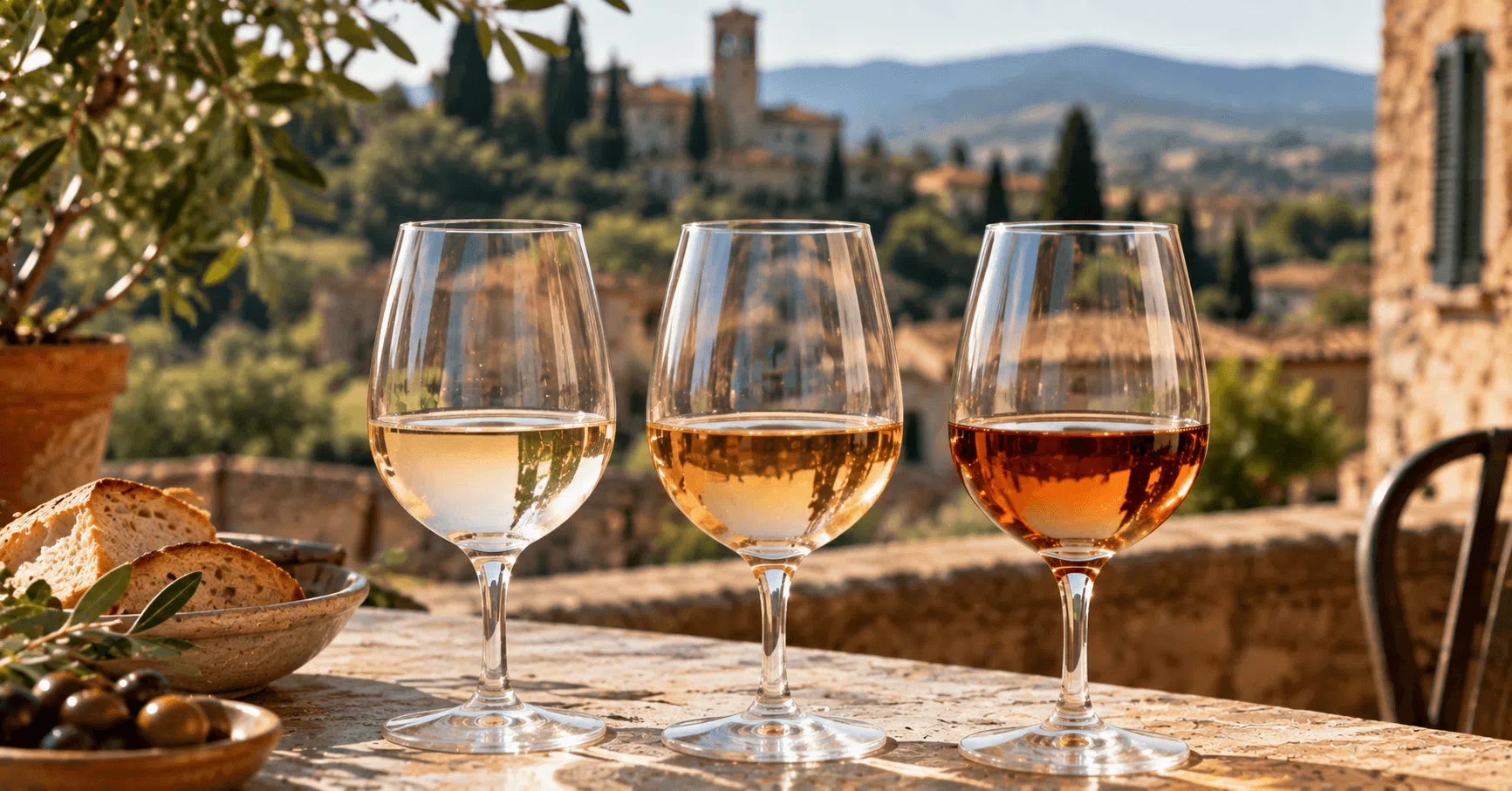
Then I started paying attention. One Pinot Grigio was all lemon and green apple. Another had ripe pear and more body. Another felt almost creamy. Then I came across one with a copper pink colour and thought, excuse me, aren’t you supposed to be white?
Apparently Pinot Grigio had been withholding information. The wine I’d mentally filed under simple, pale and predictable can change quite dramatically depending on where the grapes grow and what happens to them afterward. So no, Italian Pinot Grigio does not all taste the same. Not even close.
We Probably Have Pinot Grigio’s Success to Blame
Pinot Grigio became enormously popular for a very good reason: it’s easy to like. At its most familiar it’s dry, fresh, light and crisp, apple, pear, citrus, maybe a little floral character, nothing jumping out of the glass demanding your full attention. Sometimes that’s exactly what you want.
The DOC Delle Venezie alone, covering Veneto, Friuli-Venezia Giulia and the Province of Trento, has around 27,000 hectares of Pinot Grigio vineyards. It produces roughly 230 million bottles a year, close to half of all the Pinot Grigio made on the planet. At that scale, it’s easy to imagine one enormous lake of Pinot Grigio somewhere in north eastern Italy being quietly divided into bottles.
But look at the area those vineyards cover: mountains, hills, wide plains, river valleys, land shaped by Lake Garda, vineyards stretching toward the Adriatic. Those grapes aren’t all growing under the same conditions, and that’s where my nice simple idea of Pinot Grigio started falling apart.
Same Grape, Very Different Life
Take Pinot Grigio grown somewhere warm and relatively flat. Then take the same grape and move it higher, where the nights are cooler. Put another vineyard on different soil. Let one producer harvest earlier and another wait. Give one vine a large crop and another a smaller one. Let one winemaker bottle the wine quickly, and another give it more time on the lees. Why would all those wines taste identical? They don’t.
Temperature affects how grapes ripen and retain acidity. Cooler nights help preserve freshness. Vineyard yields influence concentration. Harvest timing changes the balance between sugar, acidity and flavour. Then the winemaker gets involved and complicates everything further. The grape is only the beginning.
This Is Where Veneto, Friuli and Trentino Start Pulling Apart
A lot of the Pinot Grigio people know internationally comes from north eastern Italy, particularly Veneto and the wider Delle Venezie area. The classic style is probably the one already in your head: light, dry, fresh, apple, pear, citrus, the sort of wine that disappears alarmingly quickly beside seafood or a plate of pasta on a hot day.
But move into parts of Friuli-Venezia Giulia, especially where producers work with lower yields or hillier sites, and Pinot Grigio can turn fuller and more textured. Suddenly there may be ripe pear, peach, herbs, almond and considerably more weight in the mouth. Then head toward the cooler vineyards of Trentino. Altitude and bigger day to night temperature swings help preserve acidity and aromatic freshness there, and you may get something particularly crisp, floral and precise.
This isn’t a rule saying Veneto means simple, Friuli means serious, Trentino means crisp. Wine refuses to organise itself that conveniently. A talented producer in Veneto can make a complex Pinot Grigio, and a producer elsewhere can make something deliberately simple. But geography changes the possibilities, and once you taste a few bottles side by side, “Pinot Grigio tastes like Pinot Grigio” starts becoming a very unhelpful description.
Then I Discovered Pinot Grigio Isn’t Even a White Grape
This was my favourite part. Look at a bunch of ripe Pinot Grigio grapes and you might wonder if someone handed you the wrong variety. The skins can be greyish, pink, even slightly purple. Pinot Grigio is genuinely a colour mutation of Pinot Noir, which explains something I’d previously found very confusing: ramato Pinot Grigio.
Ramato means copper coloured. Instead of immediately separating the juice from those pink grey skins, the winemaker allows some skin contact, and colour moves into the wine. So can texture and additional flavour. The result can be copper, salmon or pinkish rather than the almost water clear Pinot Grigio most of us expect. Same grape, nothing artificial happened, the winemaker simply stopped taking the skins away so quickly.
If you’ve spent years thinking you know Pinot Grigio, ramato is a fun way to discover you probably know one version of it.
So Why Do So Many Cheap Bottles Taste Similar?
Because sometimes they’re supposed to, and I don’t mean that as an insult. Part of Pinot Grigio’s international success came from consistency. People wanted something dry, light, fresh and uncomplicated, and producers gave them exactly that. Large producers can work across different vineyards and areas to create a recognisable house style year after year, and there’s nothing wrong with that. Not every Tuesday evening needs a wine that requires research. Sometimes dinner just needs wine.
The problem is when we taste that familiar commercial style and assume we’ve met the entire grape. That’s a bit like eating supermarket mozzarella and deciding you understand all Italian cheese.
Does Spending More Help?
Sometimes, but I wouldn’t choose Pinot Grigio by price alone. I’d look at the label instead. Where exactly is it from? Does it simply say DOC Delle Venezie, or is there a more specific denomination or place? Is it from Veneto, Friuli or Trentino? Does the producer mention a particular vineyard? Is it ramato? I’ve written before about choosing Italian wine in a supermarket aisle, and the same rule applies here: a bottle that names its real region tells you more than one that doesn’t.
You don’t need to turn shopping for a Wednesday night bottle into detective work. Just start noticing where it comes from. That’s probably the easiest way to escape the idea that Pinot Grigio is one wine with four hundred different labels.
Try This Instead of Believing Me
Buy three: one straightforward DOC Delle Venezie Pinot Grigio, one from a more specific area in Friuli, one from Trentino, and if you see a ramato, buy that too and ruin the experiment completely. Pour them side by side. Don’t go hunting for seventeen aromas, just taste. Notice which is lightest, which smells strongest, which has more acidity, and which feels fuller in the mouth. Most importantly, which one would you genuinely buy again?
You may still prefer the simple six euro bottle. That’s perfectly fine. The point isn’t to discover that expensive Pinot Grigio is secretly superior. It’s to discover that Pinot Grigio has a range at all.
And Yes, Pinot Gris Is the Same Grape
Because apparently this grape wasn’t finished confusing us. Pinot Grigio and Pinot Gris are the same variety, exactly the same grape, yet a bottle labelled Pinot Gris can taste noticeably different from the Italian Pinot Grigio you know. That has less to do with the name itself and more to do with the wine traditions hiding behind those names. But that’s a different bottle for a different day.
My Final Verdict
I think Pinot Grigio became a victim of being too reliable. It got very good at being the wine we didn’t have to think about: cold, crisp, pale, done. And somewhere along the way, I stopped wondering if there was anything else to it.
There is. You can take the same grape through different parts of northern Italy, change the altitude, climate, vineyard, harvest date and winemaking, and end up with wines that don’t behave nearly as similarly as their labels suggest. You can even leave those pink grey skins around long enough to watch your supposedly white Pinot Grigio turn copper.
So the next time someone tells me they don’t like Pinot Grigio, I know exactly what I’m going to ask. Which one?
Salute.
Kelly’s Wine Note
DOC Delle Venezie covers Veneto, Friuli-Venezia Giulia and the Province of Trento, with around 27,000 hectares of Pinot Grigio vineyards producing roughly 230 million bottles a year, about 85% of Italian Pinot Grigio and 43% of global production. Pinot Grigio is a naturally occurring colour mutation of Pinot Noir, with grey-pink skins rather than the dark skins of its parent grape. When winemakers allow brief skin contact instead of pressing immediately, the result is ramato, a copper or salmon coloured style. Pinot Grigio and Pinot Gris are the same grape variety, marketed under different names in different wine traditions.
Quick Questions
Does all Italian Pinot Grigio taste the same?
No. Vineyard location, climate, altitude, harvest timing, yields and winemaking can all change the finished wine. Italian Pinot Grigio ranges from very light and crisp to fuller, more aromatic and textured styles.
Where does most Italian Pinot Grigio come from?
North-eastern Italy is its major production centre. DOC Delle Venezie covers Veneto, Friuli-Venezia Giulia and the Province of Trento and represents a very large share of Italian Pinot Grigio production.
Why is some Pinot Grigio pink?
Pinot Grigio grapes have naturally grey-pink skins. When the juice stays in contact with those skins, the finished wine can develop copper, salmon or pinkish tones. This traditional Italian style is called ramato.
Are Pinot Grigio and Pinot Gris the same grape?
Yes. They are two names for the same grape variety. The names are commonly associated with different regional traditions and wine styles, which is why bottles labelled Pinot Gris and Pinot Grigio can taste surprisingly different.
Continue Exploring
Enjoy wine without the snobbery?
Make The Finest Italian Wine one of your Preferred Sources on Google.
Add The Finest Italian Wine to Preferred SourcesDiscover more from The Finest Italian Wine
Subscribe to get the latest posts sent to your email.