Wine Tourism in Italy: Are We Still Visiting Wineries for the Wine?
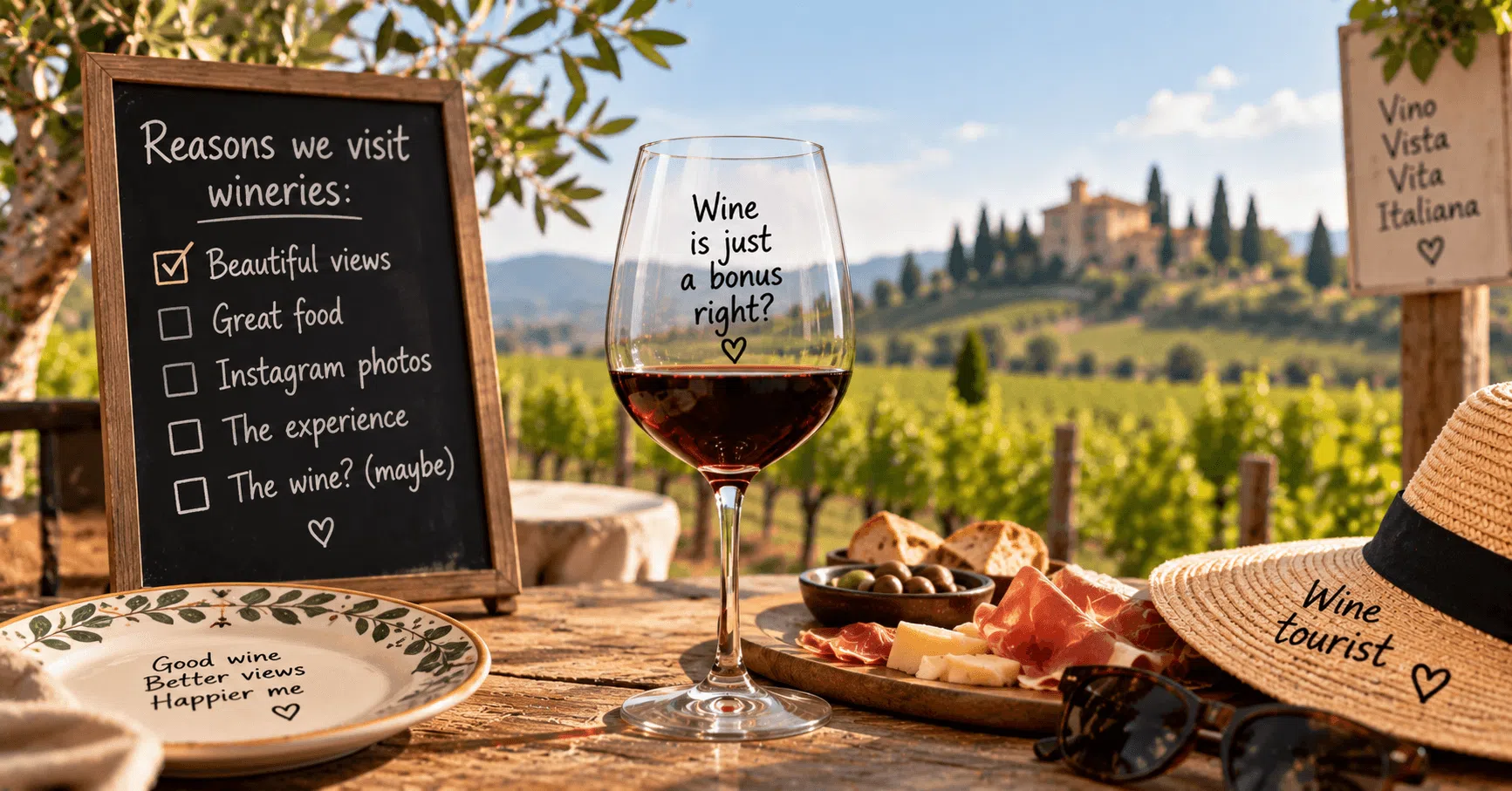
Here’s a scene playing out at wineries across Italy most weekends now. You arrive, and the first thing that happens isn’t a pour, it’s a photo of the vineyard rows. Then a second photo, because the first one didn’t quite capture the sun drenched Tuscan mood you were chasing, even though you’re standing in Lombardy.
Lunch follows on a terrace with a view worth the drive on its own. Bikes lean against a stone wall for later. Somebody mentions the spa slot is at four. You find the good angle for one more photo, and at some point, almost as an afterthought, a very nice person pours you a glass of wine.
Three hours later, you drive off delighted, tagged location and all.
Quick question: what was in the glass?
If you have to scroll back through your own photos to answer that, you’re not alone, and that’s the whole problem in one sentence.
Winery Visits Used to Be Simple
There was a time when visiting a winery meant one thing. You wanted to see where the wine was made. Someone walked you through the cellar, explained the grapes, opened a few bottles, and if you were lucky, the winemaker showed up and told a story that ran twenty minutes longer than planned.
That version still exists. It’s just no longer the only one.
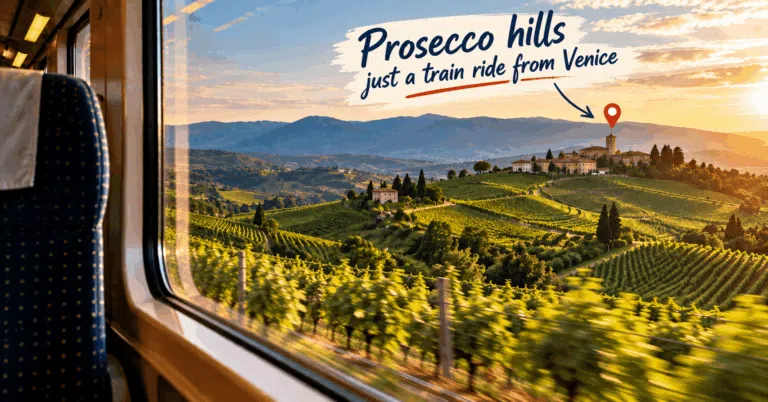
Now you can picnic between the vines, cycle through them, listen to live music beside them, eat a tasting menu overlooking them, or book a massage a hundred metres from where the grapes grow. There are art shows, sunset dinners, cooking classes and the occasional infinity pool with a view most five star hotels would kill for. Somewhere along the way, the winery quietly became a resort that happens to have a cellar attached.
Wine regions figured out something important: people don’t just want to taste wine anymore. They want a day out, and a story to tell about it that doesn’t involve the words malolactic fermentation. Fair enough. Standing in a cold cellar for forty five minutes listening to someone explain the science isn’t everyone’s idea of a good time. It isn’t always mine either.
But somewhere between the bike ride and the sunset photo, I want the winery to still ask me one question, even quietly: do you want to know what’s in your glass, or just where to stand for the picture of it?
Franciacorta Picked a Good Moment to Ask
This year’s Festival Franciacorta in Cantina, held 18 to 20 September, is the clearest snapshot I’ve seen of how far wine tourism has travelled. Over three days, dozens of wineries across the region threw open their doors for more than 300 scheduled experiences: tastings, cellar visits, picnics, bike tours, concerts, sunset dinners, enough hospitality to swallow a long weekend whole and still leave you wanting a nap.
Buried inside those 300-plus events was the part that caught my attention. For 2026, the festival introduced a new category called Focus Franciacorta, marked out with its own symbol so visitors could spot it at a glance: masterclasses, vertical tastings, vineyard walks, and sit downs with the winemakers and enologists who make the stuff, not just pour it.
Read that as what it is. The people running one of Italy’s biggest wine festivals looked at 300 ways to spend a weekend there and decided some of them needed a label that says, this one is genuinely about the wine. That’s not a festival being precious. That’s an admission that the rest of the calendar might not be.
Nobody’s Asking You to Give Up the Picnic
Before you write in defending your right to a vineyard lunch, this isn’t an argument against any of it.
I like that wine climbed out of the stiff tasting room. It makes more sense next to food. It makes more sense around a table full of people, rather than lined up at a counter being quizzed on tannin levels before you’re allowed a second sip. Wine was never supposed to feel like a test you could fail.
For anyone who isn’t already deep into wine, these experiences lower the barrier to entry. Someone books a vineyard lunch because the photos look beautiful, and leaves knowing the difference between Franciacorta and Prosecco. That’s a perfectly good place to start.
My problem starts when the bottle becomes furniture.
The Trouble With a Photogenic Region
Italian wine country has an unfair advantage: it photographs itself. Rows of vines running into hills. Stone cellars. Barrels stacked three high. A villa with exactly the right amount of ivy on it.
Put a glass in the foreground and the photo practically takes itself.
Wineries noticed, and they leaned into it, which makes business sense. But a beautiful place is easy to remember. Wine takes more effort. You need someone to explain why the grapes grow on that particular hillside and not the one next door, why one vintage tastes nothing like the one before it, why the family planted Chardonnay instead of whatever everyone around them was growing, why that bottle sat waiting three years before anyone was allowed near it. Most visitors never get past the postcard version of how wine is made, and that’s exactly the gap a good winery visit should close.
Skip that explanation often enough, and a winery quietly turns into a very good looking venue that happens to sell wine on the side. Italy makes far too many interesting wines to let that happen without a fight.
The Wineries Getting This Right Do Both
The fix isn’t going backwards. Nobody needs the bikes confiscated or lunch replaced with a lecture on secondary fermentation.
The best wine experiences use the fun part to make you care about the serious part. Cycle through the vineyard, and somebody explains why the rows run north to south instead of east to west. Sit down to lunch, and the pairing teaches you something the wine alone never would have. Walk through a beautiful cellar, and you leave understanding why those specific bottles are still sitting there instead of on a shelf somewhere.
You meet the person who made the wine. You hear why they made the choices they made, not just the ones the tasting notes mention. And somewhere in there, the bottle on your table stops being a prop and starts being the reason you came.
That’s probably why Focus Franciacorta interests me more than another sunset party would. Not because sunset parties are bad. Because I’ve been to enough of them to know they rarely teach you anything about what’s in the glass.
Maybe This Is Wine Tourism Growing Up
Think of it in stages. First, wine regions had to convince people to show up at all. Then they learned to make the visit beautiful, bookable and worth posting about. The harder stage comes now: building an experience nobody forgets, without making the wine itself forgettable.
That balance matters more in Italy than almost anywhere else. Nobody drives through Barolo, Valpolicella, Montalcino, Etna or Franciacorta purely because someone found a scenic spot for a picnic table. The landscape matters because of what grows in it, the food matters because of what’s sitting next to it in your glass, and the cellar matters because of what’s quietly ageing inside it, sometimes for longer than the visitors touring it have been alive.
Take the wine out of any of that, and you’re left with very good countryside tourism that happens to serve excellent glassware. Pretty scenery with a corkscrew is still just pretty scenery.
Where I’ve Landed
Give me the vineyard lunch. Give me the bike ride, the terrace, the chef, and yes, give me the sunset photo too. I’ll take it, and I’ll probably post it before the car’s even left the gravel driveway.
But somewhere between arriving at the winery and uploading those photos on the drive home, I want to have learned one real thing about what’s in my glass. Not a fun fact read off a laminated card and forgotten by dinner. Something that changes how I truly taste the next bottle I open from that same hillside, not just what I say about it.
That’s the real test, and it’s a simple one. A good wine trip leaves you thinking the place was beautiful. A great one leaves you hunting down that specific bottle six months later, and knowing exactly why you’re doing it.
Salute.
Quick Questions
Is wine tourism in Italy becoming more about the experience than the wine?
Increasingly, yes. Italian wineries now pair tastings with food, accommodation, outdoor activities and events, and for many visitors the wine ends up as one part of a bigger day out rather than the main event.
Is Festival Franciacorta in Cantina only about wine tasting?
No. The 2026 edition ran across more than 300 scheduled experiences, combining cellar visits and tastings with food, music and outdoor activities region-wide. It also introduced Focus Franciacorta, a dedicated category of masterclasses, vertical tastings, vineyard visits and meetings with winemakers, built specifically to deepen visitors’ understanding of the wine.
Are experience-focused winery visits bad for Italian wine tourism?
Not inherently. They introduce wine to people who might never book a technical tasting on their own. The value depends on whether the food, the landscape and the activities are used to connect visitors back to the wine, rather than distract from it.
What makes a winery visit worth remembering?
More than the photos. A good visit leaves you understanding something specific about the wine, the vineyard, the producer or the region that you didn’t know before you arrived.
Continue Exploring
Enjoy wine without the snobbery?
Make The Finest Italian Wine one of your Preferred Sources on Google.
Add The Finest Italian Wine to Preferred SourcesDiscover more from The Finest Italian Wine
Subscribe to get the latest posts sent to your email.