How to Spot Fake Italian Wine

Somewhere in the world right now, a very confident bottle of “Sassicaia” is sitting on a shelf. It’s fake Italian wine with the right label, the right wooden case and the right tissue paper. The closest it has ever been to Tuscany is a warehouse that has never seen a vine.
Fake wine sounds like something that only happens to billionaires at auctions. Mostly, it is. But Italian wine is famous enough to be worth copying, so it pays to know what the real thing looks like. And you don’t need a lab coat. You need thirty seconds and the neck of the bottle.
Quick Facts
- The neck seal: Italy’s state seal, a thin paper strip printed by the state mint, is compulsory on DOCG wines
- The new look: since 2025 the seal carries the Italian flag and a QR code, and Prosecco DOC was the first to wear it
- Prosecco: the Prosecco DOC Consortium says Prosecco can only be sold in bottles, never on tap
- The red flag: a famous wine at a bargain price from a seller you don’t know
- The good news: fakers copy famous, expensive wines, so your €8 weeknight red is not their target
The Fake Sassicaia Ring That Fell Off a Truck
Let’s start with the best fake-wine story I know.
In 2020, Italy’s financial police, the Guardia di Finanza, broke up a ring selling fake Sassicaia, one of Italy’s most famous reds, at about 70% below the real price. Two men, a father and son, were placed under house arrest, and 11 others were under investigation. Police said the ring had been making around 700 cases a month and was preparing 1,000 cases for South Korea.
And how did it all come apart? A case of fake wine fell off a truck and was found by the side of the road. That’s the entire plot twist. A whole forgery operation, undone by a bumpy road.
It’s a funny story, but it also shows where fakers aim: famous names, big prices and buyers in a hurry. The rest of this post is how not to be that buyer.
First, the Good News
Counterfeiting is a business, and like any business it goes where the money is: big names, old vintages and bottles that cost hundreds of euros.
So if you’re picking a Tuesday night red, relax. My guide on how to choose Italian wine in a supermarket will help you far more than any fraud checklist.
The tips below matter when you’re buying something special: a gift, a celebration bottle, or a famous name at a price that feels almost too kind.
Look for the State Seal on the Neck
This is the most useful thing in this whole post.
Italy has an official seal for its protected wines, the ones you can recognise by the letters on the label (I explain those in what DOCG, DOC and IGT actually mean). It’s a thin paper strip across the top of the bottle, where the capsule meets the neck. Italians call it the contrassegno di Stato, or just the fascetta. It’s printed by the Istituto Poligrafico e Zecca dello Stato, the state mint, and its QR code links the bottle to traceability and anti-counterfeiting data.
In DOCG, the G stands for guaranteed, and the seal on the neck is the bottle’s proof of that guarantee. Here’s who uses it:
- DOCG wines: the seal is compulsory. Barolo, Brunello di Montalcino, Chianti Classico, Amarone, all of them. A DOCG bottle without a seal is a red flag.
- DOC wines: optional. Each wine area decides, and producers can use a seal or an official electronic tracking code instead.
- IGT wines: they can carry one too in some cases, so a missing seal on an IGT bottle means nothing.
The New Seal With the Italian Flag
In 2025 the seal got a makeover. The new version is printed in the colours of the Italian flag and carries a QR code. Scan it and you reach the bottle’s traceability data, held on a platform run by the state mint.
Prosecco DOC was the first wine to wear it, at an event in Rome on 20 November 2025. Other wines are switching over gradually, and seals already printed can be used until the stock runs out. So for a while you’ll see both the old and new styles in shops. Both are genuine.
Is Prosecco on Tap Real Prosecco?
Not according to the people who make it.
Prosecco is the most copied name in Italian wine, which is a sort of compliment, if a slightly annoying one. The Prosecco DOC Consortium says Prosecco may be sold only in bottles, and that selling a wine called Prosecco on tap is fraud. So if a bar is pouring “Prosecco” from a tap or a carafe, ask what’s in it.
The fakes are not a myth. Italy’s food fraud inspectors counted 545 misuses of the Prosecco name in the two years from December 2014, so the problem isn’t just paperwork.
Choosing a bottle? My guide to Prosecco Extra Dry vs Brut will save you from a sweeter surprise than you planned.
Be Suspicious of a Miracle Price
Wine has no Black Friday for legends.
A famous wine at a fraction of its usual price is not a lucky find. It’s a question mark. The fake Sassicaia above sold for about 70% less than the real thing, and that gap is what tempts people. Check what the bottle normally costs at a trusted shop before you get excited.
Buy From People Who Have Something to Lose
This is the best protection of all, and it costs nothing.
A wine shop with a good reputation, a well-known online retailer, a supermarket or the winery itself all have a name to protect. A stranger with a “great deal” on a famous bottle does not.
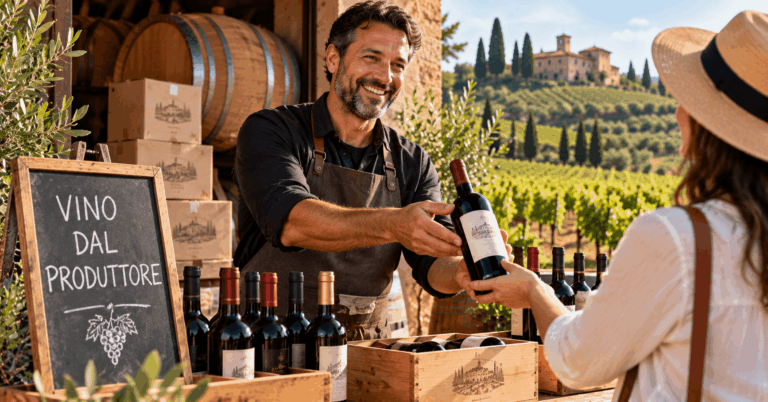
Visiting Italy? Buying straight from the producer is the safest option of all, and a lovely day out. Here’s my guide on how to buy wine directly from Italian wineries.
And if you want brilliant Italian wine with zero fake-wine worry, pick the bottles fakers don’t bother with. My best Italian wines under €20 is the place to start.
Buying Something Really Special?
For older or very expensive bottles, give it a closer look:
- Check the history. Barolo only became a DOCG in 1980, so a “1971 Barolo DOCG” is a time traveller, and time travellers are always suspicious.
- Check the capsule. Lots of creases can mean it was taken off and put back on.
- Check the spelling. Fakers love a tiny typo in the producer’s name.
- Ask where it came from. A reliable seller can tell you where the bottle has been stored and who it was bought from. Collectors call this provenance, and I explain why it matters in Can You Really Make Money Collecting Italian Wine?
One odd detail can be innocent. Two or three together? Trust your gut.
Think You’ve Found a Fake?
Don’t open it and don’t throw it away. Keep your receipt and contact the seller first.
You can also tell the wine’s consortium or the producer. Nobody hates a fake more than the people who made the real thing.
Frequently Asked Questions
How can I tell if Italian wine is real?
Look for the state seal on the neck of the bottle. It’s compulsory on DOCG wines and optional on many others. Then check that the price makes sense and buy from a seller with a good reputation.
What is the paper strip on the neck of Italian wine?
It’s the contrassegno di Stato, the state seal. It’s printed by the Italian state mint and links each bottle to traceability and anti-counterfeiting data. Newer versions show the Italian flag colours and a QR code.
Does every Italian wine have a state seal?
No. It’s compulsory for DOCG wines and optional for many DOC and IGT wines. A DOC or IGT wine without a seal isn’t automatically fake, but a DOCG wine without one is a red flag.
Is Prosecco on tap real Prosecco?
According to the Prosecco DOC Consortium, no. It says Prosecco can only be sold in bottles.
Are cheap supermarket Italian wines likely to be fake?
Very unlikely. Counterfeiters copy famous, expensive wines because that’s where the profit is. An everyday bottle from a supermarket is a much safer bet than a famous name at a suspiciously low price from an unknown seller.
What should I do if I bought a fake wine?
Keep the bottle unopened, keep your receipt and contact the seller first. You can also report it to the wine’s consortium or the producer.
One Last Thing
I think the best protection against fake wine isn’t a gadget. It’s a habit: look at the neck, ask what it normally costs, and buy from someone with a name to protect. Even a ring making hundreds of cases a month got caught in the end, so keep your eyes open and your receipts safe.
So here’s my question. Have you ever been offered a famous bottle at a price that felt too good to be true? Tell me what you did.
— Kelly 🍷
#FakeWine #ItalianWine #WineFacts #WineTips #Prosecco
Continue Reading
- Brunellopoli: when Italy’s most trusted wine got caught cheating
- The 1986 wine scandal that almost killed Italian wine
- Rudy Kurniawan, the man who faked the world’s rarest wines
Sources
- Istituto Poligrafico e Zecca dello Stato: Prosecco DOC, the first tricolour seals on the bottles of the world’s most popular Italian wine
- Federvini: Nuove fascette per DOC e DOCG, tricolore e QR code
- CNN: Italian police put cork on world’s best wine fakes
- Euronews: Fake Prosecco, put a cork in it
- Mondaq: The campaign to protect Prosecco, “If this is sparkling wine on tap, this is not Prosecco”
Information checked in November 2026. Seal rules and designs are changing, so check the producer or consortium if you are unsure about a particular bottle.
Enjoy wine without the snobbery?
Make The Finest Italian Wine one of your Preferred Sources on Google.
Add The Finest Italian Wine to Preferred Sources