
The Biggest Lie on a Prosecco Label (Extra Dry vs Brut)
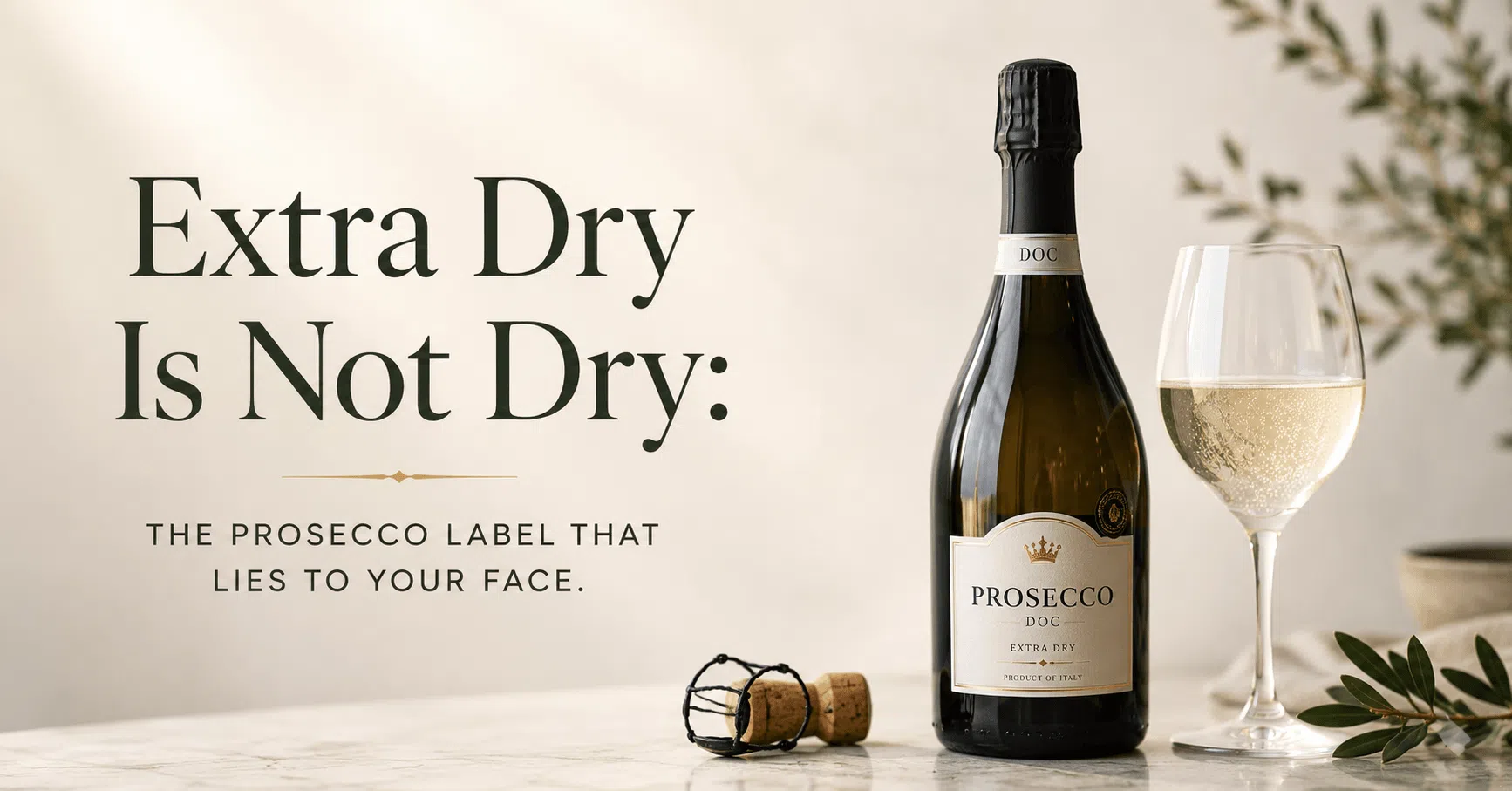
Quick Guide — Prosecco Sweetness Scale
- Driest to sweetest: Brut Nature → Extra Brut → Brut → Extra Dry → Dry (Sec) → Demi-Sec
- “Brut vs Extra Dry: Brut is drier. Extra Dry is sweeter. Despite its name, Extra Dry Prosecco contains more residual sugar than Brut.”
- What to buy for dinner: Brut
- What to buy for a solo afternoon glass with nothing savoury nearby: Extra Dry
- Why the labels seem backwards: Historical leftover — “Dry” used to mean something much sweeter than it sounds today, and the industry never went back to fix it
I’ve watched more than one dinner guest here in Veneto confidently order “the extra dry one” thinking they’re being sophisticated, only to take a sip and get a face full of pear and honey instead of the crisp, savage dryness they were expecting.
I don’t blame them. I made the exact same mistake myself years ago, before I understood how spectacularly upside-down this entire labelling system actually is. Because here’s the thing nobody tells you before you’re standing in front of a fridge full of green bottles trying to make a decision in under thirty seconds: on a Prosecco label, the word “dry” does not mean dry. In some cases, it means the opposite.
Welcome to the strangest naming system in the entire wine world. Let’s fix it, once and for all.
Is Extra Dry Prosecco Sweeter Than Brut?
Yes. Extra Dry Prosecco is sweeter than Brut. Brut is the drier of the two. Which sounds completely backwards, because it is. If you’re choosing between Brut and Extra Dry and want the crisper, drier bottle, choose Brut.
Because, against every instinct your brain has ever developed, “Extra Dry” sits in the middle of the sweetness scale, not at the dry end of it.
Here’s the actual order, from genuinely bone-dry to properly sweet:
| Prosecco Style | Residual Sugar | Sweetness |
| Brut Nature | 0–3 g/L | Bone dry |
| Extra Brut | 0–6 g/L | Very dry |
| Brut | 0–12 g/L | Dry |
| Extra Dry | 12–17 g/L | Slightly sweeter |
| Dry | 17–32 g/L | Sweet |
| Demi-Sec | 32–50 g/L | Sweetest |
Brut Nature (sometimes labelled Dosaggio Zero) is as dry as sparkling wine gets. No sugar added at all. Sharp, austere, occasionally a little unforgiving if you weren’t braced for it.
Extra Brut is nearly as dry, with the faintest whisper of sweetness — just enough to soften the edges without anyone noticing it’s there. Honestly, this one’s a bit of a wallflower. Nobody ever specifically asks for Extra Brut at a dinner party, it just quietly does its job and lets Brut Nature take all the credit for being extreme.
Brut is the one you actually want most of the time. Crisp, balanced, dry enough to sit happily beside food without either one fighting the other. If a bottle of Prosecco doesn’t specify anything else and just says Brut, this is your safest, most versatile choice.
Extra Dry — and here’s where the whole system loses its mind — is sweeter than Brut. Genuinely, measurably sweeter. Soft, round, generous with fruit. Lovely on its own on a warm afternoon. Less reliable next to strongly savoury food.
Dry (or Secco) is sweeter again, despite the label practically screaming the opposite at you.
Demi-Sec is the sweetest tier most producers bother making, properly dessert territory. I have genuine respect for anyone who orders this one confidently and correctly, because it means they’ve actually understood the scale rather than fallen for it — which, given everything I’ve just told you, puts them ahead of most of the room.
Read that list again slowly. The word “dry” appears twice on that scale, and both times it’s lying to you by degrees.
Why Do Sparkling Wine Labels Get This So Backwards?
Because the words got frozen in place a century and a half ago, back when sparkling wine’s whole personality was completely different.
Go back roughly 150 years and Champagne and sparkling wine generally were sweet by default — thick, sugary, the kind of thing served alongside dessert rather than before dinner. When that started to shift and drinkers began wanting something crisper to serve earlier in a meal, producers needed a word for “less sweet than what everyone’s used to,” and “Dry” got the job. Relative to the syrupy norm of the time, it genuinely was the drier option.
Then tastes kept moving in the same direction, drier and drier, and the industry needed a new word for something even less sweet than “Dry” already meant. So “Extra Dry” was born — extra dry compared to the original sweet “Dry,” not extra dry compared to what we’d now consider actually dry.
And then, because apparently nobody stopped to future-proof any of this, tastes kept sliding further still, and the industry ran out of English words for dry entirely. That’s when “Brut” — French for raw, rough, unrefined — got pulled in to describe the genuinely crisp stuff.
Nobody sat down and planned this as a system. It’s a historical pileup, one linguistic patch stacked on top of the last, and we’re all still living with the confusion it left behind.
What Should You Actually Buy?
Ignore the word “dry” entirely and use this instead.
Cooking dinner, serving with food, want something that won’t clash with a savoury dish? Buy Brut. Every time. It’s the safest, most food-friendly choice on the shelf and it will not betray you the way Extra Dry will.
Sitting on a terrace with nothing more complicated than good company and maybe some olives? Extra Dry is genuinely lovely here — soft, generous, easy. This is where it actually shines, provided you know that’s what you’re choosing rather than stumbling into it by mistake.
Dessert on the table? Go straight to Demi-Sec and don’t overthink it.
The trick is simple once you know it: read past the word “dry” entirely and look at where it sits on the actual scale. Brut Nature and Extra Brut for the driest. Brut for your reliable middle ground. Extra Dry and Dry for anyone with a sweet tooth. Demi-Sec for dessert.
Frequently Asked Questions — Prosecco Sweetness Levels
Is Extra Dry Prosecco sweet or dry? Sweet, relative to what the name suggests. Extra Dry sits in the middle of the sweetness scale and is noticeably sweeter than Brut, despite the word “dry” appearing directly in the name.
What’s the driest Prosecco you can buy? Brut Nature (also labelled Dosaggio Zero), followed closely by Extra Brut. Both have little to no added sugar.
Should I buy Brut or Extra Dry Prosecco for dinner? Brut. It’s dry enough to pair well with savoury food without clashing, whereas Extra Dry’s natural sweetness tends to fight against anything that isn’t equally sweet.
Why is “Dry” Prosecco sweeter than “Extra Dry”? Because both terms are leftovers from a 19th century sweetness scale that no longer matches how we use the word “dry” today. The order has never been renamed to match modern expectations, so the confusion has simply stuck around for well over a century.
One Last Thing
I still think the wine industry owes everyone a small apology for this one. Somewhere back in the 1800s, a decision got made that made perfect sense at the time, nobody ever circled back to fix it once the world’s palate moved on, and generations of confused dinner guests have been paying for it ever since.
I’ve said before, in the regional Prosecco guide, that the industry has known about this exact confusion for decades and simply chosen to live with it rather than fix it. Writing out the full history for this post hasn’t made me any less annoyed about that. If anything, now that I know exactly why it happened, I’m almost more irritated — it’s not an accident, it’s just nobody’s problem to solve.
What gets me most, honestly, isn’t even the confusion itself. It’s that somewhere out there, right now, someone is standing in front of a fridge, reading the word “dry” and trusting it completely, about to hand a bottle of liquid pear tart to a table expecting something crisp. There’s nothing to be done about it except tell as many people as possible and hope the word spreads faster than the label ever will.
Consider yourself told.
Want the fuller picture on Prosecco? Read our Complete Guide to Prosecco and Prosecco vs Champagne vs Spumante for everything else worth knowing before your next bottle.
— Kelly 🍷
#Prosecco #WineFacts #ItalianWine #ProseccoGuide #WineTips #SparklingWine
Enjoy wine without the snobbery?
Make The Finest Italian Wine one of your Preferred Sources on Google.
Add The Finest Italian Wine to Preferred SourcesDiscover more from The Finest Italian Wine
Subscribe to get the latest posts sent to your email.



3 Comments