Meet the Christian Brother Who Made Wine

Millions of Americans knew his face. Almost nobody today knows his name.
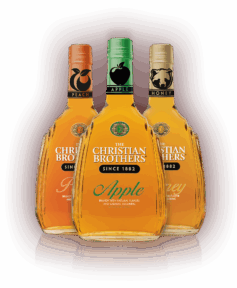
For decades, one man’s warm, easy grin was the face of one of the biggest wine and brandy brands in the country, splashed across advertisements from coast to coast, in full black robe and white collar, looking every bit like your local parish had somehow landed a national ad budget. Ask most people today who Brother Timothy was, though, and you’ll get a blank stare, even from people who’ve had a bottle of Christian Brothers brandy in their own cupboard, usually sitting next to the good stuff, quietly doing the heavy lifting in a lot of forgettable cocktails.
That gap between how famous he was then and how forgotten he is now is the whole story here. And once you know it, there’s a twist at the end that makes it even stranger: the brand carrying his name today has almost nothing to do with the man himself. It’s a bit like discovering the Colonel on the fried chicken bucket was once a real, specific person with actual opinions about frying oil, except this time the man in question had also taken a vow of obedience and was somehow fine with all of it.
Who was Brother Timothy?
Born Anthony George Diener in Elizabeth, New Jersey, in 1910, he joined the De La Salle Christian Brothers — a Catholic teaching order — in 1928, and trained in science at Saint Mary’s College. He spent his early years teaching high school chemistry, which is exactly the kind of quiet, unremarkable career you’d expect for a member of a teaching order.
Then, in his mid-twenties, the order’s leadership asked him to do something else entirely: help run their winery.
Why did a teaching order even have a winery?
Because the wine was never the actual point. The schools were.
The Brothers had been making altar wine at a property in Martinez since the 1880s, mainly to help fund their real mission of running schools for children who couldn’t otherwise afford one. When the operation moved to Mont La Salle on Mount Veeder in Napa Valley, what started as a modest, faith-driven side project slowly grew into something much bigger than anyone had planned for.
By the time Brother Timothy was pulled in, the order needed someone with actual scientific training to take the operation seriously. He’d later joke about the reasoning behind his own recruitment, saying it mostly came down to being “big and strong and young” — which is either a wonderfully unglamorous explanation for how someone accidentally becomes a wine legend, or proof that 1930s HR departments hired winemakers the same way rugby coaches pick a scrum.
How did a wine chemist end up as a household face?
Because someone had to represent the brand publicly, and it turned out he was remarkably good at it.
Christian Brothers grew into one of America’s top-selling wine and brandy labels through the mid-20th century, and Brother Timothy became its face in a long-running national ad campaign. For people who never once set foot in Napa Valley, his grin was simply what “Christian Brothers” looked like. He reportedly even appeared on a nationally televised game show of the era — accounts differ on whether it was To Tell the Truth or What’s My Line? — which means somewhere in America, a live studio audience once watched a panel of minor celebrities try to guess a Catholic Brother’s occupation, and got to be genuinely stumped when “cellarmaster for a major brandy company” turned out to be the correct answer.
He kept wearing his black robe and white collar deliberately, even while doing plainly commercial work, as a visible reminder that the winery’s profits went toward the order’s schools rather than into anyone’s pocket. It’s a detail worth sitting with for a second: an actual advertising icon whose entire brand identity was built on the fact that he wasn’t personally profiting from any of it. Try pitching that to a modern marketing department. They’d ask where the loophole was.
Was he taken seriously as a winemaker, or just a friendly mascot?
Genuinely taken seriously, by people whose opinion carried real weight.
Brother Timothy spent more than fifty years as cellarmaster at Christian Brothers, working alongside the generation that rebuilt California wine after Prohibition — Robert and Peter Mondavi, Ernest Gallo, Joe Heitz, Louis Martini, and André Tchelistcheff among them. In 2007, three years after his death, he was inducted into the inaugural class of the Vintners Hall of Fame at Greystone Cellars, alongside Robert Mondavi and a small handful of the true founding names of American wine. That’s not a courtesy nod to a friendly face on a bottle. That’s an industry recognising a genuine peer.
So what happened to the brand after he retired?
This is where the story turns, and it’s the part almost nobody knows.
Brother Timothy retired in 1989, the same year the order sold the winery to the Heublein spirits conglomerate. Heublein later broke up the Napa Valley properties entirely — Greystone Cellars became the West Coast campus of the Culinary Institute of America, and Mont La Salle became home to The Hess Collection. Today, if you pick up a bottle of Christian Brothers brandy at the supermarket, it’s produced in Madera, in California’s Central Valley, as an inexpensive, mass-market label with essentially no connection to the Napa operation Brother Timothy actually built and ran for half a century.
The name survived. The man behind it, and the winery he actually made, didn’t come with it. Somewhere, a bottling plant in Madera is churning out brandy under a Catholic Brother’s old brand name with roughly the same institutional memory of him that a vending machine has of its manufacturer.
Is there anything left that’s actually connected to him?
There is, and it’s a far better ending than the supermarket bottle deserves.
Each year, The Hess Collection produces a small batch — fewer than 275 cases — of a Cabernet Sauvignon and Chardonnay named in Brother Timothy’s honour, made from grapes grown on the same Mont La Salle vineyard he once tended himself. Every dollar of proceeds goes to the Lasallian Christian Brothers Foundation, funding scholarships for students who couldn’t otherwise afford school, which is exactly the outcome a man who reportedly saw himself as “a Brother first, a winemaker second” would probably have wanted.
He died in 2004 at 94, having spent his retirement tending roses and an orchid collection at the same Napa property where he’d once helped build an American wine empire, without ever personally profiting from a single bottle of it. Millions of people once knew his face from a wine ad. Only a small circle of scholarship students today know his name from something better.
That’s the trade he’d probably have wanted anyway. It’s a different story from the usual celebrity-owned winery piece, where the face on the label is very much still cashing the cheques.
FAQ
Who was Brother Timothy in the wine industry? Brother Timothy, born Anthony George Diener, was a member of the De La Salle Christian Brothers, a Catholic teaching order, who became the winemaker and public face of Christian Brothers Winery in Napa Valley from 1935 until his retirement in 1989.
Is Christian Brothers wine still connected to the original Napa Valley operation? No. After the order sold the winery to Heublein in 1989, the Napa Valley properties were sold off separately. Today’s Christian Brothers brandy is produced in Madera, California, with no operational connection to the historic Napa winery Brother Timothy ran.
Can you still buy wine connected to Brother Timothy? Yes. The Hess Collection produces a small annual batch of Brother Timothy Cabernet Sauvignon and Chardonnay from the original Mont La Salle vineyard, with proceeds donated to a scholarship foundation for disadvantaged students.
Was Brother Timothy a priest or a monk? No. He was a Brother in the De La Salle Christian Brothers, a Catholic teaching order whose members take religious vows but are not ordained clergy and are distinct from monastic orders.
Enjoy wine without the snobbery?
Make The Finest Italian Wine one of your Preferred Sources on Google.
Add The Finest Italian Wine to Preferred SourcesDiscover more from The Finest Italian Wine
Subscribe to get the latest posts sent to your email.