The Real Reason Barolo Gets the Biggest Glass in the House

Go into any trattoria in the Langhe and order Barolo. What lands in front of you looks less like a wine glass and more like a fishbowl that skipped leg day.
Nobody blinks. Ten minutes later you order a Gavi and get something the size of a shot glass wearing a costume.
Same table, same waiter, same restaurant that presumably owns matching glassware. And yet.
For years I figured this was just Italians doing what Italians do — making an ordinary decision look intentional, but it turns out I had it backwards. The giant Barolo bowl isn’t performance. It’s actually the physical answer to a question everyone eventually asks and nobody actually answers: why does red wine get the big glass?
The glass isn’t pouring you more wine
So let’s kill the obvious wrong guess first. Nobody’s being generous. A standard pour is still 125 to 175ml no matter what you’re drinking it out of — a thimble or a punch bowl.
What actually changes is the air. Winemakers call it headspace, and for a wine like Barolo, that empty space above the liquid does more work than the glass’s price tag ever will.
You’re not tasting Barolo. You’re smelling it.
Here’s the part most explainers skip. In fact, your tongue can only clock sweet, sour, bitter, salty, umami. Everything else — the tar, the dried rose, the sour cherry that makes Nebbiolo taste like Nebbiolo — travels through your nose instead.
Which is why the glass’s whole job is aroma management. Spray perfume in a phone booth and it’s a wall of scent with no detail. Spray it in an open room, though, and the notes actually separate. A bigger bowl gives Barolo’s tangle of aromatics somewhere to spread out before they hit you, while a small glass mashes it all into one note.
Nebbiolo needs to breathe more than most grapes do
“Let it breathe” sounds like something a sommelier says to sound important. It’s chemistry, not theatre.
Nebbiolo — the grape behind both Barolo and Barbaresco — shows up young, tight, and tannic. Oxygen is what softens it and coaxes the fruit out from underneath. So a wider glass means more wine surface touching air, which means that softening happens faster, ideally by the time it reaches your mouth and not twenty minutes later, after you’ve already decided you don’t like it.
Think of it as opening the shutters on a Piedmont morning. Nothing in the room changed. You just let more in.
Why Pinot Grigio doesn’t get the same treatment
Barolo, for its part, is complicated — high tannin, high acid, aromatics that keep shifting the longer it sits in the glass. So it needs room to unfold.
A crisp white like Gavi or Pinot Grigio, on the other hand, is built to do the opposite job. It wants to stay cold and stay direct. Put it in a big Barolo bowl and you haven’t upgraded it — you’ve just sped up how fast it goes warm while its lighter aromatics float off into the room and disappear.
Same logic, opposite conclusion. That’s the whole reason a well-run Italian wine list doesn’t standardize glassware: the glass gets matched to the job the wine has to do.
The swirl isn’t for show
Watch anyone taste seriously and eventually the glass starts moving in slow circles. It looks like a performance. Actually, it’s the point.
Swirling coats the inside of the bowl in a thin film, multiplying the surface area exposed to air far past what sitting still would do. A narrow glass gives that swirl nowhere to go, but a wide Barolo glass gives it room — and every rotation releases another wave of aroma that was sitting dormant.
The shape is doing as much as the size
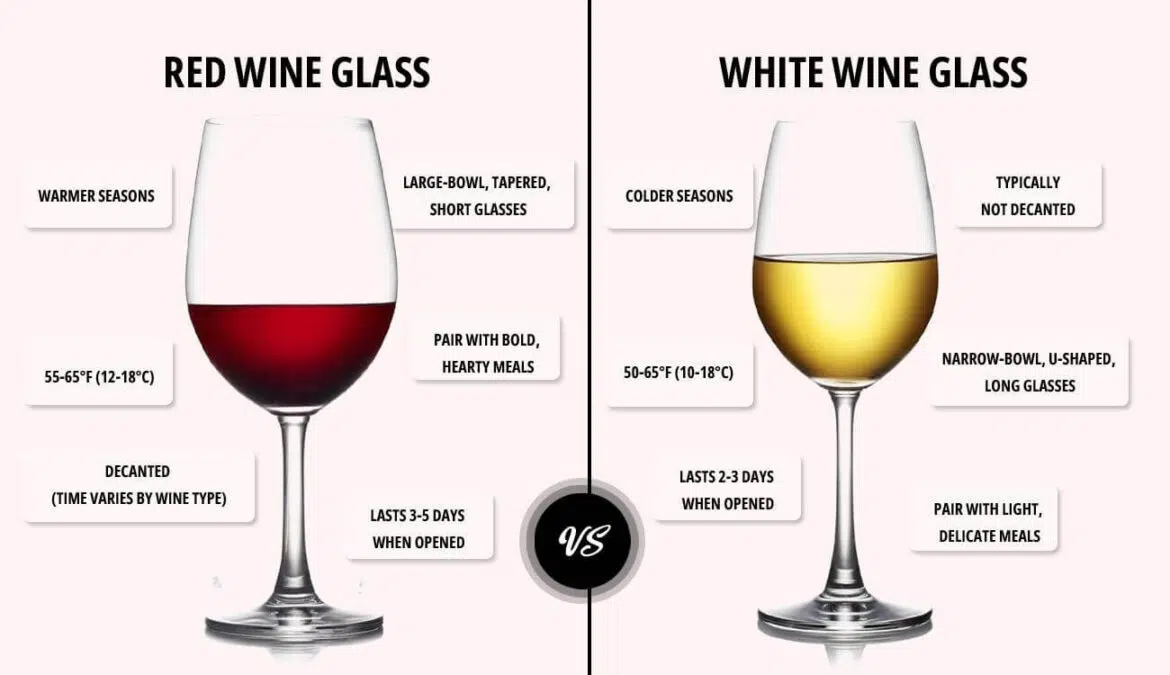
Wide bowl, narrow rim. Not an accident of glassblowing, but a funnel.
The wide base gives the wine somewhere to release aroma. The narrow rim then concentrates that aroma into a stream aimed at your nose, instead of letting it scatter into the dining room. Take the taper away, and you’d smell less. Since smell is doing most of the actual tasting, you’d taste less too.
So does the glass really change how it tastes?
Not chemically. The Barolo in the bottle is identical no matter what you pour it into. What changes, instead, is how much of it actually reaches you, and in what order — some glasses direct the first sip toward the front of your mouth, others spread it across your whole palate at once.
With something simple, the difference is minor. But with something as layered as Barolo, it’s the difference between hearing a song on a phone speaker and hearing it on real speakers. Same recording. Not the same experience.
The one mistake nearly everyone makes
Filling the glass past its widest point.
That big Barolo bowl looks like an invitation to pour generously. It’s actually the opposite. Professional pours stop at or below the widest part of the glass, because going past it erases the exact headspace the oversized bowl exists to create. So next time an Italian waiter pours what looks like a stingy half-glass into an enormous bowl, that’s not stinginess. That’s someone who knows exactly what they’re doing.
You don’t need to spend a fortune to get this right
Shape beats prestige, every time. A well-designed €12 glass with a generous bowl will outperform an €80 crystal one, as long as the proportions are right. So spend your money on the Barolo first. Upgrade the glass whenever you feel like it — your nose will notice the shape long before it notices the brand etched into the base.
What nobody actually says out loud in Piedmont
There’s no laminated card explaining any of this at a Langhe trattoria. Nobody’s citing headspace ratios. Someone just hands you the big glass for the red and the small one for the white, because that’s what their parents did, and their parents before them. The reasoning got lost a few generations back, but the habit stuck around anyway, because it worked.
So next time someone side-eyes their Barolo pour and mutters that the place is being cheap with a glass that big, you’ll know better. That’s not a stingy pour. That’s a glass that understands Nebbiolo better than most people at the table ever will.
Continue Exploring
- The Barolo Rule That Forces Winemakers to Wait 38 Months Before Selling a Single Bottle
- The Italian Wine Rule That Confuses Almost Every Tourist
- Where Did Wine Really Originate From?
- Why Are Wine Bottles Always 750ml? Here’s the Real Reason
Enjoy wine without the snobbery?
Make The Finest Italian Wine one of your Preferred Sources on Google.
Add The Finest Italian Wine to Preferred SourcesDiscover more from The Finest Italian Wine
Subscribe to get the latest posts sent to your email.