Why the Prosecco Grape Doesn’t Exist Anymore
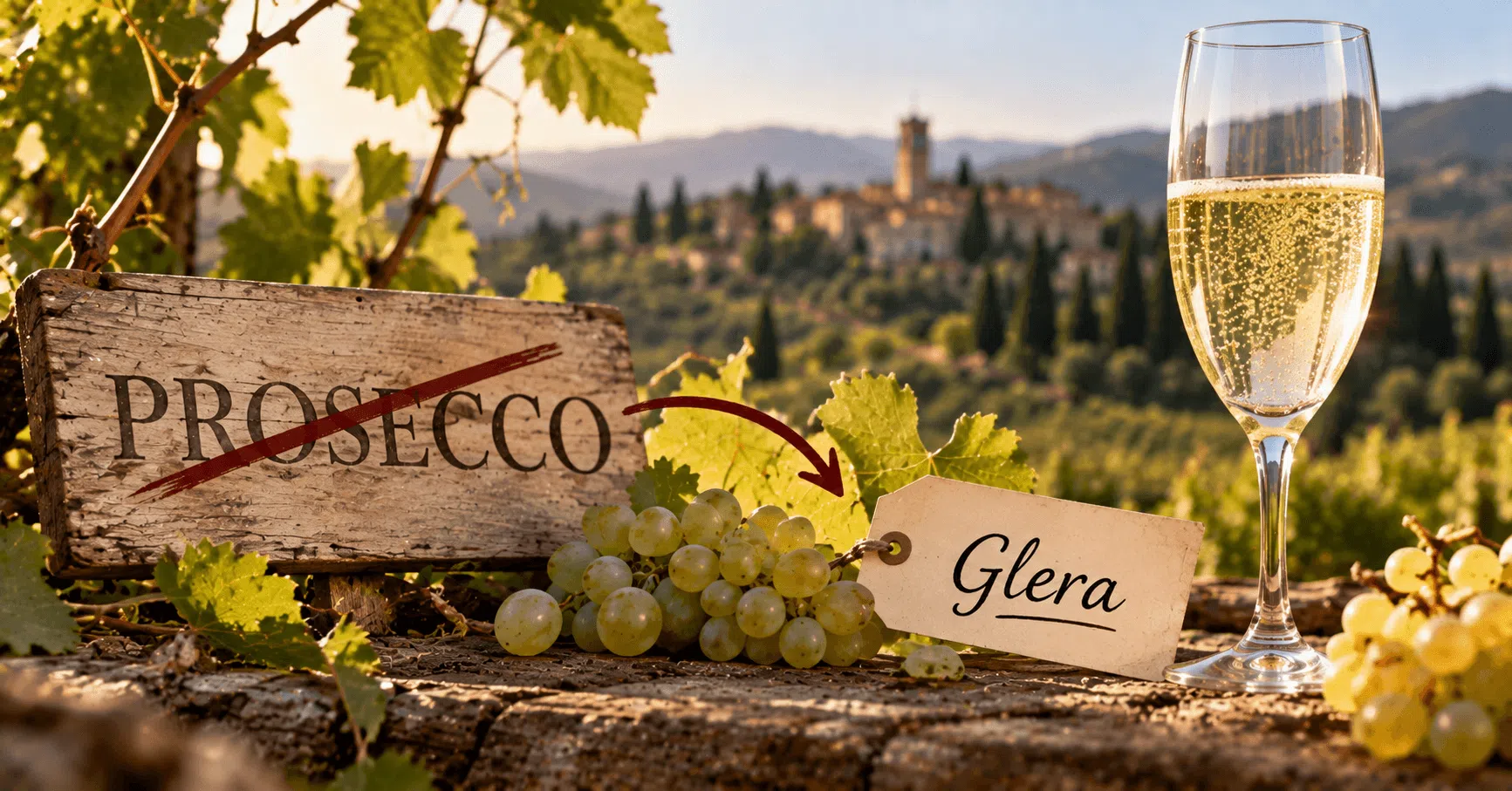
Here’s a sentence that sounds made up but isn’t: officially, the grape that makes Prosecco isn’t called Prosecco. Hasn’t been since 2009. Its legal name is Glera, and almost nobody outside the wine trade has ever heard of it.
Italy didn’t rename the grape because a scientist discovered something new about its genetics. It renamed the grape for one reason. That was the only way to win a fight over who gets to use the word “Prosecco” at all. This is the story of one of the cleanest legal maneuvers in the entire wine industry. It worked so well that most people drinking Prosecco right now have no idea it happened.
Quick Facts
- Until 2009, the grape used to make Prosecco was itself called Prosecco, named after a village near Trieste
- In 2009, Italy officially renamed the grape to Glera, an old, obscure regional synonym nobody used
- That single move let Italy register “Prosecco” as a protected geographic name instead of a generic grape variety
- Producers outside Italy, including in Australia, who had been legally selling their own “Prosecco” for years, lost the right to use the name in EU markets
What Prosecco Actually Used to Mean
Before 2009, “Prosecco” meant two completely different things at once, and that was the whole problem.
It was the name of a grape variety, a light, aromatic grape believed to date back to Roman times. That grape took its name from Prosecco, a small village near Trieste on Italy’s border with Slovenia. And it was the name people used, loosely, for the sparkling wine made from it. Mostly in Veneto’s Conegliano and Valdobbiadene hills, the same rolling countryside behind the wine vacations we’ve sent readers to.
That overlap seems harmless until you realize what it actually meant legally. Grape variety names are fair game everywhere. Anyone in the world can plant Merlot, Chardonnay, or Sangiovese. They can call the resulting wine by that grape’s name no matter which country grew it. If “Prosecco” was a grape variety name, technically, so was any sparkling wine made from it, no matter where someone grew it.
The Rule That Forced Italy’s Hand
Protected place names play by a completely different rulebook. You can’t slap “Champagne” on a bottle unless the wine actually comes from Champagne, France. Champagne is a place, not a grape, and no amount of good intentions in the Barossa Valley changes that.
Here’s Italy’s problem. It wanted that same iron-clad protection for Prosecco. One small snag: at the time, “Prosecco” was also the legal name of the grape, and wine law has a rule nobody thinks about until it bites them. A place name can’t double as a grape variety name. Prosecco spent the 2000s becoming a global sensation, which is exactly when this technicality turned expensive. Producers in Australia had been legally growing the grape and bottling it as Prosecco for years. They weren’t cheating. They weren’t even bending a rule. The grape’s name belonged to everybody, and Italy had no legal leg to stand on.
How Italy Solved It: Rename the Grape, Trademark the Place
So in 2009, Italy did something almost embarrassingly simple. It renamed the grape. Prosecco became Glera, an obscure regional synonym so dusty that even most Italian winemakers had never used it. Nobody discovered anything new about the grape’s DNA. Nobody ran a single lab test. A committee just picked an old word off a shelf and declared it official.
That one signature freed up the word “Prosecco” to mean something else entirely: a place, not a plant. Italy immediately created a new protected designation, “Prosecco di Conegliano e Valdobbiadene,” locking the name to a specific patch of hillside in Veneto. The same DOCG system already protecting Chianti and Barolo kicked in here too. Prosecco stopped being a grape you could grow anywhere. It became a piece of geography with a lock on the door, and Italy held the only key.
What It Meant for Everyone Else
For Italian producers in Veneto, the change was a win. Prosecco became theirs, protected the same way Champagne belongs to one region of France.
For everyone else, it was the opposite. Australian producers had built real businesses around a name they’d used legally for years. Suddenly, that name was off-limits in European markets. Trade agreements followed. New Zealand signed a deal with the EU requiring its producers to phase out “Prosecco” on their labels. They’d grown the grape and used the name in good faith for years, and none of that mattered anymore.
Not everyone accepted the new name quietly. Respected wine authorities, including Jancis Robinson, kept calling the grape Prosecco long after 2009. They treated “Glera” as a legal fiction invented for trade purposes, not a real ampelological correction. They weren’t entirely wrong. The grape didn’t change. Only the paperwork did.
Frequently Asked Questions
Is Glera the same grape as Prosecco? Yes, genetically it’s identical. Only the official name changed, in 2009, for legal reasons rather than scientific ones.
Can other countries still legally call their sparkling wine Prosecco? Not for sale in the EU. Producers elsewhere can still grow the Glera grape. But using the word “Prosecco” on a label now requires the wine to come from the protected Italian zone.
Why didn’t the same thing happen to Champagne or Chianti? Because those names were never also grape variety names. Champagne comes mostly from Chardonnay, Pinot Noir, and Pinot Meunier, none of which share Champagne’s name. Prosecco was the rare case where the grape and the wine shared the same name. That’s exactly what created the legal loophole in the first place.
Does any of this affect how Prosecco actually tastes? Not even slightly. The grape in your glass is the same grape it always was. Only its passport changed.
Most wine drinkers assume rules like these exist to protect quality. This one existed to protect a word. Prosecco tastes exactly the way it always has. Only its paperwork changed, and that paperwork was worth fighting an international trade battle over.
— Kelly 🍷
#ItalianWine #WineFacts #Prosecco #Glera #WineLaw
Continue Reading
Enjoy wine without the snobbery?
Make The Finest Italian Wine one of your Preferred Sources on Google.
Add The Finest Italian Wine to Preferred SourcesDiscover more from The Finest Italian Wine
Subscribe to get the latest posts sent to your email.