How a British Soap Merchant Accidentally Invented Marsala, Sicily’s Most Famous Wine
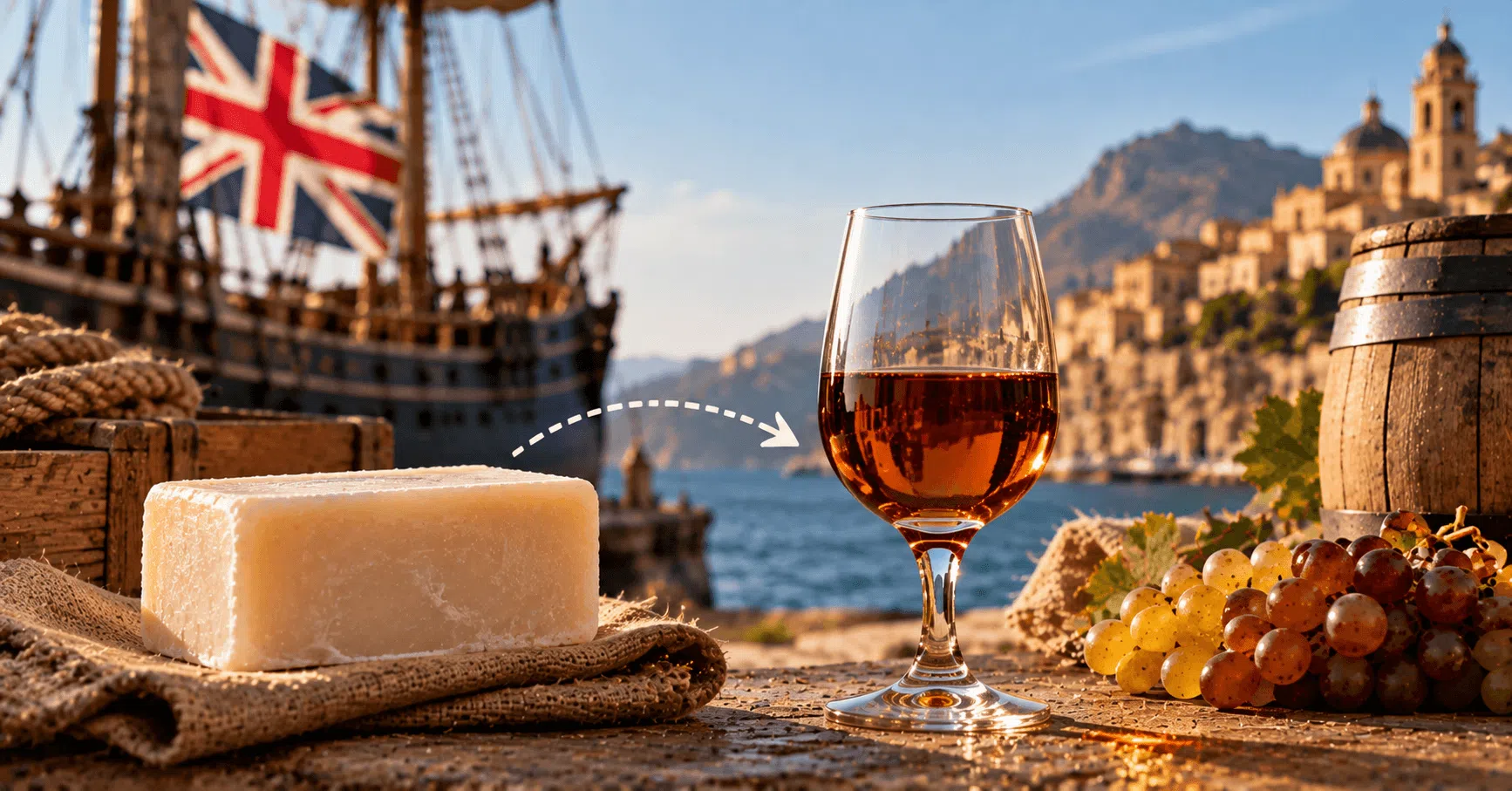
Marsala wine gets marketed as pure Sicilian tradition. Old-world, sun-baked, passed down through generations of Sicilian winemaking families. Here’s the part that never makes it onto the label: the man who built the entire industry wasn’t Sicilian. He wasn’t even a winemaker. He was an English merchant who came to Sicily to buy soap ingredients and stumbled onto wine almost by accident.
His name was John Woodhouse, and without him, Marsala as the world knows it probably wouldn’t exist.
Quick Facts
- In 1773, English merchant John Woodhouse arrived in Sicily to trade barrilla, a soda ash used in soap and glass making, not wine
- He fortified the local wine with brandy to survive the sea voyage back to England, creating what became Marsala wine
- Admiral Horatio Nelson personally ordered around 200 pipes, roughly 110,000 liters, of Marsala for his fleet in 1798
- The Italian Florio family didn’t enter the business until 1833, and only bought out Woodhouse’s original firm decades later
The Merchant Who Wasn’t Even Looking for Wine
In 1773, John Woodhouse sailed into the port of Marsala on Sicily’s western coast. He was there for barrilla. That’s a soda ash used to make soap and glass, one of the era’s less glamorous trade goods.
While he was there, he tried the local wine. Sicilian winemakers had been aging it in wooden casks for generations. Woodhouse noticed it tasted remarkably similar to the Spanish and Portuguese fortified wines already popular back home in England. He saw an opportunity that had nothing to do with soap.
The Trick That Made Marsala Possible
Wine doesn’t survive months at sea particularly well. Left alone, it keeps fermenting, picks up off flavors, and can arrive undrinkable. Portuguese producers had already solved this problem for Port. Spanish producers had solved it for Sherry. Woodhouse used the same fix: he added distilled spirit to the wine before shipping it.
That fortification did two jobs at once. It raised the alcohol content high enough to stop unwanted fermentation in the barrel. It also helped the wine hold its flavor across a long voyage. Woodhouse eventually refined this into a continuous blending system called in perpetuum. It works a lot like the solera method used for Sherry: older and younger wines blend together over time instead of staying separate by vintage.
He returned to Sicily. By 1796, he was producing and shipping Marsala commercially. What started as a workaround for a shipping problem became the entire identity of the wine.
The Admiral Who Made It Famous
Marsala’s biggest early break came from an unlikely source: the Royal Navy.
Admiral Horatio Nelson met Woodhouse’s son in 1798 while operating in the Mediterranean. The two struck up a regular correspondence. Nelson placed an order for roughly 200 pipes of Marsala, somewhere around 110,000 liters, to provision his fleet. Writing to his superior officer, Lord Keith, Nelson called the wine “so good that any gentleman’s table might receive it.” He added that “it will be of real use for our seamen.”
Nelson’s service in Naples and Sicily earned him the title Duke of Bronte in 1799. Woodhouse set aside one particularly good cask and named it Bronte Marsala in his honor. A soap merchant’s shipping fix had just become a drink fit for a duke.
How the British Handed It to the Italians
Woodhouse wasn’t even the last Englishman to smell the opportunity. In 1806, a merchant from Leeds named Benjamin Ingham showed up and pushed Marsala into markets across Europe and the Americas. Ingham’s family eventually merged with the Whitakers, who brought vineyards the size of small towns and a banking fortune to match. At this point, transplanted Brits with excellent business instincts ran almost the entire industry behind the most “Sicilian” wine in the world.
Actual Sicilians didn’t get a real foothold until 1833, when local entrepreneur Vincenzo Florio bought land and started his own production. Even then, he didn’t buy out Woodhouse’s original firm until decades later, in the late 1800s, before Marsala finally landed back in Italian hands. Florio and Pellegrino are still the biggest names in Marsala today, running an industry two Englishmen basically built from scratch.
So the wine now sold to tourists as authentically, historically Sicilian has a more complicated past. British families built it, named it, fortified it, and marketed it for its first several decades. The most Sicilian thing about it might be how completely that story gets glossed over.
Frequently Asked Questions
Is Marsala wine sweet or dry? Both exist. Marsala comes secco (dry), semisecco (semi-sweet), or dolce (sweet), depending on residual sugar. The sweeter styles are the ones most people recognize from dessert wine lists and classic Italian food pairings.
Do people still cook with Marsala, or is it mainly for drinking? Both, and cooking is arguably how most people encounter it today. Chicken Marsala and veal Marsala both lean on the wine’s fortified sweetness and depth to build their sauce.
Is Marsala still made by British families today? No. Florio’s 19th-century buyout of Woodhouse’s firm ended British ownership of the major Marsala houses. Italian companies run production today, chiefly Florio and Pellegrino.
What does “in perpetuum” actually mean? It’s a continuous blending method. Wine from different years gets combined into the same barrel system over time, instead of each vintage staying separate. It’s closely related to Sherry’s solera system, and it’s part of why older, more complex Marsala styles taste the way they do.
Marsala gets sold as one of Sicily’s oldest traditions, and in a sense, it is. It just happens to be a tradition an Englishman invented while looking for soap ingredients, a merchant from Leeds perfected, and an actual Sicilian only bought back decades later. Sometimes the most “authentic” story is the one nobody puts on the label.
— Kelly 🍷
#ItalianWine #WineFacts #Marsala #Sicily #WineHistory
Continue Reading
- Discover Salty Wines: A Unique Flavor Experience from the Sea
- Best Wines for Cheese Boards: Pairing Guide for Wine Lovers
- Fun Facts About Italian Wines
Enjoy wine without the snobbery?
Make The Finest Italian Wine one of your Preferred Sources on Google.
Add The Finest Italian Wine to Preferred SourcesDiscover more from The Finest Italian Wine
Subscribe to get the latest posts sent to your email.