“Up to 80%” Funding for Italian Wineries: What the Headline Never Tells You
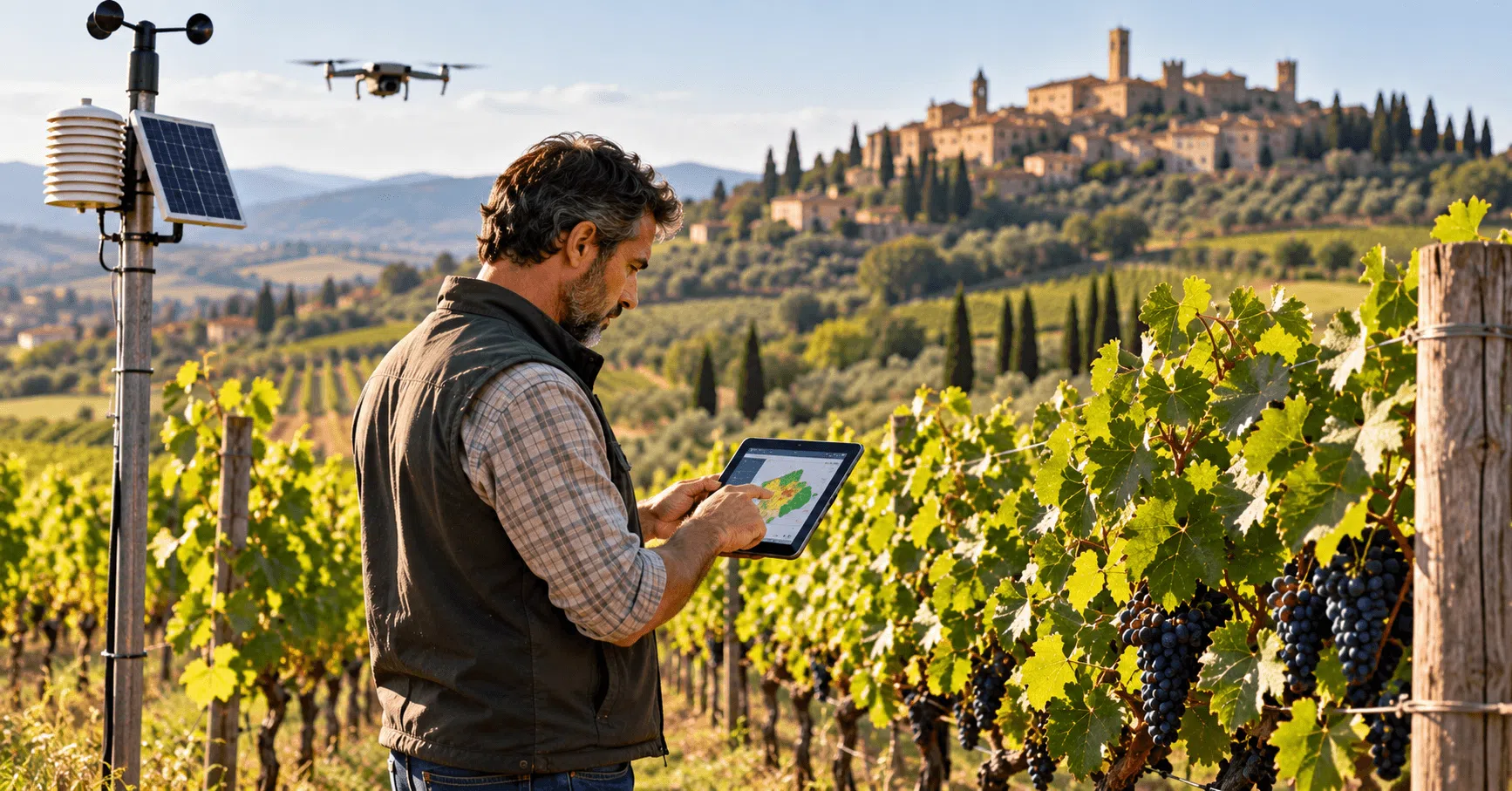
You know that shop sign that says “up to 70% off”? Everyone walks in picturing the leather jacket at 70% off, and everyone walks out with a scarf at 12%. Funding headlines are the same trick in a nicer suit. When Italy announced in 2026 that it could cover up to 80% of certain winery investments, plenty of people pictured a cheque for the whole shiny drone. That’s the story of Italy winery sustainability funding, and it’s a better one than the headline, because the lessons outlast any deadline.
Quick Facts
- Italian wineries can get public money for green upgrades, but through several separate schemes, not one grant
- “Up to 80%” is a ceiling. The real rate depends on the scheme, the region and the project
- The money passes through Brussels, Rome, a paying agency and a region before it reaches a winery
- Spending usually has to start after the application, not before
- The 2026 figures here are a dated example, so check current rules before relying on them
Italy Winery Sustainability Funding: Who Actually Pays?
Think of a relay race run by people who have never met. The baton starts in Brussels, where EU farm rules, including Regulation (EU) 2021/2115, let member states support sustainable investment in the wine sector. It passes to Rome, where the agriculture ministry writes the decree. Then to AGEA, the paying agency, which works with the regions on the detailed lists. Finally the regions decide how generous to be, and only then does the winery get to run its leg.
The catch is that every runner can shorten the stride of the one before. Rome sets a ceiling, and a region can set a lower one. So a national headline can be perfectly true and still not describe the form a winemaker in Piedmont or Puglia will actually fill in.
“Up To” Is Doing a Lot of Work
Take a producer planning a qualifying €50,000 project:
| What happens | Producer receives | Producer pays |
|---|---|---|
| Full 80% rate applies | €40,000 | €10,000 |
| Region sets 50% | €25,000 | €25,000 |
| Money runs out, or project not approved | €0 | €50,000 |
Same machine, same winery, three very different bank balances. These schemes have budgets, which means eligible and funded are two different things. If the pot runs dry, a ranking decides, and being right on paper doesn’t win.
Several Doors, Not One Grant
Here’s the part the headlines skip. “Italy pays 80%” usually means one of several schemes. There’s a new measure for sustainable vineyard investments, with 80% as its ceiling. There’s vineyard restructuring and conversion, which normally pays 50% but can rise to 80% when a technical report proves a positive environmental contribution. And there are winery investments in cellars and treatment plants, normally 40% but able to reach 80% for climate and sustainability projects. ItaliaOggi reported those last two changes in September 2026, while the amending decree was still awaiting publication, so anyone applying should read the final text. Each door has its own rules, and walking through the wrong one is how people lose months.
Your Region Matters More Than Your Ambition
A winemaker in Veneto can’t assume the rules match Tuscany’s. Regions can choose which investments to fund, set minimum and maximum spending, lower the percentage and decide how to rank applicants.
Trentino shows how much this matters. Its rules, updated in October 2026, require at least 0.7 hectares of vines and cap each application at €80,000. They also strike several machines off the list, including a multispectral drone for precision monitoring and precision-sensorised defoliators and pre-pruners. Yes, a drone. The national decree names drones as an example of what might qualify, and one kind still lost its seat at the table. I love that detail, because it’s the whole lesson in one sentence: “example” and “approved” are not synonyms.
The Rule That Catches People: Apply First, Spend Second
Imagine eating a very expensive dinner and then asking whether the restaurant takes your voucher. That’s what it’s like for a producer who buys the equipment before applying. Under the 2026 measure, operations and spending count only if they begin after the application is submitted. Buy the machine in a burst of enthusiasm and it may not count at all.
It’s one of the oldest traps in public funding, and it has nothing to do with wine. A big percentage makes people impatient, and impatience is expensive.
So Is It Worth Paying Wineries to Go Green?
I think it is, with a condition. Italian wine is built on place, and place is changing. Hotter summers and unpredictable rain have pushed harvests earlier, which I covered in how global warming is transforming Europe’s wine industry. A sensor doesn’t make a Nebbiolo less Italian, and a drone can’t stop a hailstorm, but better information helps a grower decide when to pick, spray or irrigate.
The condition is who actually gets through the paperwork. If the 80% mostly reaches estates that can afford someone to fill in the forms, then public money has helped the comfortable. The real test is whether a family with a few hectares and no consultant can use it too. I’d judge any scheme like this by that, not by the percentage in the headline.
Does it make wine cheaper? Don’t count on it. If price is your priority, my Best Italian Wines Under €20 list is still the better tool.
The 2026 Snapshot (Check Before Relying on It)
This is how the new sustainable-investment measure looked when this was written in October 2026, under Ministerial Decree No. 381401 of 4 August 2026, published in the Gazzetta Ufficiale on 30 September 2026:
| Detail | 2026 position |
|---|---|
| Maximum aid | 80% of eligible costs, with regions able to set lower |
| Who can apply | Farm entrepreneurs, cooperatives running their own vineyards, agricultural companies and public viticulture schools that grow grapes. Businesses in difficulty are excluded |
| Examples named | Sensors, drones and sprayers, with detailed lists left to AGEA and the regions |
| First deadline | 30 November 2026 (2026/2027 campaign) |
| Ordinary deadline | 30 March each year |
| Ranking due | 19 February 2027 |
Trentino said an extension was being discussed, but nothing was confirmed when I looked. This isn’t legal or financial advice, so check the current regional and AGEA instructions before committing any money.
Frequently Asked Questions
Does Italy really pay 80% of a winery’s sustainability investments? Up to 80% of eligible costs, for qualifying projects. It’s a ceiling, and regions can set lower rates.
Is there one national grant every winery can apply for? No. There are several schemes, such as sustainable vineyard investments, vineyard restructuring and winery investments, each with its own rate and rules.
Who decides what equipment qualifies? The national decree gives examples, but detailed lists come from AGEA and the regions, which can remove items.
Can a winery buy equipment before applying? Under the 2026 measure, no. Spending must begin after the application is submitted.
Does public funding make Italian wine cheaper or better? Not directly. It may help producers adapt to a changing climate, but prices depend on many other factors.
Where do I find the current rules? In the latest decrees and your region’s instructions, since rates and deadlines change.
One Last Thing
Italy built its wine reputation on doing things the way they’ve always been done, and now it’s quietly deciding which new tools will protect that reputation. I find that rather moving, and rather bureaucratic, which is a very Italian combination.
So next time you see a big funding number, ask three things. Is it a ceiling? Who sets the final rate? And what do I have to do before I spend a single euro? Those questions will outlast any deadline.
Do you think public money should help wineries adapt to a hotter climate, or should they pay for it themselves? I’d like to know where you stand.
— Kelly 🍷
#ItalianWine #WineIndustry #ClimateChange #SustainableWine
Continue Reading
- The Uncorked Consequences: How Global Warming Is Transforming Europe’s Wine Industry
- Best Italian Wines Under €20
Sources
- Edotto: Vino, aiuti fino all’80% per investimenti sostenibili (in Italian)
- EC News: Vitivinicolo, investimenti sostenibili, domanda entro il 30 novembre (in Italian)
- Provincia autonoma di Trento: Intervento W006, Investimenti sostenibili nel vigneto (in Italian)
- ItaliaOggi: I contributi per ristrutturare o riconvertire i vigneti salgono all’80% (in Italian)
- Italian Ministry of Agriculture, Decree No. 381401 of 4 August 2026, published in the Gazzetta Ufficiale on 30 September 2026
Funding rates, eligibility and deadlines change. Check the latest regional and AGEA instructions before making any financial commitment.
Enjoy wine without the snobbery?
Make The Finest Italian Wine one of your Preferred Sources on Google.
Add The Finest Italian Wine to Preferred SourcesDiscover more from The Finest Italian Wine
Subscribe to get the latest posts sent to your email.