What Actually Happens at a Wine Tasting in Italy? A First-Timer’s Guide
The first time you book a wine tasting in Italy, there are questions nobody seems to answer. Do you just walk in? How many wines are you actually going to get? Are you supposed to finish every glass, and do you have to buy a bottle afterward? What if you don’t know the difference between tannins and Tuesday?
And perhaps most importantly: if they hand you a bucket, are you genuinely expected to spit wine into it in front of other human beings?
Yes. We’ll get to that.
Italian winery visits look very relaxed in photographs. Beautiful vineyard, stone cellar, elegant glasses, somebody holding a bottle against the afternoon sun as though the whole scene happened by accident. What the photograph doesn’t show is you sitting in the car park ten minutes earlier, wondering whether you’re supposed to knock. So here’s what an actual first wine tasting in Italy looks like, bucket and all.
Quick Facts
- Most Italian wineries expect advance booking rather than walk-ins, especially smaller family estates
- Tasting pours are small on purpose. Spitting is completely normal at serious tastings, not rude or unusual
- Buying wine afterward is a separate decision from paying for the tasting, unless the winery says otherwise
- A proper visit with a vineyard or cellar tour runs well past “just a quick glass.” One or two wineries is plenty for one day
Booking a Wine Tasting in Italy: What to Check First
A winery isn’t necessarily a wine bar with vineyards attached. Many Italian wineries are working agricultural businesses. The person who’d normally welcome you might be in the cellar, out in the vineyard, or doing one of the approximately four thousand other things required to turn grapes into something you’ll eventually drink while saying, “oh, that’s nice.” Unless a winery specifically welcomes walk-ins, book ahead. Larger estates may run dedicated tasting rooms with regular hours. Smaller family wineries might only offer a few visits a day, or on particular days. And during harvest, the grapes do not reschedule themselves because you’ve arrived from Manchester. Book.
Pay attention to what you’re booking, too, because the words “wine tasting” have become surprisingly flexible. It might mean three wines at a counter, or a vineyard walk and cellar tour with five wines. It might mean wine with cheese and salumi, a vertical tasting of different vintages, a full lunch, or an afternoon involving bicycles, olive oil and enough food to make dinner increasingly theoretical. Italian wine tourism has moved well past lining up four glasses on a counter, which is a whole topic in itself: I’ve argued elsewhere that this shift isn’t entirely good for the wine. For booking purposes, the practical takeaway is simpler: when a €20 tasting and a €90 “wine experience” both get labeled degustazione, read the actual description. They can be very different afternoons.
What Happens When You Arrive
Usually, somebody welcomes you and explains the estate and what you’ll be doing. If you’ve booked a guided visit, you might start in the vineyard, hearing about the grapes, the soil, the family, the vintage, and why this particular hill is apparently better than the hill three hundred metres away. Before you dismiss that last part as wine drama, sometimes those differences genuinely matter.
Then you head inside, through fermentation tanks, barrel rooms, bottle-ageing areas, and historic cellars if the estate has them. Visit Valpolicella at the right time of year and you might see grapes drying for Amarone. Visit Franciacorta and you might catch bottles going through the traditional-method sparkling process. Spend any time in Barolo, and you will almost certainly leave knowing considerably more about Nebbiolo than you knew there was to know. This part never gets old for me. The bottle stops being a bottle. You see where it actually came from.
The Wine Itself: How Many Glasses, and in What Order
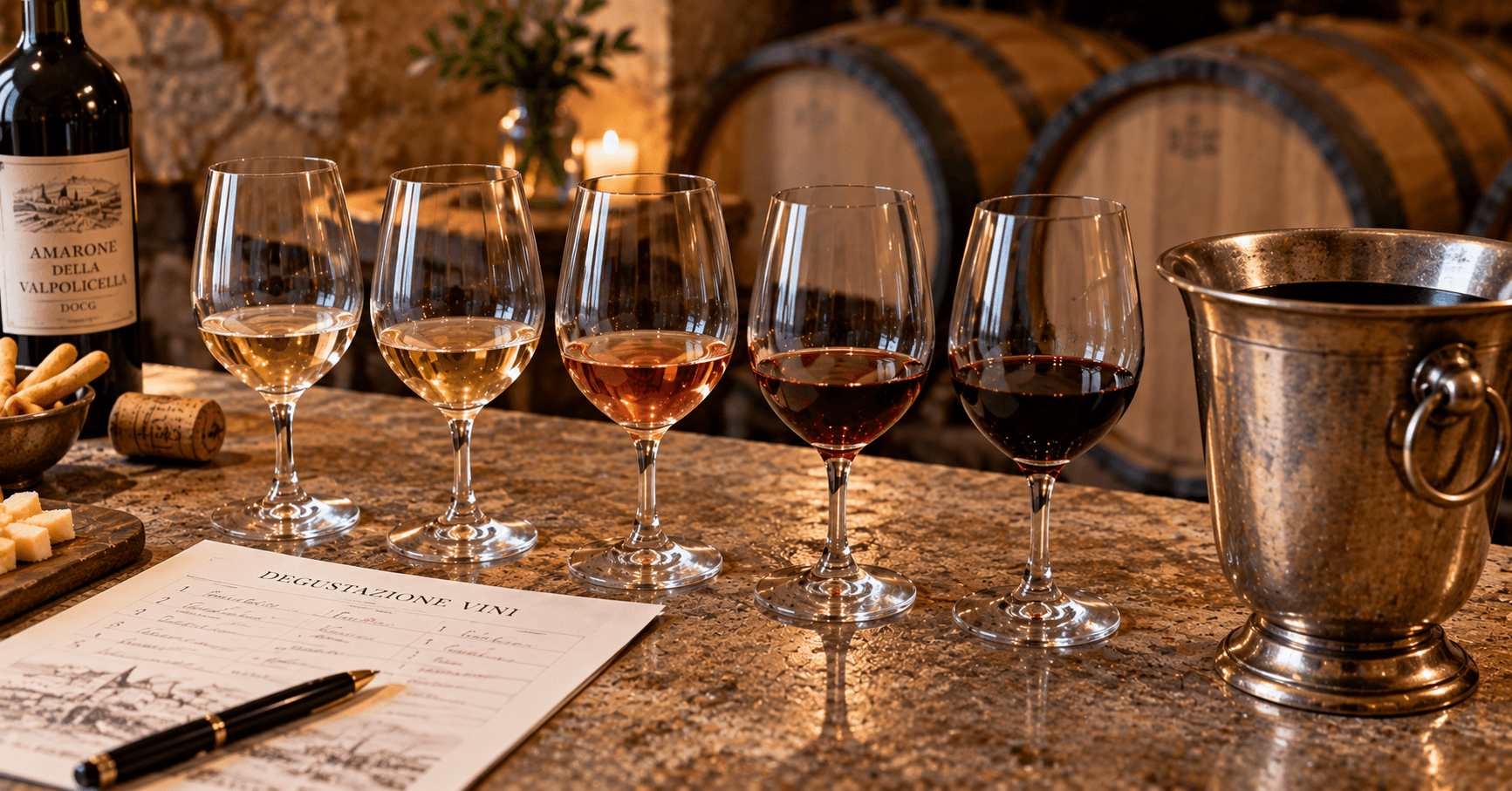
Depending on what you’ve booked, you may taste three wines, four, five, or more, usually poured one at a time or presented as a flight. These flights tend to move from lighter wines to fuller, more structured ones: whites before powerful reds, younger wines before older ones, everyday bottles before the one the producer has been waiting forty-five minutes to show you. These are tasting pours, not restaurant-sized glasses, unless somebody has made a very unusual business decision. The point is to experience several wines without requiring someone to roll you back to your hotel afterward.
Do You Need to Know What You’re Doing, and Can You Actually Spit?
No, you don’t need to know what you’re doing. Please don’t postpone visiting an Italian winery until you’ve acquired a certificate and learned to identify seventeen varieties of wet stone. You’re allowed to simply like wine. Look at the colour, smell it, taste it slowly, compare one glass against another, and ask questions. If you smell cherries, say cherries. If everybody else smells violets and you don’t, the tasting police will not arrive. And if the winemaker announces notes of tobacco, leather and forest floor while your brain is confidently reporting “red wine,” that’s fine too. Your palate learns by tasting, which is rather the point of being there.
As for the bucket: yes, you can spit, and yes, you should feel free to. At many serious tastings, especially when several wines are being poured, you’ll see a spittoon, which may look like a small metal bucket or a surprisingly elegant object designed specifically to make spitting seem less like spitting. Professionals use them. Nobody will think you’re insulting the wine. Spitting lets you properly taste a wine without taking on all its alcohol, which matters more than you’d think once several wineries are on the day’s itinerary.
You also don’t have to finish every glass. A tasting isn’t a challenge. If you don’t like something, leave it, and use whatever container is offered for the remainder before the next pour. Four wineries, times five wines, times “I don’t want to be rude,” is exactly how sensible holiday plans start to deteriorate. The bucket is your friend. It has seen worse.
Will There Be Food, and Do You Have to Buy Wine Afterward
Maybe, on the food front. Some tastings include nothing beyond the wine. Others bring bread, crackers, cheese, salumi, olive oil or small regional dishes, and more elaborate experiences might run to a full pairing or lunch. This is where Italian wine tasting gets genuinely enjoyable. Wine tends to make more sense beside the food of the place that made it: Chianti with Tuscan food, Nebbiolo with Piedmontese dishes, Amarone with the rich food of Veneto, a local white beside seafood somewhere you can actually see the sea. Suddenly you’re not trying to remember whether somebody said “medium-plus acidity.” You’re understanding why people in that region have been drinking that wine for generations, which is a much better lesson.
As for buying wine, that question causes far more anxiety than it should. If you’ve paid for a tasting, purchasing bottles afterward is generally a separate decision, unless the winery has specified otherwise. So don’t spend the whole visit wondering whether skipping a case of wine will cause a diplomatic incident between your country and Italy. If you genuinely loved something, buying directly from the producer is one of the nicest parts of the experience, and you may find bottles that aren’t easily available at home. Some wineries have their own arrangements around tasting fees and purchases, so check the individual policy. But please don’t buy a bottle you didn’t actually like just because the winemaker is standing there. That bottle will follow you home and judge you from the kitchen.
How Much Time to Budget, and Why Four Wineries a Day Is a Trap
Allow more time than you think. Once you add a vineyard or cellar tour, conversation and the tasting itself, a winery visit can take considerably longer than the quick glass of wine you might have imagined. Which is exactly why I wouldn’t pack four proper visits into one day. On paper, 10:00, 12:00, 14:00 and 16:00 looks efficient. In reality, your first visit runs late because the owner opens another bottle, then somebody starts explaining their grandfather, then you’re hungry, then lunch takes two hours because this is Italy and lunch has no interest in your spreadsheet. By 16:00 you’re racing through Tuscany with Google Maps shouting at you while trying to appreciate Sangiovese.
One or two proper winery experiences in a day is plenty for most people. That’s not just my opinion either: it’s the same number my step-by-step guide to planning an Italian wine vacation lands on, for exactly this reason. Leave space for Italy to interfere with your itinerary. It usually has better plans than you did.
A Few Things Nobody Tells You Before Your First Tasting
You don’t need to dress up. Comfortable, presentable clothing is normally fine, though practical shoes help if the visit involves walking through vineyards, which contain dirt, and your shoes have been warned. Don’t drown yourself in perfume beforehand, either. You’re supposed to be smelling the wine, and if your perfume enters the cellar three minutes before you do, things get more difficult for everyone.
Tipping doesn’t need to dominate your thoughts. A paid winery tasting in Italy isn’t automatically treated like an American restaurant bill where you’re expected to calculate another percentage at the end. Practices vary by venue and type of service, so there’s no single rule to memorize. Children are a separate question. Some Italian wineries have become remarkably family-friendly, with vineyard walks, picnics and outdoor activities. Others offer experiences clearly designed for adults. Check before booking, rather than discovering the answer on arrival with a nine-year-old who’s already asked “are we finished?” before the first glass.
And if you’re driving, plan for that before you start tasting, not after. Spitting reduces how much alcohol you take in, but a tasting pour still isn’t imaginary wine. Use a designated driver, organised transport, or another safe option if you’ll be drinking. Italy’s prettiest wine regions also tend to have the most spectacularly winding roads, and they’re much nicer from the passenger seat after a tasting than from behind the wheel.
What’s Actually Worth Asking the Winemaker
Whatever you’re genuinely curious about. What grapes are in this? Why does this vineyard taste different from the one next door? Was this a difficult vintage? How long was it aged? What do people locally eat with it? What’s the bottle the family actually drinks at home? I particularly like that last one. You don’t need to perform wine knowledge here. Genuine curiosity gets you much further than trying to impress someone who’s been making wine since before you discovered what tannins were. Sometimes one good question leads to another bottle appearing, which is both a benefit and a scheduling hazard.
Frequently Asked Questions
Do I need to book wine tastings in advance in Italy? It’s a good idea. Many smaller Italian wineries operate by appointment or have limited visiting hours, so check the individual winery before travelling there.
How many wines will I taste? It depends entirely on the experience you book. A simple tasting may include a few wines, while more extensive or premium tastings can include considerably more.
Is it rude to spit wine during a tasting? No. Spitting is completely normal at professional tastings, and genuinely useful once you’re tasting several wines in one day.
Do Italian winery tastings include food? Some do and some don’t. Experiences range from wine-only tastings to cheese and salumi pairings, picnics and full meals. Check what’s included when you book.
Do I have to buy wine afterward? Normally, no. Buying wine is generally a separate decision from paying for the tasting, unless the winery states a particular arrangement.
Can children visit wineries in Italy? Some wineries welcome families and offer child-friendly activities; others don’t. Check the winery’s policy when booking.
What should I wear to a wine tasting? Comfortable, presentable clothes are usually enough. Wear sensible shoes if the visit includes vineyards, and avoid strong perfume, since it can interfere with smelling the wines.
How many wineries should I visit in one day? For most travellers, one or two proper experiences are enough. It leaves time for travelling, eating, and actually enjoying where you are instead of racing between appointments.
What I wish more first-time visitors understood is that you’re not going to a winery simply to consume several glasses of wine. You can do that without getting on a plane. The real pleasure is context. You stand beside the vines, see the soil, walk into the cellar, and hear why the family chose that grape, why one vintage was difficult, why the vineyard on the other side of the hill behaves differently. Then somebody pours the wine, and suddenly the thing in your glass has a story attached to it.
So, to actually answer the question: you book ahead, you arrive, someone tells you a story, you walk through a vineyard or cellar, and you learn more about one patch of land than you expected to. Then somebody pours you some wine. You smell it, taste it, possibly spit it into a bucket with surprising confidence, eat something delicious, ask questions, discover a bottle you’d never heard of, and maybe buy it. You leave knowing a little more about why that wine tastes the way it does. You’re not really going there just to drink wine. You can do that at home. You’re going because wine tastes different once you know where it came from, and because occasionally the winemaker opens one more bottle just as you’re about to leave. Which is why you should never book the next winery too close. I warned you.
— Kelly 🍷
#ItalianWine #WineTasting #WineTravel #Italy
Continue Reading
- How to Plan a Wine Vacation in Italy (Step-by-Step Guide)
- How to Drink Red Wine (And Truly Experience It)
- Wine Tourism in Italy: Are We Still Visiting Wineries for the Wine?
Enjoy wine without the snobbery?
Make The Finest Italian Wine one of your Preferred Sources on Google.
Add The Finest Italian Wine to Preferred SourcesDiscover more from The Finest Italian Wine
Subscribe to get the latest posts sent to your email.