Serprino Wine: The Sparkling White That Isn’t Prosecco
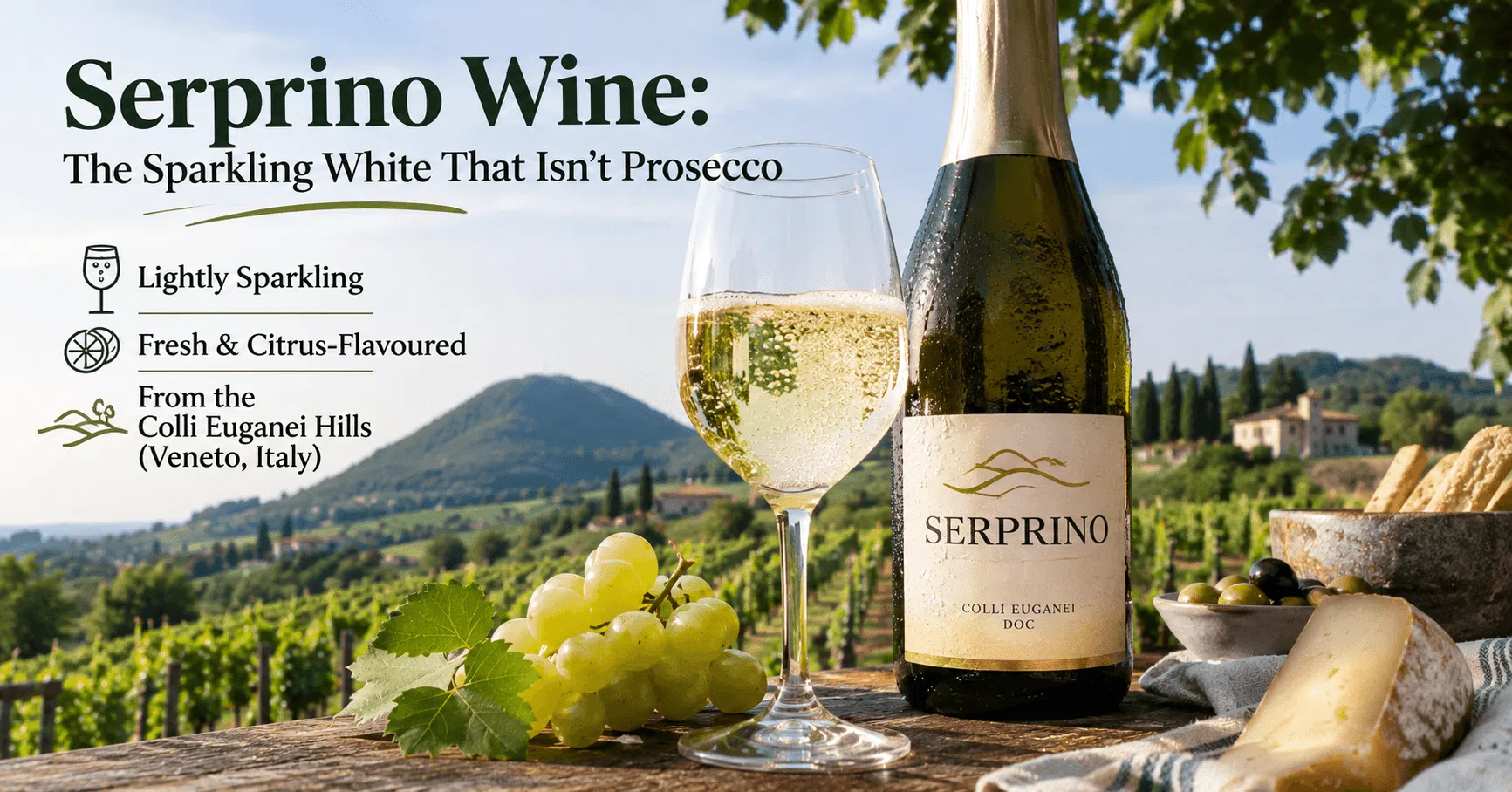
Serprino wine sounds like a cartoon sidekick, and it drinks like one: small, bubbly and hard to dislike. It also gets mistaken for its famous cousin all the time, which is a bit like calling someone by their sibling’s name.
If you’ve seen it on a menu near Padova and wondered whether it’s just Prosecco with a different label, you’re not alone. So let’s clear it up, because the answer is more interesting than “yes” or “no”.
Quick Facts
- What: a light, fresh sparkling white wine from the Colli Euganei, the volcanic hills south of Padova
- Grape: Serprina, a local biotype of Glera, the grape used for Prosecco
- Denomination: Colli Euganei Serprino DOC, in two styles, frizzante (lightly fizzy) and spumante (fully sparkling)
- Alcohol: at least 10.5% by law
- Serve: well chilled, and young
What Is Serprino Wine?
Serprino is a white wine made from the Serprina grape, which is grown in the Colli Euganei. According to the local wine consortium, Serprina is a biotype of Glera, so it’s a close relative adapted to the hills’ own soils and climate.
It comes in two styles. Frizzante is the traditional one, with a light, fading foam, while spumante has finer, more persistent bubbles. Both are straw yellow, fresh and fruity.
It’s also a small part of a small area, so for the bigger picture, see my Colli Euganei wine guide.
Serprino vs Prosecco
Both wines come from the Glera family, so it’s no surprise people compare them. However, the differences are in the place, the grape and the name:
| Serprino | Prosecco | |
|---|---|---|
| Grape | Serprina, a local biotype of Glera | Glera |
| Place | The volcanic Colli Euganei hills | A much larger area in north-eastern Italy |
| Taste | Apple, pear and peach, with a mineral edge | Apple and pear |
| Name | Colli Euganei Serprino DOC | Prosecco DOC and DOCG |
The taste row is a generalisation, though. According to a regional magazine, Serprino shows apple and pear like Prosecco, with a background of tropical fruit and a mineral note, probably from the volcanic soil. Treat that as a description from the trade, not a blind-test result.
If you’re curious how Prosecco’s export story looks from the other side of the world, I wrote about it in Prosecco in China.
Is Serprino Just Another Name for Prosecco?
Legally, no. In practice, though, they’re cousins. On a label you’ll see Serprino, because the local consortium is clear that the wine does not want to be called Prosecco.
There’s a bit of history that makes this more intriguing. The consortium’s website points out that the earliest document it cites mentioning “Prosecco” is a 1754 poem that places it alongside “Pedevenda”, a medieval name for the Euganean Hills. As a result, the grape may have grown here early on, and not only near Trieste. Still, the origin is uncertain, so treat this as a good story, not proven fact.
Two Styles: Frizzante and Spumante
Both styles usually start the same way. First, the grapes are pressed and the juice is handled at low temperatures. Then, according to the consortium, the second fermentation takes place in a pressurised tank, known as the Charmat method.
- Frizzante: light, with a delicate foam that fades, while the taste runs from dry to off-dry. It’s the traditional style
- Spumante: more structured, with finer and more persistent bubbles, but the sugar level ranges from brut nature to dry, depending on the producer
If you see both on a menu, start with frizzante for an aperitivo and choose spumante when you want more fizz. That’s my simple rule of thumb, not an official one.
What Does It Taste Like?
Overall, expect a light, lively wine. The descriptions agree on apple, pear and peach, with floral notes and sometimes tropical fruit. A mineral edge often comes up, because the producers attribute it to the volcanic soil.
My own experience is simple. The Serprino I tried caught my eye first because of the shape of the bottle, which made me pick it up. “Colli Euganei” was written boldly on the label, and from the back view you would almost think it was a Fior d’Arancio. Once I opened it, I found it was on the dry side, and it smelled lovely. That fits the official picture, since frizzante ranges from dry to off-dry.
It’s also a useful tip: with so many Colli Euganei wines in similar bottles, always look for the word Serprino on the label, so you know what you’re buying.
It’s not a big, serious wine, and it doesn’t try to be. Instead, the pleasure is freshness, and that scent.
Where It Grows and What the Label Guarantees
According to the regional press, the best Serprino comes from the northern Colli Euganei, where cooler slopes alternate with woods and the soils are marly and clayey. However, the hills are small, so plenty of wineries may make a good one.
As for the rules, the DOC requires at least 10.5% alcohol, and it caps yields at 15 tonnes of grapes per hectare. That’s enough detail for most drinkers, because the label’s real promise is simple: a fresh, local wine.
How to Serve and Drink It
Serve it cold. The consortium suggests 5 to 10 °C, while a regional magazine says no more than 8 °C. The consortium also advises drinking it within a year, because freshness is the whole point.
What to Eat With Serprino
It’s an easy wine to pair, since it’s light and fresh:
- Aperitivo: cured meats and cicchetti
- Seafood: light starters, shellfish and baccalà
- Vegetables: especially fried ones, and herb risotto
- Sushi: the consortium lists it as a good match
- Medium-aged cheeses: best with the spumante
For a bigger list across Italy, see my Italian wine and food pairings guide.
Where to Try Serprino
The easiest way is at a winery in the hills. For example, Ca’ Lustra Zanovello in Cinto Euganeo and Quota 101 in Torreglia both list a Serprino, and Il Pianzio in Galzignano Terme grows Glera for it. Cantina Colli Euganei also lists one.
If you’d like to visit, I’ve put the details in my guide to Colli Euganei wineries you can visit, and in my post on Cantine Aperte in the Colli Euganei. There’s also a summer Serprino Festival in the hills, but dates change, so check ahead.
Frequently Asked Questions
What is Serprino? It’s a light sparkling white wine from the Colli Euganei, made from Serprina, which is a local biotype of the Glera grape.
Is Serprino the same as Prosecco? No. Both come from the Glera family, but Serprino is a separate wine from a different, smaller area, so it has its own DOC.
Is Serprino sweet? Usually not, because frizzante ranges from dry to off-dry, while spumante ranges from brut nature to dry.
How much alcohol does Serprino have? At least 10.5% by law.
What is the difference between frizzante and spumante? Frizzante is lightly fizzy, with a delicate foam. Spumante, on the other hand, is fully sparkling, with finer and more persistent bubbles.
How should I serve Serprino? Well chilled, at about 5 to 10 °C.
What does Serprino go with? Aperitivo snacks and cured meats, but also seafood, fried vegetables, herb risotto and sushi.
Where can I buy Serprino? At wineries in the Colli Euganei, or from Italian wine shops. If you’re abroad, ask your wine merchant, because they may be able to order it.
One Last Thing
I like a wine that doesn’t take itself seriously, and I’ll admit I picked my first Serprino because of the bottle. It turned out to be dry and lovely to smell, and it comes from one of the most interesting corners of Veneto. Because it’s light and bright, it deserves to be known by its own name.
So have you tried one? Tell me whether you could tell it from Prosecco, and whether the bottle caught your eye too.
— Kelly 🍷
#Serprino #ColliEuganei #ItalianWine #SparklingWine
Continue Reading
- Colli Euganei Wine: A Guide to the Hills Near Padova
- Colli Euganei Wineries You Can Visit
- Fior d’Arancio DOCG
- Prosecco in China: Why +30% Is Smaller Than It Sounds
Sources
- Consorzio Vini Colli Euganei: Serprino
- QN Itinerari: Serprino Doc, la Glera vulcanica. Non chiamatelo Prosecco
- Quattrocalici: Serprino
- Ubique Chic: Serprino Colli Euganei
- Italian Wine Central: Colli Euganei DOC
Information checked in October 2026. Rules and figures can change, so confirm with the producer or the consortium.
Enjoy wine without the snobbery?
Make The Finest Italian Wine one of your Preferred Sources on Google.
Add The Finest Italian Wine to Preferred SourcesDiscover more from The Finest Italian Wine
Subscribe to get the latest posts sent to your email.