That Little QR Code on Your Wine Bottle Knows More Than You Think
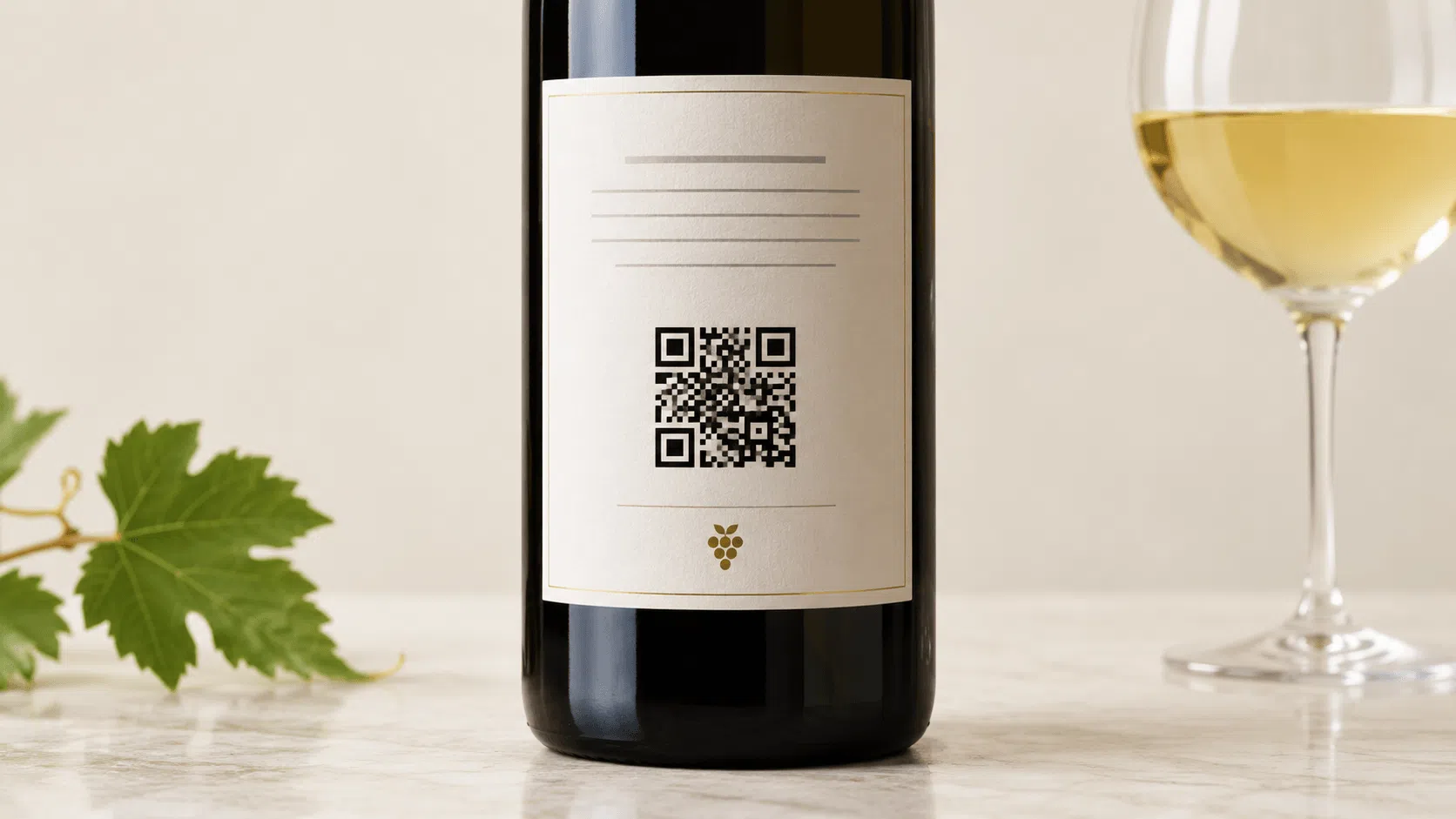
Look at the back of your next bottle and you might spot a small black-and-white square tucked between the alcohol percentage and the producer’s address. We already handed restaurant menus over to QR codes, so it’s tempting to roll your eyes at one more. But the wine bottle QR code is doing something quite different: it can tell you what’s in your wine, how much sugar it carries and its calories per 100 ml.
Think about the last packet of biscuits you bought. Ingredients, sugar and calories, all printed in tiny letters. Wine, the drink we write poetry about, got to skip all of that for years. Here’s how the rules changed, what you actually find when you scan one, and a few things that surprised me.
Quick Facts
- EU rules requiring ingredients and nutrition information on wine started applying on 8 December 2023
- They cover wine made after that date, so older stock can keep selling under the old rules
- The QR code is optional. A producer can print everything on the bottle instead
- The energy value and allergens must always stay on the physical label
- The page behind the QR code can’t carry marketing, links to shops or user tracking
Why Wine Never Had to List Its Ingredients
For years, a wine label could tell you the grape, the region, the vintage and the alcohol, and then spend three lines describing cherries, tobacco and freshly cut grass. A real ingredients list was not part of the deal, because wine was exempt from rules that applied to most other food and drink.
That ended on 8 December 2023, when Regulation (EU) 2021/2117 began applying. Ingredients and nutrition information is now required for wine sold in the EU, whatever its country of origin. Producers have two choices: print it all on the bottle, or print the most important bits and put the rest behind a QR code.
The Tiny “i” That Lost the Argument
Here’s the part I enjoyed. Much of the wine industry wanted to put a small “i” symbol next to the QR code and call it a day. Many producers had already printed labels that way. A whole industry fighting for one lowercase letter, and the hope that nobody would ask what it stood for.
The European Commission said no. Its guidance states that generic terms or symbols, like an “i”, aren’t enough, and the word “ingredients” has to appear next to the code so consumers understand what they’re about to open. In Italy, the agriculture ministry softened the blow for labels that were already printed, but the rule itself stayed. So if you see a QR code with the word ingredients beside it, that’s the official one.
What You Find When You Scan the Wine Bottle QR Code
Good news for the technophobes: your phone’s camera is enough, and no special app is needed. The page should show the ingredients and nutrition details. The fiddly part is knowing what has to stay on the bottle and what can hide behind the code, so here it is in one table:
| Information | Where it has to be |
|---|---|
| Energy value per 100 ml (kJ and kcal) | Always on the bottle |
| Allergens, such as “contains sulphites” | Always on the bottle |
| Alcohol, category, origin, bottler | Stays on the label |
| Ingredients list | On the bottle or behind the QR code |
| Full nutrition table (carbohydrates, sugars) | On the bottle or behind the QR code |
So you shouldn’t need an internet connection to find the calories or spot sulphites. The QR code adds the rest. Think of the bottle as the headline and the QR code as the small print, except this time the small print is actually worth reading. When a producer lists ingredients, they appear in descending order by weight, starting with grapes or grape must.
What the Ingredients List Doesn’t Say
This is where the “oh really” gets interesting, because the list is not a full confession of everything that ever touched the wine. Don’t expect to see yeast, for instance. According to the Commission’s guidance, yeast is generally not an ingredient. The same goes for processing aids, which are substances used during winemaking that don’t end up in the finished bottle:
| Usually appears | Usually doesn’t appear |
|---|---|
| Grapes or grape must | Yeast |
| Additives, listed by category and name or E-number | Processing aids that don’t remain in the wine |
| Allergens such as sulphites |
There’s one exception worth knowing: producers still have to declare a processing aid that can cause allergies. So an ingredient you don’t recognise isn’t proof of a dodgy cellar. It’s just a record of how the wine was made.
Sugar vs Sweetness: Your Phone Won’t Replace Your Palate
The nutrition table can show carbohydrates and sugars per 100 ml, and for many of us that’s the headline number. I’d just warn against turning into a spreadsheet drinker, because a number on a screen and the sweetness on your tongue are different things. Acidity can make a wine with some residual sugar taste surprisingly dry, and a low-acid wine can taste sweeter than its number suggests.
If sweetness labels already confuse you, I untangled one of the worst offenders in The Biggest Lie on a Prosecco Label (Extra Dry vs Brut). And if what you really want is the calorie story, my post on Calories in Wine explains where those numbers come from.
The QR Code That Isn’t Allowed to Sell You Anything
I love this rule. Imagine scanning a code because you want to know the sugar content, and instead a video starts, a newsletter pop-up appears and you’re offered a discount on six bottles. You asked about sugar. You didn’t ask to join the wine club.
The rules don’t allow that. The page behind the official code can’t carry marketing, links to shops or advertising, and it can’t collect your personal data. A winery is free to print a second QR code for its story and its shop, as long as it’s clearly separate and doesn’t confuse the mandatory one. So a bottle can carry two codes, and only one of them is there to inform you.
Why Some Bottles Have No QR Code
A missing QR code isn’t a confession either. There are three boring, innocent explanations:
- The code is optional. A producer can print the full ingredients and nutrition information on the bottle instead, which is lovely if the label has the room
- The wine is older. Wine made before 8 December 2023 can keep selling under the old rules until stocks run out, so nobody has to pour the old stock away
- The date follows production, not bottling. For sparkling wine, what counts is when the second fermentation finishes, which makes “is this wine covered?” a surprisingly technical question
In practice, the new rules apply to wines from the 2024 harvest onward, so more bottles now carry them. If you pick up an older Barolo with no QR code, don’t assume the producer is hiding something. It probably just predates the rules.
What the QR Code Won’t Tell You
It covers ingredients and nutrition. It won’t tell you whether the grapes were grown organically, how much water the winery uses or how the producer treats its workers. Those are separate questions. I wrote about how appealing wine words can drift away from facts in Cameron Diaz’s Wine Brand Started a Fight With the Federal Government, and the lesson applies here too. Useful information is not the same as the whole story.
Frequently Asked Questions
Why do wine bottles have QR codes? Many use them to provide the ingredients and nutrition information required under EU wine labelling rules. Other QR codes may have different purposes, like marketing.
Is a QR code compulsory on wine bottles in Europe? No. Producers can print the required information directly on the label instead.
When did the EU wine labelling rules start? They began applying on 8 December 2023, with a transition for wine made before that date.
Can I find the sugar content of a wine by scanning the QR code? Yes, if the code links to the wine’s electronic nutrition declaration, which includes carbohydrates and sugars per 100 ml.
Does the ingredients list include yeast? Generally not. Yeast and processing aids that don’t remain in the wine usually stay off the list, though producers must declare allergenic ones.
Do I need a special app to scan it? Usually not. Most smartphone cameras can read a QR code.
One Last Thing
I’m not suggesting anyone turns a glass of Pinot Grigio into a lab investigation. Wine is meant to be enjoyed. But the next time you’re shopping, turn the bottle around and look for the little square with the word ingredients beside it. Scan it, compare two bottles if you’re curious, and see what the producer has declared. We spend plenty of time reading labels that promise blackberries, vanilla and the occasional mysterious hint of leather. Surely we can spare ten seconds to find out what’s actually in the bottle.
So tell me: have you ever scanned the QR code on a wine bottle? Did you find anything interesting, or has that little square been invisible to you all along?
— Kelly 🍷
#ItalianWine #WineLabels #WineQRCode #WineFacts
Continue Reading
- The Biggest Lie on a Prosecco Label (Extra Dry vs Brut)
- Calories in Wine
- Cameron Diaz’s Wine Brand Started a Fight With the Federal Government
Sources
- Wein.plus: This is how nutritional value and ingredient information must look on the label
- Scantrust: EU wine label requirements, latest clarifications from the Commission Q&A
- Il Fatto Alimentare: Vino, etichette e aggiornamenti (in Italian)
- QuiFinanza: Etichette vino, il nuovo regolamento (in Italian)
- Just Drinks: Winemakers look for positives as EU label reform nears
Enjoy wine without the snobbery?
Make The Finest Italian Wine one of your Preferred Sources on Google.
Add The Finest Italian Wine to Preferred SourcesDiscover more from The Finest Italian Wine
Subscribe to get the latest posts sent to your email.