Does Wine Get Better Overnight? Only Sometimes.
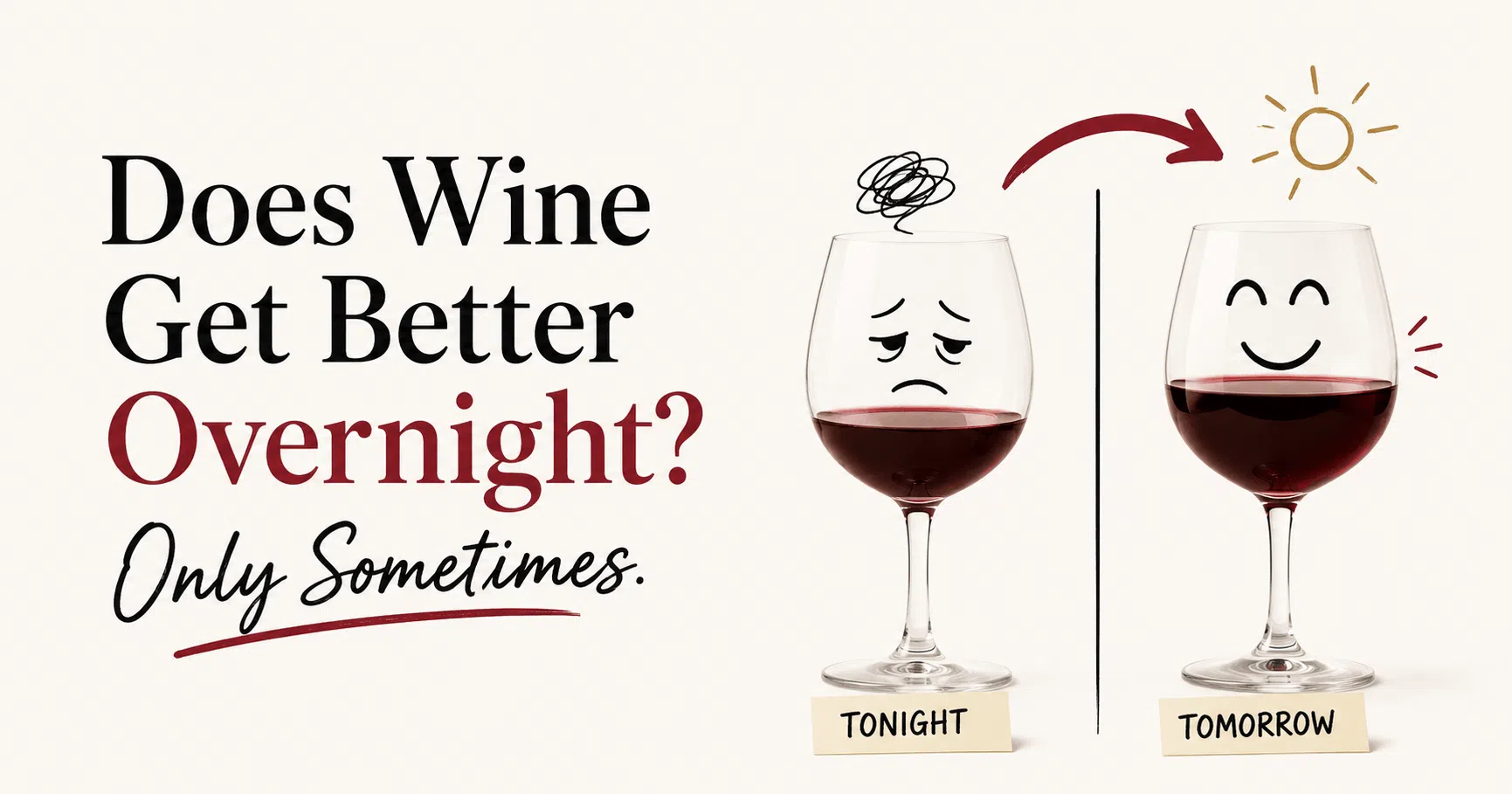
There’s a specific kind of wine disappointment that goes like this: you open a bottle, take a sip, and land somewhere in the middle: not bad, not memorable, just wine. So you cork it, forget about it, and the next evening you pour what’s left almost as an afterthought. And it’s better. Noticeably better. Same bottle, same wine, but somehow more interesting than it was the night before.
That contrast is real, and it comes down to one thing: oxygen. Here’s the part most articles skip, though: the same oxygen that makes some wines better the next day is exactly what ruins others. My rule after years of getting this wrong in both directions: I don’t decide a wine is bad until I’ve tasted it twice. Sometimes that second taste changes everything. Sometimes it just confirms the bottle was never going to work. Knowing which one you’re dealing with is the actual skill here.
Oxygen Is Doing More Than You Think
The moment a cork comes out, wine starts reacting with the air around it. In small doses, that reaction is useful. It softens the sharper edges of a young wine and lets aromas that were locked up start to show themselves. This is the entire logic behind swirling a glass or running a bottle through a decanter: you’re deliberately introducing air to loosen the wine up.
The glass itself plays into this more than people realize. A wider bowl gives wine more surface area to interact with oxygen, which is part of why glasses built for bold reds tend to be bigger than the ones made for delicate whites. More surface area means more room for that reaction to happen before the wine ever reaches your nose.
But oxygen isn’t a one-way improvement. It’s a slow trade. At first it opens a wine up. Eventually it wears the wine down. Whether your leftover bottle is better or worse tomorrow comes down to where the wine sits on that timeline, and how much structure it has to survive the trip.
Twenty Minutes and Overnight Are Different Games
Most people know the “give it a few minutes” trick: pour a young red, taste it, let it sit in the glass, taste it again. That’s the fast version of oxygen doing its work, and it’s usually enough for a wine that just needs to shake off some initial tightness.
Overnight is a bigger commitment, and it only pays off for wines with enough tannin, acidity, and concentration to handle a longer stretch of air exposure without falling apart. Young Cabernet Sauvignon, Syrah, and Nebbiolo-based wines are the usual candidates, built with enough backbone to still be standing the next day, sometimes standing taller. Barolo is the textbook case. Young bottles are famously tight and unwilling to show much on night one, and giving one extra time with oxygen (through decanting, or simply leaving it corked overnight) is often exactly what convinces it to loosen up. Barolo doesn’t do anything quickly. Overnight is practically a fast turnaround for a wine like that.
Worth saying plainly: this isn’t universal. Wines with real structure are candidates for improvement. A light, fruit-forward red or a wine that’s already fully developed usually isn’t, and hoping otherwise is how good wine gets wasted.
This Isn’t the Same as Aging
It’s tempting to think leaving a bottle open overnight is a fast-forward version of cellaring a wine for a decade. It isn’t, and the mechanism is completely different. Aging happens slowly, inside a sealed bottle, with barely any oxygen getting in, and the changes unfold over years. An open bottle is doing the opposite: rapid, direct exposure to air, with effects that show up in hours, not decades. A cheap supermarket red left open for a week isn’t quietly becoming a wine worth cellaring. It’s just turning into something you’ll regret pouring.
Eventually, the Same Oxygen Turns Against the Wine
This is the half of the story that gets left out whenever people talk about wine “opening up.” The same air that lifts a wine in its first hours will eventually flatten it. Fruit fades, flavors go dull, and you start picking up notes of bruised apple or something vaguely nutty that wasn’t there before. That’s oxidation, and once a wine crosses that line, there’s no bringing it back. Lighter reds, the ones with less tannin and acidity to lean on, tend to cross that line fastest, which is one reason a delicate Pinot Noir rarely gets the overnight treatment as well as a young Barolo does.
Which Bottles to Leave Alone
Older wines are the obvious ones to handle carefully, and I’ve learned this one the annoying way more than once: a bottle that was singing in the evening turned into a ghost of itself by the next day. A wine that’s already spent twenty or thirty years developing slowly in the cellar doesn’t have much resilience left once it’s opened. Some old wines are only good for an hour or two before they start fading in the glass. Delicate whites and rosés belong in the same category. Their whole appeal is freshness, and freshness is exactly what oxygen erodes first. They’ll survive until the next day if stored properly, but don’t expect tomorrow’s glass to outshine tonight’s. With bottles like these, drink them like they mean it the first time.
Yes, Put the Red Wine in the Fridge
I know how this sounds. Somewhere, a wine purist just felt a disturbance. But once you’re done pouring for the night, re-cork the bottle and put it in the fridge, red included. Cold temperatures slow down the chemical reactions responsible for spoilage, and most reds hold their condition for three to five days when stored this way, compared to a fraction of that left out on the counter. Pull the bottle out ahead of time and let it warm slightly before your next glass. It’s a small habit, and it’s saved me from pouring more than one bottle down the sink that didn’t deserve it.
Vacuum Pumps and Preservers: Nice, Not Necessary
A vacuum pump pulls some of the air out of an opened bottle, and other preservation systems work to limit oxygen exposure even further. I own one, and I reach for it maybe a handful of times a year, usually after misjudging how much wine two people actually want to drink on a random Tuesday. It’s genuinely useful for stretching a bottle over several days. For everyday drinking, a cork and a fridge shelf will usually get the job done without any extra equipment.
Try It Yourself
The easiest way to actually understand this isn’t to read about it. It’s to test it. Next time you open a young, structured red, taste it right after pouring. Notice what’s sharp, what’s muted, what you can’t quite smell yet. Then let it sit. Come back the next day, pour what’s left, and taste again.
You might like the first glass better. You might like the second. Either way, you’ll walk away with something more useful than a rule: a sense of how your own wine actually moves over time. The bottle isn’t the variable here. Time is. And once you start paying attention to what a day does to a glass of wine, you stop rushing to judge anything on the first pour.
Quick Answers
Does wine really taste better the next day? Sometimes. It depends on the wine. Young, structured reds with good tannin and acidity (Cabernet Sauvignon, Syrah, Nebbiolo) often improve after a night of air exposure. Delicate wines and older bottles usually don’t.
Should you refrigerate leftover red wine? Yes. Re-cork it and store it in the fridge, even for reds. Cold slows down oxidation, which keeps the wine fresher for longer. Let it warm up slightly before pouring your next glass.
Is leaving wine open overnight the same as aging it? No. Aging happens slowly in a sealed bottle with minimal oxygen exposure over years. An open bottle is exposed to much more oxygen, much faster, and the effects show up in hours or days, not decades.
How long can you keep an opened bottle of red wine? Most reds hold up for three to five days if re-corked and refrigerated. Wines with more tannin and acidity tend to last longer than lighter, more delicate reds.
Do you need a wine preservation tool? Not for casual drinking. A cork and the fridge cover most situations. Vacuum pumps and preservation systems are worth it mainly if you regularly stretch a bottle over several days.
Enjoy wine without the snobbery?
Make The Finest Italian Wine one of your Preferred Sources on Google.
Add The Finest Italian Wine to Preferred SourcesDiscover more from The Finest Italian Wine
Subscribe to get the latest posts sent to your email.