Celebrities Who Own Wineries: Francis Ford
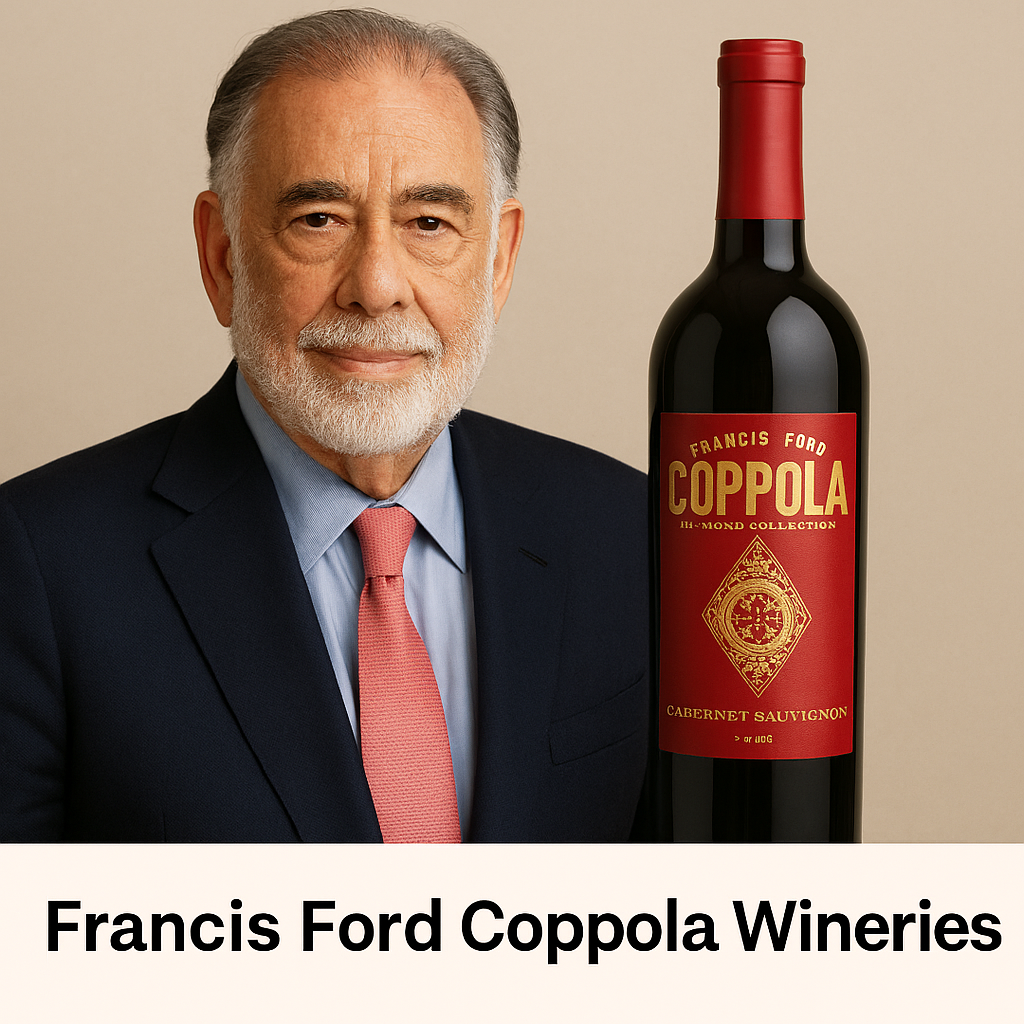
The Man Who Bet a $650 Million Wine Empire on a Movie Nobody Wanted
Two Oscars. One bankrupt vineyard. A Finnish sea captain. And a film that cost him everything. Welcome to the most dramatic celebrity winery story ever told.
Most celebrity wineries exist because someone got rich, went to Tuscany, and caught feelings. Francis Ford Coppola’s winery exists because of a childhood memory, a Finnish sea captain’s ghost, four decades of obsession, at least one bankruptcy, and a final plot twist so characteristically Coppola that you couldn’t write it without someone calling it unrealistic.
Buckle up.
It Started With His Grandfather’s Basement
Before there was Inglenook, before there was Napa, before any of this — there was a basement in New York during Prohibition. Coppola’s grandfather Agostino, fresh off the boat from Italy, was quietly making homemade wine in the basement while America tried to pretend wine didn’t exist. The family drank it at dinner. Nobody talked about it outside the house. It was just what you did.
That detail matters. Because everything Coppola did with wine for the next fifty years traces back to that basement. Not to a business plan. Not to a market opportunity. To a smell, a table, a family, and a tradition he never wanted to lose.
He Spent Godfather Money on a Broken Dream
In 1975, flush from The Godfather and The Godfather Part II, Coppola bought a piece of Inglenook — a legendary Napa estate founded in 1879 by a retired Finnish sea captain named Gustave Niebaum who had made his fortune in the Alaskan fur trade and spent it building California’s most ambitious winery. By the time Coppola arrived, the estate had been chopped up, sold off in pieces, and stripped of most of its former glory.
He bought it anyway. Knowing it was broken. Knowing it would cost more than he had.
Then it got worse. The debt mounted. The winery had no proper equipment. He couldn’t even use the Inglenook name — the trademark had been sold separately and was now being used on bottles of perfectly ordinary supermarket wine that had nothing to do with the estate’s history. His winery was called Niebaum-Coppola, which is accurate and thoroughly unglamorous.
He went into bankruptcy. Kept the vineyard. Kept making wine.
🎬 Most people who go bankrupt on a passion project quietly move on. Coppola made Apocalypse Now instead. Different approach.
He Spent 36 Years Buying Back a Name
Here is the detail that tells you everything about how this man operates. In 2011 — thirty-six years after he first set foot on the property — Coppola finally bought back the Inglenook trademark. The name that had been stripped away and sold off to a beverage corporation, stuck on bottles of wine that bore no resemblance to what Niebaum had built.
He paid more for the name than he had originally paid for the entire estate.
Think about that for a moment. The land, the 19th-century chateau, the vineyards — all of that cost less than the four letters on the label. He paid it without hesitation. Because the name was the point. It always had been.
The estate was finally whole. Same land. Same name. Same family. Thirty-six years later.
The Wine That Makes It All Make Sense
Inglenook’s flagship is Rubicon — a serious, cellar-worthy Cabernet Sauvignon blend grown on organically farmed vineyards in Rutherford, one of the most coveted appellations in Napa Valley. It is not a celebrity wine. It is not priced for casual Tuesday drinking. It is the wine of a man who spent four decades trying to deserve a legacy.
To understand what that legacy looks like — the 1941 Inglenook Cabernet Sauvignon received a perfect 100-point score from Wine Spectator. One of the top wines of the 20th century, made on the same land, bearing the same name. Coppola bought the estate 34 years after that bottle was made and spent the rest of his career trying to get back to that standard.
The people who’ve tasted modern Rubicon say he got there.
He also brought in Philippe Bascaules from Château Margaux as winemaker in 2011. You don’t hire from Château Margaux for a vanity project. That’s a statement of intent.
The Plot Twist Nobody Saw Coming
In 2021, Coppola sold his entire Sonoma wine operation — the Francis Ford Coppola Winery, the Diamond Collection, Director’s Cut, Sofia, everything in Geyserville — to Delicato Family Wines for around $650 million. Kept Inglenook. Kept the Oregon property. Let everything else go.
Why?
To self-fund Megalopolis. A $120 million film that no studio in Hollywood would touch. A film that divided critics, confused audiences, and cost him — by some estimates — the majority of what he made on the sale once marketing and production were factored in.
He sold a $650 million wine business to make a movie nobody wanted to back. At 85 years old.
🎥 Some people retire at 85. Coppola liquidated part of a wine empire to self-fund a controversial epic. We are not all operating at the same level.
Why This Story Actually Matters
Sting made wine out of wounded pride. Brad Pitt made wine as a love story that ended up in court. Coppola made wine as a fifty-year act of restoration — of a name, a place, a family tradition, and a standard set by a Finnish sea captain in 1879.
Of every celebrity winery we’ve covered in this series, Inglenook is the one that stopped being a celebrity winery somewhere around the second decade. It earned its place. Slowly, expensively, stubbornly. The way Coppola does everything.
The tasting room is open. You can go. You can drink Rubicon in Niebaum’s chateau and think about the man who spent 36 years and a film fortune making sure that was still possible.
There are easier ways to run a winery. This one just makes a better story.
Have you tried Rubicon? Drop a comment — and if you want more stories like this, read the Sting post next. Also dramatic. Fewer Oscars. More flower pots.
#CelebrityWineries #FrancisFordCoppola #Inglenook #NapaValley #Rubicon #WineBlog #ItalianWine
Enjoy wine without the snobbery?
Make The Finest Italian Wine one of your Preferred Sources on Google.
Add The Finest Italian Wine to Preferred SourcesDiscover more from The Finest Italian Wine
Subscribe to get the latest posts sent to your email.