
Celebrities who Owns Wineries – Sting
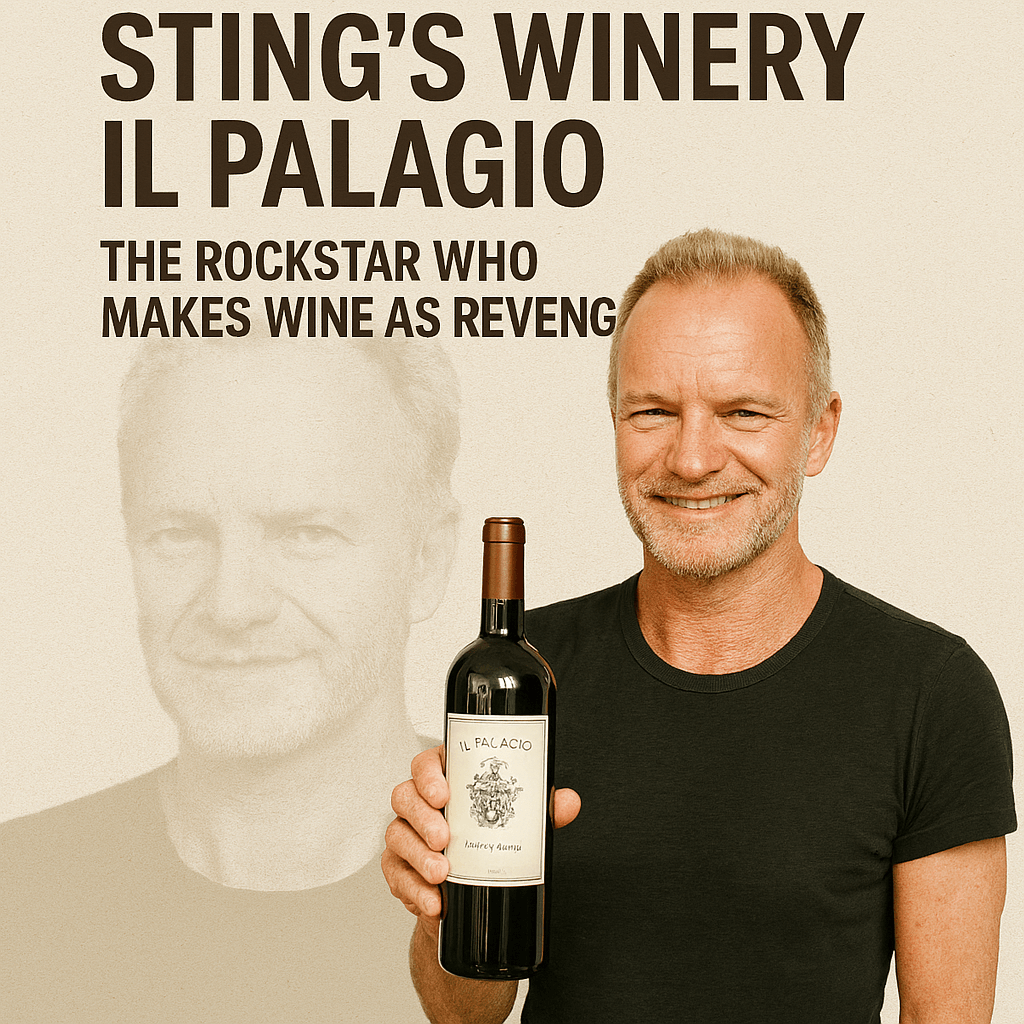
Sting’s Winery Il Palagio: The Rockstar Who Makes Wine as Revenge
He got conned on the day he bought the place. What followed was two decades of very expensive, very biodynamic payback.
Let’s be honest. When you hear “celebrity winery,” your expectations drop immediately. You picture a famous face on a label, grapes sourced from somewhere vaguely Italian, and a wine that costs three times what it should because of who’s smiling on the bottle. Fair assumption. Usually correct.
Sting’s winery is not that. And the reason it isn’t starts with one of the best origin stories in Italian wine — involving a dodgy duke, a glass of someone else’s Bordeaux, and dinner guests quietly pouring bad wine into flower pots.
The Con That Started Everything
In 1997, Sting and his wife Trudie Styler bought Il Palagio — a crumbling 16th-century villa sitting in the Tuscan hills above Figline Valdarno, about 40 minutes south of Florence. Three hundred and fifty hectares of land. Woods, olive groves, vineyards, a lake. The kind of place that makes you sign the papers before you’ve fully thought it through.
On the day of the viewing, the Duke who owned the estate poured Sting a glass of wine. It was excellent. Sting was sold — literally. He bought the estate partly because of that glass.
Then came the reveal. The wine wasn’t from the estate. Not even close. It was a French cru classé claret the Duke had quietly produced for the occasion. The grapes actually grown at Il Palagio had been sold off to the local cooperative for years. And the wine being made from them? Trudie Styler later recalled watching guests discreetly pour it into the flower pots rather than drink it.
🌸 The flower pot detail is the one that gets me every time. Not one guest. Multiple guests. Independently arriving at the same conclusion. That is a damning wine review.
Sting’s response, delivered years later with characteristic dryness: “I was provoked to make good wine as revenge.”
And that — right there — is the most honest and entertaining reason anyone has ever started a winery.
Tearing It Up and Starting Again
Most people in this situation would hire a decent winemaker, fix up the label, and move on. Sting did not do that. Instead, he and Trudie brought in Alan York — a leading US biodynamic viticulture consultant — and replanted the entire vineyard from scratch between 2001 and 2003. Every vine. Starting over.
They went fully biodynamic from day one. No synthetic chemicals. No pesticides. Farming guided by lunar cycles and soil health. The kind of approach that sounds eccentric until you understand what it actually produces — wines with a real sense of place, made from vines that are genuinely healthy rather than chemically propped up.
A quick note on biodynamic farming — because it comes up a lot with Il Palagio:
It’s organic farming with an extra layer of philosophy, rooted in the work of Rudolf Steiner in the 1920s. Planting, harvesting, and bottling follow a lunar calendar. Natural preparations are used to build soil biodiversity. The vine is treated as part of a living ecosystem rather than a production unit. Many of the world’s greatest estates now farm this way. It’s not fringe anymore — it’s where serious winemaking has been heading for decades.
His Studio Is Above the Cellar. Literally.
Here’s the detail that no press release about Il Palagio adequately captures: Sting’s recording studio sits directly above the wine cellar. He has spoken about how it feels like the music and the wine feed each other — creativity going down through the floor, aromas coming up through it.
He also once mentioned that he sings in the cellar. Make of that what you will. The wines don’t seem to mind.
“A wine is like a song — it has to tell a story. This is why I named my wines after my biggest hits.” — Sting
The Wines — and Why the Names Actually Make Sense
This is where most celebrity wineries fall apart. The product. At Il Palagio, naming the wines after his songs wasn’t a marketing decision — it genuinely fits. The connection between music and winemaking runs through everything about this estate. When Sister Moon was ready for its first release, the name was obvious. The grapes had been grown biodynamically, partly guided by the moon’s phases. The song was already there. It clicked.
Currently the estate produces around 120,000 bottles a year across seven labels. Here are the four worth knowing:
Sister Moon — IGT Toscana — The One to Try A Super Tuscan blend of Sangiovese, Merlot, and Cabernet Sauvignon. This is the flagship. Named after the 1987 song from Nothing Like the Sun. In 2016 it was selected as one of Italy’s 100 Top Wines at OperaWine — a blind-assessed list covering all of Italy’s regions. That’s not a celebrity bonus. That’s a wine earning its place.
When We Dance — Chianti — The Everyday Bottle 95% Sangiovese with Canaiolo and Colorino. Fresh and fruit-forward. This is the one you open on a Tuesday because you feel like it. Approachable, honest, and reliably good.
Message in a Bottle — White Vermentino Light, floral, citrus-driven. Named after the most famous three chords in pop history. Buying a bottle of Message in a Bottle from Sting’s winery is either deeply poetic or the most on-the-nose thing you’ll ever do. Either way you’ll enjoy telling the story.
Casino delle Vie — IGT Toscana — The Middle Ground Aged in used oak. Spiced and mellow with cherry and plum. Sits between the easy-drinking Chianti and the serious Sister Moon. The bottle you bring to dinner when you want to look like you know what you’re doing.
🎵 The wine list at Il Palagio reads like a Sting setlist. Which is either brilliant branding or just what happens when someone actually means it.
Celebrity Wineries Done Right: Does the Wine Hold Up?
Here’s the honest answer: yes. And it’s not just because of the famous name attached to it.
Sister Moon made Italy’s top 100 in a blind tasting. You can’t charm your way into that list. Renowned Italian oenologist Riccardo Cotarella — one of the most respected names in Italian winemaking — came on board as consultant in 2020. That is not a vanity hire. Cotarella works with estates that are serious about quality. His involvement says something.
The estate now distributes through ZONIN1821 in the UK, getting the wines into restaurants rather than just gift shops. That’s a commercial decision made by people who believe the wine can compete on its own merits. So far, it seems to be right.
What the Estate Looks Like Today
Beyond the wine, Il Palagio has become a full working organic farm. Eight thousand olive trees producing extra virgin olive oil good enough to win Tre Foglie from Gambero Rosso — the highest rating the guide gives. Eight varieties of honey from their own apiary. Fruit and vegetables grown for the surrounding villages. A lake. Five guesthouses you can actually rent if you want to spend a few nights surrounded by Tuscan hills and the faint possibility that Sting might walk past while you’re having breakfast.
It won’t be cheap. But then, none of this was ever really about being cheap.
The Revenge That Worked
Twenty-something years ago, Sting got sold a dream and handed a glass of someone else’s wine to close the deal. Most people would have quietly hired someone to fix the vineyard and moved on. Instead he replanted everything from scratch, went fully biodynamic, named his wines after his songs, and built something that can genuinely stand alongside serious Italian estates.
The flower pots never got a second sip.
Have you tried any of the Il Palagio wines? Drop a comment below — and if you want more from the Celebrity Wineries series, go read the post on Brad Pitt and Angelina Jolie’s Château Miraval next. That one has its own drama.
#CelebrityWinery #Sting #IlPalagio #TuscanWine #ItalianWine #BiodynamicWine #WineBlog
Enjoy wine without the snobbery?
Make The Finest Italian Wine one of your Preferred Sources on Google.
Add The Finest Italian Wine to Preferred SourcesDiscover more from The Finest Italian Wine
Subscribe to get the latest posts sent to your email.


4 Comments