Why Do Wine Glasses Have Stems Anyway?
I’ll admit something.
For years I thought the stem was there to make the whole thing look fancy. Hold it delicately, take a small sip, nod like you know something. Meanwhile the person next to you is drinking wine out of a coffee mug and having, objectively, a better time.
Nobody ever actually explains this to you. You just absorb it, the way you absorb which fork goes where, without once asking who decided this or why a wine glass needs a little glass leg in the first place.
So I finally asked.
Turns out that leg is doing actual work.
It’s Not About Looking Fancy — It’s About Keeping Your Hand Off the Wine
Your hand is warm. The wine, especially if it’s white, rosé, or fizzy, is not.
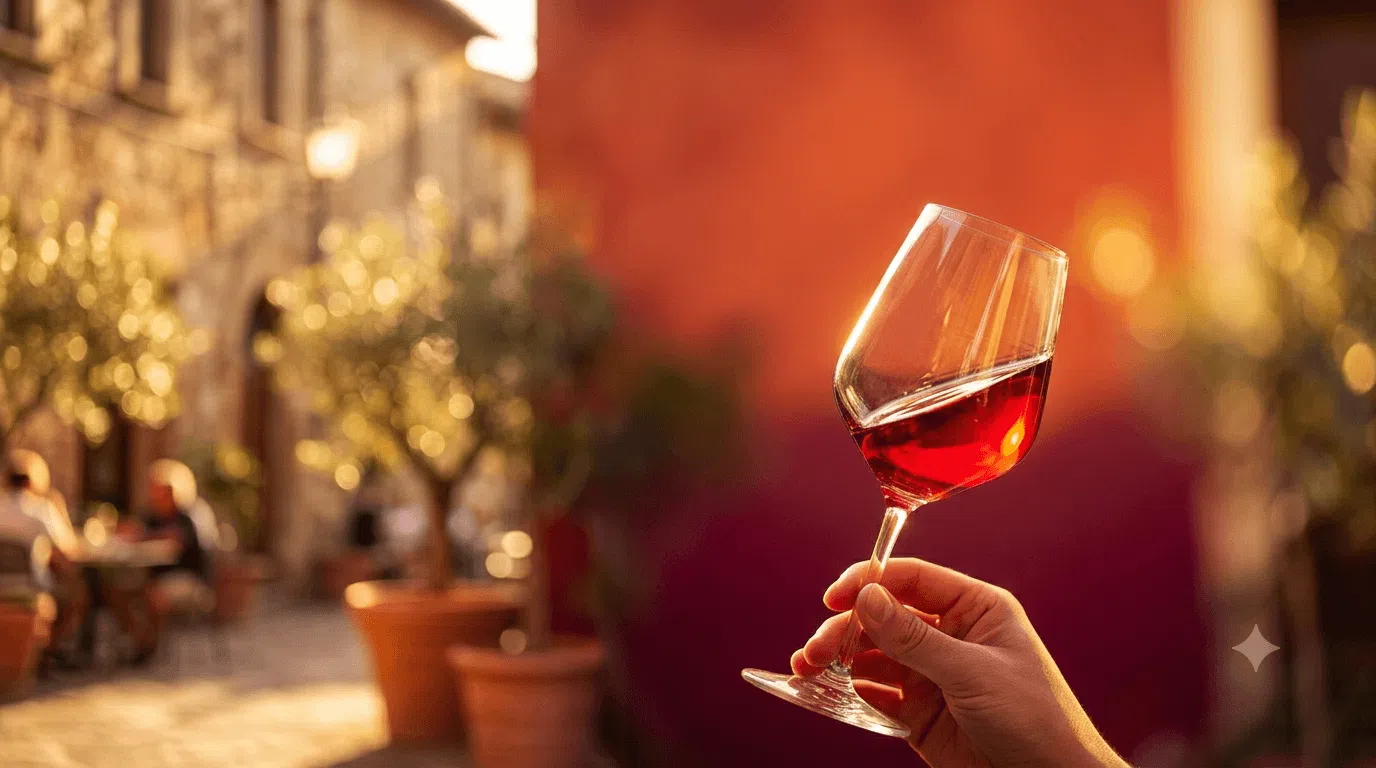
Wrap your palm around the bowl and you start heating the wine, slowly, for as long as you’re holding it. The stem exists so you don’t have to choose between holding your glass and keeping your drink at the temperature it was poured at.
That’s it. That’s the whole secret behind everyone holding their glass “properly.” It was never really about manners. It was about not accidentally turning your Soave into room-temperature juice by the second course.
If you want the full etiquette breakdown — exactly where to put your fingers, why the bowl-grip gets side-eyed — I’ve already gone deep on that in how to hold a wine glass properly.
It Also Makes You Look Like You Know What You’re Doing While Swirling
That swirl everyone does before sniffing their wine? Not just theatre.
Swirling increases the wine’s contact with air and pushes more aroma up into the bowl — which matters, because your nose is doing most of the actual tasting. Your tongue only picks up sweet, sour, bitter, salty. Everything else — cherry, leather, the “wet stone” note people insist on identifying at every tasting — that’s smell, not taste.
The stem gives you something to swirl with, instead of gripping the entire bowl like you’re afraid it’s going to make a run for it.
And if you’ve ever swirled a little too enthusiastically and watched a good portion of your wine head straight for your blouse, you already understand exactly why that control matters.
Then There’s the Fingerprint Problem
Holding by the stem also keeps your fingers off the bowl, which means fewer fingerprints on the glass.
At home, this changes nothing. Nobody is dusting your Tuesday-night wine glass for prints. But at a proper tasting, or honestly just a nice dinner out, a clean bowl means you can actually see the wine — its colour, how clear it is — instead of squinting through a smudge trail like you’re solving a crime.
So Who Actually Decided Wine Needed a Leg?
Nobody sat down one day and sketched this out on a napkin. People drank wine out of whatever was around for most of history — cups, goblets, anything that held liquid. Stemmed glassware developed gradually as European glassmaking got more refined, and Venice in particular became one of the centres of that craft.
Living here, that part gets me a little. This object sitting on your table that nobody thinks twice about is the end result of a few hundred years of Venetian glassmakers slowly working out how to make wine easier to hold, see, and smell.
Which is very Italian, honestly — spend centuries perfecting something, then act like it was always obvious.
And Then Somebody Cut the Legs Off
Enter the stemless wine glass, which traditionalists treat like a minor betrayal.
I’m not going to pretend stemless glasses are wrong. They’re not — they’re just a trade-off. Easier to store, harder to knock over with a stray elbow, and your hand is now directly on the bowl for the entire time you’re drinking, warming the wine and collecting fingerprints whether you meant to or not.
If you’re the type who swirls and sniffs before every sip, a stemmed glass gives you more control over that. If you just want a glass of wine on a Tuesday without thinking about bowl diameter, stemless is completely fine. Nobody’s grading you.
Wait — Isn’t the Bowl Shape Also Supposed to Matter?
Yes, and that’s a genuinely different question. The stem is about how you hold the glass. The shape and size of the bowl is about what the wine does once it’s actually in there — I broke that down properly in Are You Using the Right Wine Glass?, and if you want the red-versus-white version of that argument specifically, why red wine gets a bigger glass than white goes deep on that.
Stem, bowl, base. Three parts, three separate jobs, and somehow nobody explains any of it until you go looking.
Can You Just… Hold the Bowl?
You can. No one’s coming to take the glass away from you.
There’s actually one case where it works in your favour — if a red’s been served too cold, warming it slightly with your hand can bring it into range faster. So “never touch the bowl” isn’t quite the commandment some people treat it as.
Wine isn’t a courtroom. There are no wine police.
But for anything chilled, holding the stem is still the smarter move, unless you enjoy your glass tasting noticeably warmer by the last sip than it did at the first.
So, Why Do Wine Glasses Have Stems?
Because it lets you hold your glass without your hand doing the one thing you don’t want it doing — warming the wine.
Because it gives you something to swirl with.
Because it keeps the bowl clean enough to actually look at what you’re about to drink.
That’s a fair amount of quiet responsibility for something most people never look at twice.
One Last Thing
Next time you pick up a glass, actually look at the stem before you grab it.
It’s easy to ignore. Most people do.
But it’s sitting there doing three jobs at once while everyone at the table argues about whether you’re supposed to swirl before or after you sniff.
Wine’s full of details like that. A dent in the bottom of the bottle. A cork that looks like it’s had a rough decade. A bottle that somehow always holds exactly 750ml no matter where you buy it.
And, it turns out, a stem with an actual reason for being there.
Continue Exploring
- How to Hold a Wine Glass
- Are You Using the Right Wine Glass?
- Why Is Red Wine Served in Bigger Glasses?
Enjoy wine without the snobbery?
Make The Finest Italian Wine one of your Preferred Sources on Google.
Add The Finest Italian Wine to Preferred SourcesDiscover more from The Finest Italian Wine
Subscribe to get the latest posts sent to your email.