Wine Facts: What Your Body Is Really Doing When You Drink
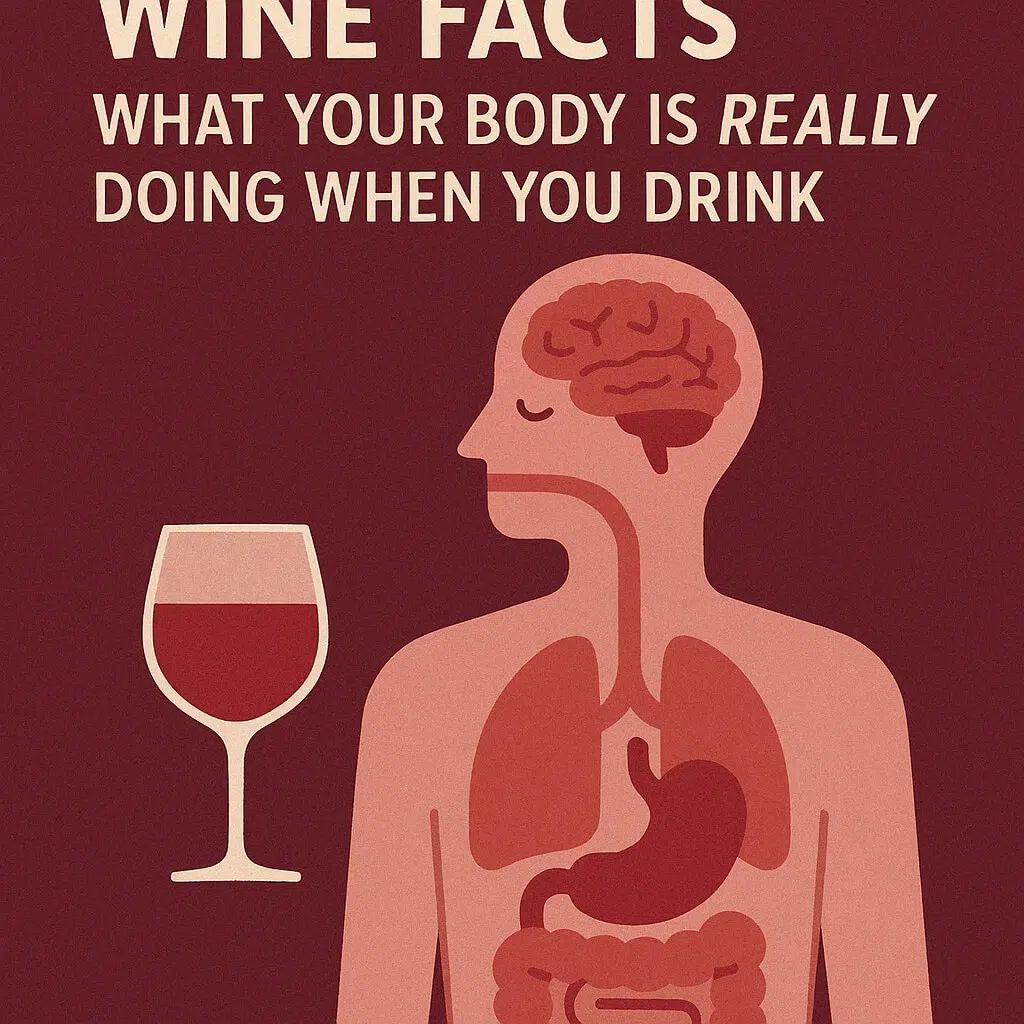
Your tongue is lying to you. Your nose has been doing all the work. And that headache? You’ve been blaming the wrong thing for years. Here’s what’s actually going on.
We spend a lot of time talking about what wine tastes like. Very little time is spent asking what’s actually happening inside your body when you drink it. Turns out — quite a lot. And some of it will make you rethink everything from how you smell a glass to why you woke up with a headache last Sunday. These wine facts are rooted in real science, explained like a human being wrote them.
1. Your Tongue Detects 5 Things. Wine Has Over 1,000 Compounds. Do the Math.
Here is a wine fact that should permanently change how you taste: roughly 80% of what you experience as flavor is actually smell. Not taste. Smell. Your tongue — that confident, pink organ you’ve trusted your whole life — can only detect five signals: sweet, salty, sour, bitter, and umami. That is it. That is the full list.
Everything else — the dark cherry, the toasted oak, the leather, the “hint of graphite” that one person at every tasting insists they detect — is coming entirely from your nose. Wine contains over 1,000 distinct aromatic chemical compounds. When you swirl a glass and inhale, volatile molecules travel up through your nasal passage, bind to olfactory receptors, and your brain stitches together what you experience as flavor. It’s less tasting and more — your brain putting on a full production with very limited cast members.
This is also why two people can smell completely different things in the exact same glass and both be technically correct. Your olfactory memory is personal. It’s built from every smell you’ve ever encountered. One person smells blackcurrant because they grew up picking them. Another smells “forest floor” because they hiked a lot. Same wine. Different brains. Different experience.
💡 This is also why wine tastes like expensive disappointment when you have a blocked nose. Your nose checked out. Your tongue never stood a chance.
What This Actually Means For You
Sommeliers aren’t born with better palates. They’ve trained their olfactory memory — deliberately and repeatedly — by smelling everything. Coffee grounds, fresh earth, cut grass, dried herbs. The more smell references your brain has stored, the more you can identify in a glass. Tasting wine is a learnable skill. Your nose just needs the reps.
2. Tannins Aren’t Bitter. You’re Not Tasting Them at All — You’re Feeling Them.
Ask someone to describe tannins and nine times out of ten they’ll say “bitter.” Understandable. Also wrong. Tannins are polyphenolic compounds — found in grape skins, seeds, stems, and oak barrels — and here is the key wine fact: they do not trigger your taste receptors. At all. Not even a little.
What they do instead is bind to the proteins in your saliva — specifically a group called proline-rich proteins — and cause them to clump together and pull away from your mouth’s soft tissue. The result is that dry, grippy, mouth-coating sensation you feel after a sip of young Cabernet or Barolo. That’s not a flavor. That’s a physical reaction happening in your mouth. You are feeling tannins. Not tasting them.
This distinction matters because it completely explains why the steak-and-red-wine pairing is such a brilliant one. The fat and protein in the meat coats the proteins already in your mouth — giving the tannins something else to bind to instead of your sensitive oral tissue. The grippy astringency softens dramatically. The wine suddenly feels smooth. It isn’t magic. It’s mouth chemistry working exactly as it should.
🥩 The wine-and-steak pairing isn’t romantic tradition. It’s your mouth using meat as a buffer. Delicious, delicious science.
10× The difference in tannin concentration between a young Barolo and a light Pinot Noir — experienced entirely as texture and grip. Your taste buds are not involved.
Bonus Wine Fact
Tannins also act as a natural preservative — one of the main reasons high-tannin red wines age better and longer than low-tannin ones. The same compounds that grip your mouth are protecting the wine from oxidation inside the bottle. Structure and shelf life in one molecule.
3. Sulfites Are Not Giving You That Headache. Please Stop Blaming the Raisins’ Cousin.
“I can’t drink red wine — the sulfites give me headaches.” You’ve heard this sentence. You may have said it. It is one of the most confidently repeated wine myths in existence and the science simply does not support it. Here’s the wine fact that blows the whole theory apart: white wine contains more sulfites than red wine. Consistently. Measurably. More.
And dried fruit — raisins, apricots, dried mango, the mix in your trail mix — contains five to ten times more sulfites than any glass of wine you will ever pour. If sulfites were genuinely causing your headache, the school lunchbox would be a public health crisis. Nobody is leaving a dinner party early because of the apricots.
The real story is more complicated and more interesting. Red wine headaches are most likely caused by a combination of factors: biogenic amines — specifically histamine and tyramine — which are found in significantly higher concentrations in red wine than white. Tannins, which trigger serotonin release in some people and can cause vasoconstriction — the tightening of blood vessels associated with headache onset. Alcohol-induced dehydration. And individual sensitivity to specific flavonoids present in red grape skins. It’s not one culprit. It’s a committee.
🍇 The raisin sitting quietly in your cereal has more sulfites than your entire glass of Cabernet. Think about that next time you blame the wine.
<1% The proportion of the population with a confirmed sulfite sensitivity — and even then, the reaction is typically respiratory, not a headache. The rest of us need a better theory.
What To Do Instead
If red wine consistently gives you headaches, try drinking a full glass of water alongside it — dehydration is one of the most likely contributors. You can also experiment with lower-tannin reds like Pinot Noir or Gamay. If the headaches disappear, tannins were probably the issue. If they persist across all reds, histamine sensitivity might be worth exploring with an actual doctor rather than a wine blog.
Your Body Was Always Part of the Tasting
These wine facts don’t make wine more complicated — they make it more fascinating. Your nose, your saliva proteins, your olfactory memory, your individual biochemistry — all of it is part of what makes every glass a different experience for every person. That’s not a flaw in how we taste wine. That’s the whole point.
Read Part B next — where we get into the geology, the history, and why the most “radical” wine movement is actually the oldest one on earth.
#WineFacts#WineScience#WineTannins#WineEducation#WineBlog
Enjoy wine without the snobbery?
Make The Finest Italian Wine one of your Preferred Sources on Google.
Add The Finest Italian Wine to Preferred SourcesDiscover more from The Finest Italian Wine
Subscribe to get the latest posts sent to your email.