Ferragosto Wine Guide: Italy’s Holiday for Doing Nothing
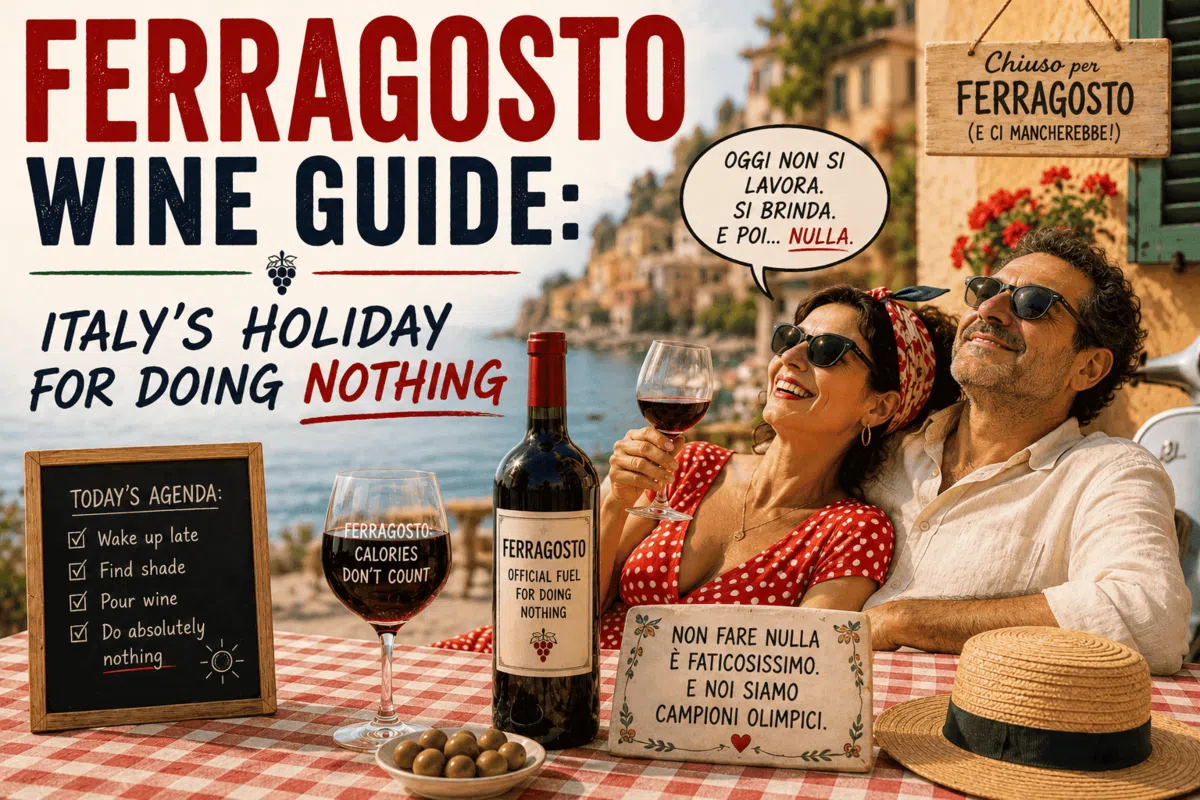
Every August 15th, Italy does something most countries can’t quite pull off. It stops. Not just offices and schools, which close for weeks anyway. Shops shutter. Small towns empty out. Even cities built for tourists go strangely quiet. Half the country has already left for the coast, the mountains, a lake, or a cousin’s house with a garden and enough food to suggest nobody is planning to leave soon. Italians call it Ferragosto. It might be the most committed a nation has ever been to doing absolutely nothing on purpose.
If you’ve never lived through one, it’s worth understanding. Not because you need to plan around it next August, but because it explains something real about how Italy drinks in the summer. Ferragosto doesn’t have an official wine. It doesn’t need one. The wine simply follows the day, and Ferragosto is a very long day.
A Roman Emperor Invented This, and He Wasn’t Being Subtle About It
Ferragosto traces its name back to Feriae Augusti, a period of rest introduced by Emperor Augustus in 18 BC after weeks of agricultural work and existing summer festivals. Augustus essentially gave people official permission to relax. He also attached his own name to the occasion while he was at it. Subtlety was never really the point of being Emperor.
Centuries later, the Catholic celebration of the Assumption of Mary became associated with August 15th, giving modern Ferragosto its religious significance. Somewhere along the way, the ancient tradition of taking a break and the religious feast became part of the same enormous summer occasion. Today Ferragosto is one of Italy’s most important holidays. That’s remarkable staying power for something that began, more or less, with an emperor telling everybody to stop working.
What Actually Ends Up in the Glass
Ferragosto doesn’t have a single official wine, and that’s part of the appeal. What it has instead is a sequence of events, and the bottle changes depending on where you happen to be when somebody decides it’s time to open one.
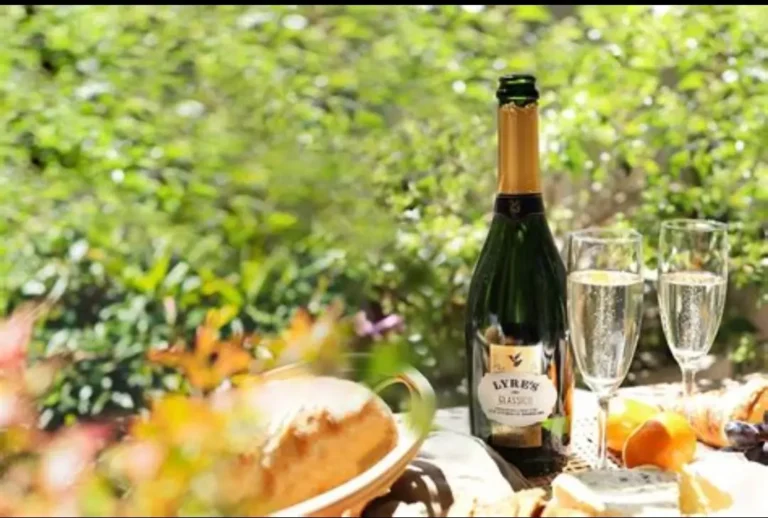
Aperitivo often means Prosecco. It’s light, cold and asks very little of you, which is exactly the job description for a wine on a day when ambition has temporarily left the country. If you’ve ever wondered why Prosecco and Champagne aren’t actually the same thing, Ferragosto is probably not the afternoon to conduct the experiment. Just pour the Prosecco before somebody eats all the olives.
Rosato does some of its best work here too. Bardolino Chiaretto feels almost designed for an August afternoon, particularly around Veneto and Lake Garda. Cold, fresh, pink and about as serious as a pool float shaped like a flamingo. Rosé has always belonged to summer, and Ferragosto simply gives it a national holiday to prove the point.
Lunch is where things get interesting because Ferragosto lunch has a habit of refusing to end. Seafood and lighter dishes call for crisp whites such as Soave, Vermentino or Pinot Grigio. You sit down at one, look at your phone sometime later and discover it’s nearly four. Nobody remembers agreeing to a three-hour lunch. It simply happened. This is Italy. Chairs have consequences.
Then Someone Lights the Grill
Then there’s the grigliata, Italy’s answer to a barbecue, which really means one person at the grill and several people standing nearby explaining how that person is doing it wrong. This is where lighter reds earn their place. Bardolino served slightly chilled or a lively Lambrusco can handle sausages, grilled meat and smoke without making you regret your decisions in 34-degree heat. It’s also a useful reminder that properly serving wine doesn’t always mean treating the bottle like a fragile museum exhibit.
And yes, Franciacorta can absolutely come to Ferragosto. A cold bottle of serious Italian sparkling wine has never ruined anybody’s afternoon. If someone arrives carrying one, welcome them warmly. This person understands friendship. The bottle that really looks confused is the enormous, tannic red somebody has decided to open on a beach at two in the afternoon. There is a time for magnificent Italian reds. Under an umbrella while your feet are covered in sand may not be it.
The Holiday About Doing Nothing Takes an Enormous Amount of Effort
Here’s the part I find genuinely funny about Ferragosto. It’s supposed to be the day Italy stops. In practice, it might be the most labour-intensive day of the entire summer.
Someone has to pack the cooler. Another person buys enough food for six people and somehow comes home with enough for eighteen. By seven in the morning, you’re sitting in coastal traffic because apparently everybody else had the same brilliant idea about leaving early. Then comes the search for parking, followed by carrying the chairs, towels, umbrella, watermelon, wine and the mysterious extra bag containing things nobody will use but apparently could not be left at home. Finally, someone has to keep the grill from turning every last sausage into charcoal while everybody else stands around holding a glass and offering completely free advice.
Eventually, that person gets handed a plate and told to relax, as if relaxation is a switch you can flip after a traffic jam that started before breakfast.
The whole day is built on a small, comfortable lie. Everyone agrees to call it rest. Everyone quietly knows better.
Living Near It
I live in Veneto, and Ferragosto here isn’t subtle. You can almost watch normal life begin disappearing before August 15th arrives. Roads towards the coast get heavier. Businesses close. Cities feel oddly hollow, the way a place does when everyone who normally fills it has gone somewhere else at once. Meanwhile Jesolo, Lake Garda and every piece of water capable of accommodating a towel seem to be receiving the population that vanished from everywhere else.
What sticks with me isn’t really the scenery. It’s the sheer scale of the agreement. An entire country looks at the calendar, nods, and decides that today is not the day for productivity. Then a large percentage of that country wakes up ridiculously early, packs half the house into a car, sits in traffic, searches for parking, cooks for ten relatives and calls the whole thing relaxing.
Maybe that’s Ferragosto. Doing nothing is hard work.
You might as well open the wine.
Quick Answers
What is Ferragosto?
Ferragosto is an Italian public holiday celebrated on August 15th. Its name comes from the ancient Roman Feriae Augusti, introduced by Emperor Augustus in 18 BC. August 15th is also the Catholic Feast of the Assumption of Mary.
What do Italians drink on Ferragosto?
There is no official Ferragosto wine. Prosecco and rosato work naturally for aperitivo and hot afternoons, crisp Italian whites suit seafood and long lunches, while lighter reds such as Bardolino and Lambrusco work particularly well with a grigliata.
What wine should I take to a Ferragosto barbecue?
Try a fresh red such as Bardolino or Lambrusco, which can both work well slightly chilled. In August heat, they’re often much easier company than a big, heavily tannic red.
What wine should I take to a Ferragosto beach lunch?
Prosecco, Chiaretto, Vermentino or another crisp Italian white are easy choices. Keep it cold and leave the enormous red at home. It has done nothing wrong and doesn’t deserve this.
Enjoy wine without the snobbery?
Make The Finest Italian Wine one of your Preferred Sources on Google.
Add The Finest Italian Wine to Preferred SourcesDiscover more from The Finest Italian Wine
Subscribe to get the latest posts sent to your email.