What to Drink During Vendemmia, Italy’s Harvest Season
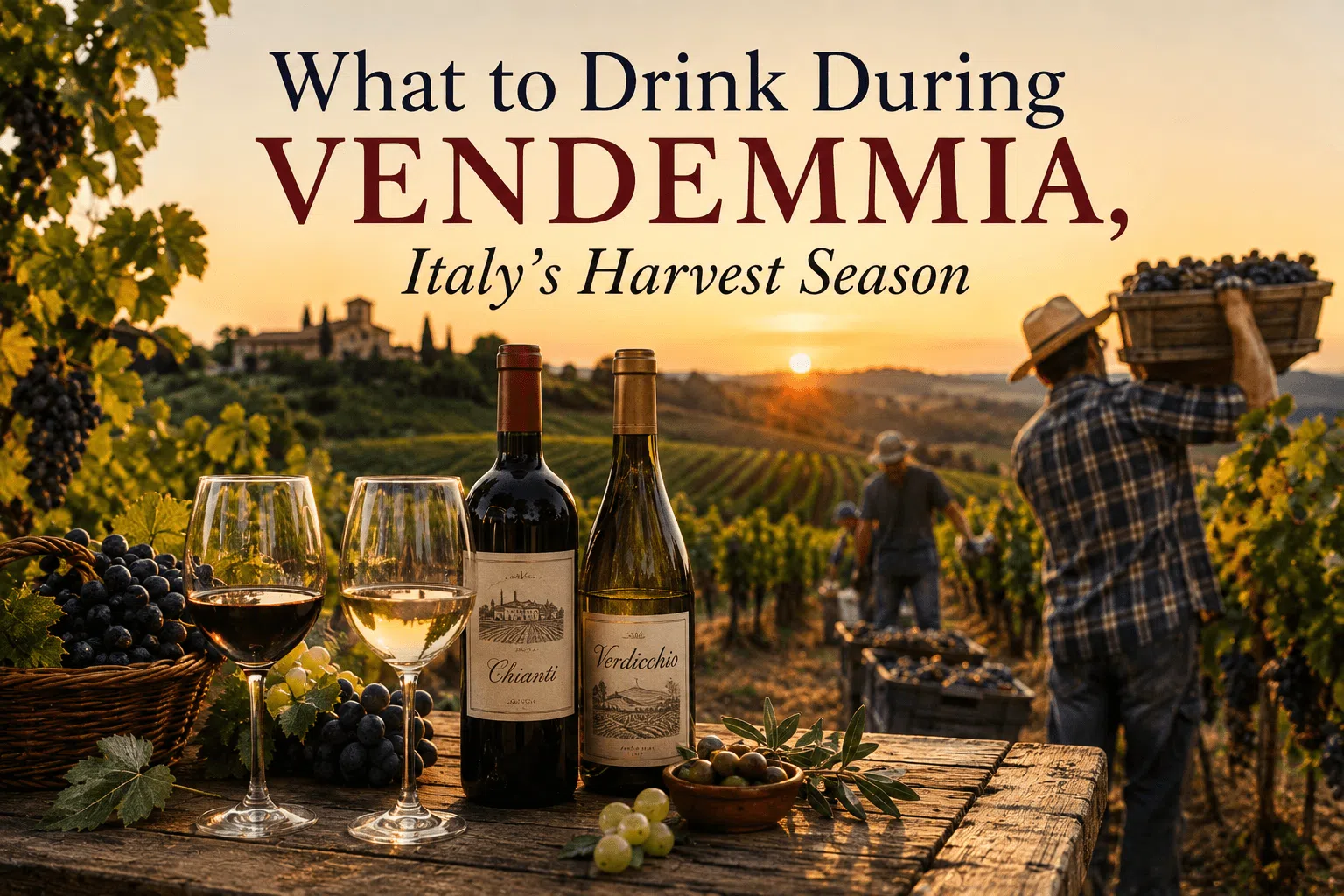
Right now, across most of Italy, vendemmia is happening. That’s the word for the grape harvest, and if you live here, you feel it before you see it. Tractors moving slower through country roads because they’re loaded down. Restaurant menus quietly swapping in something new. A kind of low hum of activity in every vineyard town. Even the ones that don’t look like much the rest of the year.
Italy doesn’t really run on a harvest schedule so much as a national mood swing. An entire country quietly reorganizes itself around when a few million grapes feel like being ready. Grapes, famously, answer to nobody. Not the calendar, not the winemaker, and certainly not whatever plans you had for the weekend.
Most people think of harvest as a producer’s problem, not a drinker’s occasion. Understandable, since nobody’s handing you a glass straight off the vine. But what happens during these few weeks quietly shapes what ends up in your glass for the next several years. There’s a specific, small window of wines that only make sense to drink right now, while harvest is actually happening.
Harvest Isn’t One Day, It’s a Slow Wave Across the Whole Country
Vendemmia doesn’t happen on a single date. It moves. White grapes come in first, usually in late August, because they ripen faster. Growers need to pick them before they lose the acidity that makes them taste alive. Reds follow through September and into October. The slowest, most stubborn varieties, Nebbiolo especially, can hang on the vine into November.
Timing isn’t just about ripeness either. Growers sometimes pick grapes at night or before dawn specifically to keep them cool. Warm fruit starts changing the moment it’s off the vine. It’s one of the more overlooked decisions in winemaking, when exactly to cut a bunch of grapes. It has more influence over what you’ll taste than most people assume.
This Year’s Harvest Is Already Deciding What You’ll Drink in 2029
Here’s the part that actually matters to you as a drinker, not just a spectator. The word for a wine’s harvest year is vintage. A hot, dry vendemmia produces a completely different wine than a cool, wet one, even from the exact same vineyard. Too much heat and the grapes ripen fast but lose acidity, giving you a wine that can taste heavy or flat. A cooler, well-timed season tends to hold onto that acidity and produce something with more lift and structure.
None of this shows up in your glass today. It shows up in two, three, sometimes ten years, when that bottle finally reaches a shelf. Paying attention to harvest season now is really paying attention to what you’ll actually be drinking later. Whether you realize it or not.
Not Everyone Is Rushing
Most of the country races to pick before heat or rain ruins the fruit. A handful of Italian wines take the opposite approach entirely. Amarone della Valpolicella and Vin Santo start the same way, with a normal pick. But then producers set the grapes aside to dry for months afterward, traditionally on straw mats. The grapes shrivel until they look closer to raisins than fruit. That patience is the entire point. It concentrates the sugar and flavor into something far more intense than an early harvest could ever produce.
So one winemaker picks grapes in a panic before a storm rolls in. Another walks past the exact same vineyard, checking on fruit that isn’t going anywhere for weeks. Same season, completely opposite philosophy.
What’s Actually Worth Drinking Right Now
If you want to drink something that’s genuinely tied to this exact moment on the calendar, skip the reds still resting in barrel. Reach for a Vino Novello instead. It’s what happens when a winemaker skips the two quiet years a barrel usually demands and decides, politely but firmly, absolutely not. Winemakers use carbonic maceration and release it just weeks after picking, usually timed to San Martino on November 11th. It’s Italy’s answer to Beaujolais Nouveau, basically a wine for people who consider patience a personality flaw.
The tradition traces back to farmers settling their harvest contracts around that date. They’d crack open the first wine of the season to celebrate. Here in Veneto, it still comes with its own local touch. A cookie shaped like San Martino on horseback, which bakeries serve right alongside the glass. It’s not for aging or deep thought. Pour it while the harvest that made it is still technically finishing somewhere down the road.
If red isn’t where your head’s at yet, rosé still has a case to make for itself this time of year. It works especially well in the earlier weeks of vendemmia, when the days are still warm even if the nights have turned. Consider it the transition wine, not quite summer, not quite ready for the heavier reds harvest is about to hand us.
Living Through It
I live in Veneto, and vendemmia here isn’t some quaint tradition you read about in a guidebook. It’s just what late summer turns into. You start noticing the grape trucks on the smaller roads. People talk about it at the market the same way someone elsewhere might mention it’s getting colder or the leaves are turning.
What I like most about it, honestly, is how unglamorous the actual work is next to how romantic the word sounds. Vendemmia conjures up images of golden light and full baskets. The reality is closer to exhausted pickers, unpredictable weather, and a lot of decisions people make under real time pressure. But that tension, rushed picking versus patient drying, night harvest versus day, is exactly what makes the wines worth paying attention to. You’re not just tasting grapes. You’re tasting a decision someone made under pressure, months or years before the bottle ever reached you.
So next time someone hands you a glass and gets dreamy about harvest moons and golden light, just smile and nod. Somewhere behind that bottle, someone was almost certainly swearing at a tractor at two in the morning.
Quick Answers
What is vendemmia? Vendemmia is the Italian word for the grape harvest, the period when growers pick and bring in the grapes to make wine. It generally runs from late August through October, though growers pick some grapes later.
Does harvest timing actually affect how wine tastes? Yes. Picking too late can cost a wine the acidity that gives it structure and freshness. Picking too early may leave the flavor underdeveloped. Weather during harvest also shapes the vintage, which is why the same wine can taste noticeably different from one year to the next.
What is Vino Novello? Winemakers make Vino Novello shortly after harvest using carbonic maceration. That process produces a fruity, light-bodied wine you drink soon after release rather than age. Producers traditionally release it around November 11th, similar in spirit to French Beaujolais Nouveau.
Why do some Italian wines wait so long to be picked? Wines like Amarone della Valpolicella and Vin Santo use grapes that producers pick and then dry for months afterward. That concentrates their sugar and flavor. This deliberately delayed process is the opposite of the rush to harvest happening elsewhere in the same season.
Is there a best wine to drink during harvest season? There’s no single answer, but Vino Novello ties most directly to the season itself. Producers make and release it within weeks of picking. Rosé also works well in the earlier, still-warm weeks of harvest as a transition between summer and the heavier reds that follow.
Enjoy wine without the snobbery?
Make The Finest Italian Wine one of your Preferred Sources on Google.
Add The Finest Italian Wine to Preferred SourcesDiscover more from The Finest Italian Wine
Subscribe to get the latest posts sent to your email.