The Big Reds Italy Makes You Wait All Year For
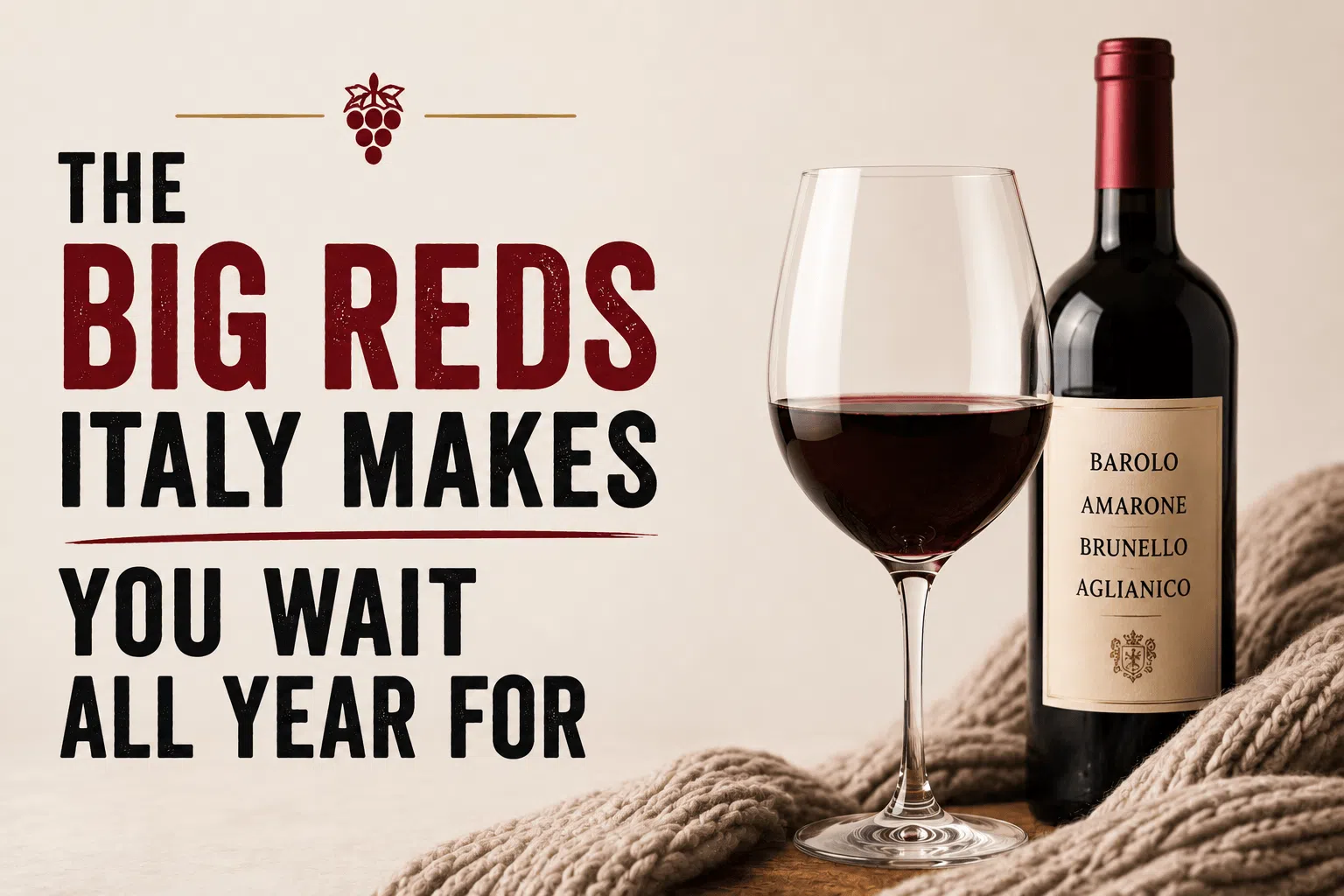
Every wine has a season it’s built for, whether anyone admits it or not. Rosé wants sunshine. Prosecco wants a terrace. And somewhere around the point where you start wearing a scarf indoors, out of necessity and not fashion, a certain kind of red wine finally gets let off the bench.
Big, structured reds spend most of the year looking a little out of place. Crack one open in July and it fights the heat instead of complementing it, the wine equivalent of showing up to the beach in a wool coat. Winter is where these wines stop being a slightly odd choice and start being exactly right.
Why a Heavier Wine Makes Sense in the Cold
This is partly physical, not just mood. Structured reds carry more tannin, more body, and often more alcohol than what you’d pour in summer. All three read as warmth in the mouth. Cold weather also slows your palate down, and a delicate white can taste thin once you’re chilled to the bone. A wine with real weight holds its own instead.
Serving temperature matters too. A big red poured too warm in summer feels heavy and clumsy. That same wine, poured at room temperature in a cold house, lands exactly where it should. Winter doesn’t just suit these wines. It corrects them.
The Wines That Actually Earn the Season
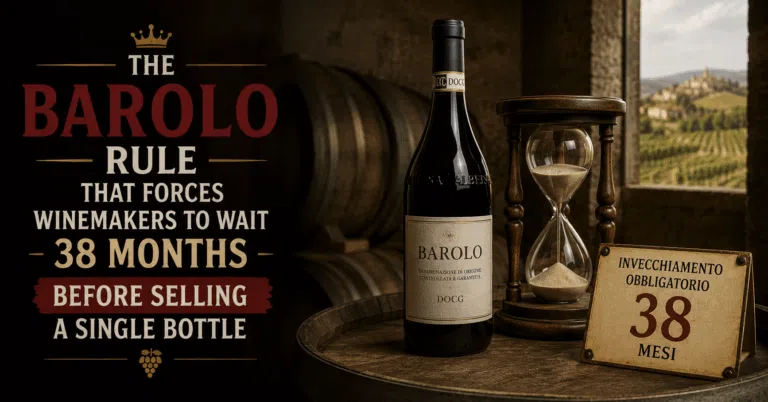
Nebbiolo sits at the top, Barolo especially. Firm tannin, real acidity, and a bottle that often needs a few hours of air, or a few extra years in the cellar, before it opens up. Barolo has never once in its life been in a hurry, and it’s not about to start just because you have a Tuesday to get through.
Amarone della Valpolicella earns its spot too. It’s one of the reds people reach for on a cozy night by the fireplace, rich, dense, layered with dried fruit and a little chocolate. Calling it “just a red wine” is technically accurate and a little bit of an insult.
Brunello di Montalcino, Aglianico from the south, and a well-aged Sangiovese round out the list. What connects them isn’t the grape. It’s the backbone. Cold weather bullies delicate wines, and these are the ones built to hit back.
The Wine Italy Deliberately Ruins on Purpose
Vin brulé, Italy’s answer to mulled wine, takes a perfectly good red, usually something simple like Sangiovese or Barbera, and heats it with orange peel, cinnamon, and cloves until it barely resembles wine anymore. The tradition comes from the Alpine north, particularly Piemonte, where winters earn the word brutal. It shows up at Christmas markets across the country every December.
Ask a serious wine drinker what they think of heating red wine on the stove and you’ll get a slightly pained expression. Fair enough. But there’s something funny about a country this precious about temperature, serving reds slightly below room temperature and whites properly chilled, turning around every winter and just boiling a bottle with fruit in it. Vin brulé isn’t showcasing a wine. It’s warming your hands, and it couldn’t care less what a sommelier thinks about that trade.
What Winter Wine Is Actually Asking For
Italian winter isn’t dramatic, it’s persistent. Fog rolls in and settles for days. Everything gets a little grey and a little slower, and a glass of something structured and warm-feeling starts making sense in a way it doesn’t in August.
Summer wine asks almost nothing of you, a crisp white just wants you hot and a little thirsty. Winter wine asks for more. It wants you to slow down, sit still, and stay a while, the same trick Barolo plays on a cellar for a decade before it’s ready to talk. Summer wine keeps you company. Winter wine asks you to actually show up for it.
Quick Answers
Why do people drink heavier red wines in winter? Structured reds carry more tannin, body, and alcohol, all of which read as warmth. Cold weather slows the palate too, making delicate wines taste thin by comparison.
What are the best Italian wines for winter? Barolo, Barbaresco, Amarone della Valpolicella, Brunello di Montalcino, and southern reds like Aglianico. Structure and depth are the common thread.
What is vin brulé? Italy’s version of mulled wine, made by heating red wine with orange peel and spices like cinnamon and cloves. It comes from the Alpine north, particularly Piemonte, and is common at Christmas markets across the country.
Does serving temperature matter more in winter? Yes. A big red at room temperature tastes balanced in a cold house, but can feel heavy in a warm room, which is more often a summer problem.
Is Amarone a winter-only wine? Not exclusively, but its richness and higher alcohol make it especially suited to cold weather and slow evenings, which is part of why it shows up so often around the holidays.
Enjoy wine without the snobbery?
Make The Finest Italian Wine one of your Preferred Sources on Google.
Add The Finest Italian Wine to Preferred SourcesDiscover more from The Finest Italian Wine
Subscribe to get the latest posts sent to your email.