Pompeii Is Making Wine Again. Yes, That Pompeii.
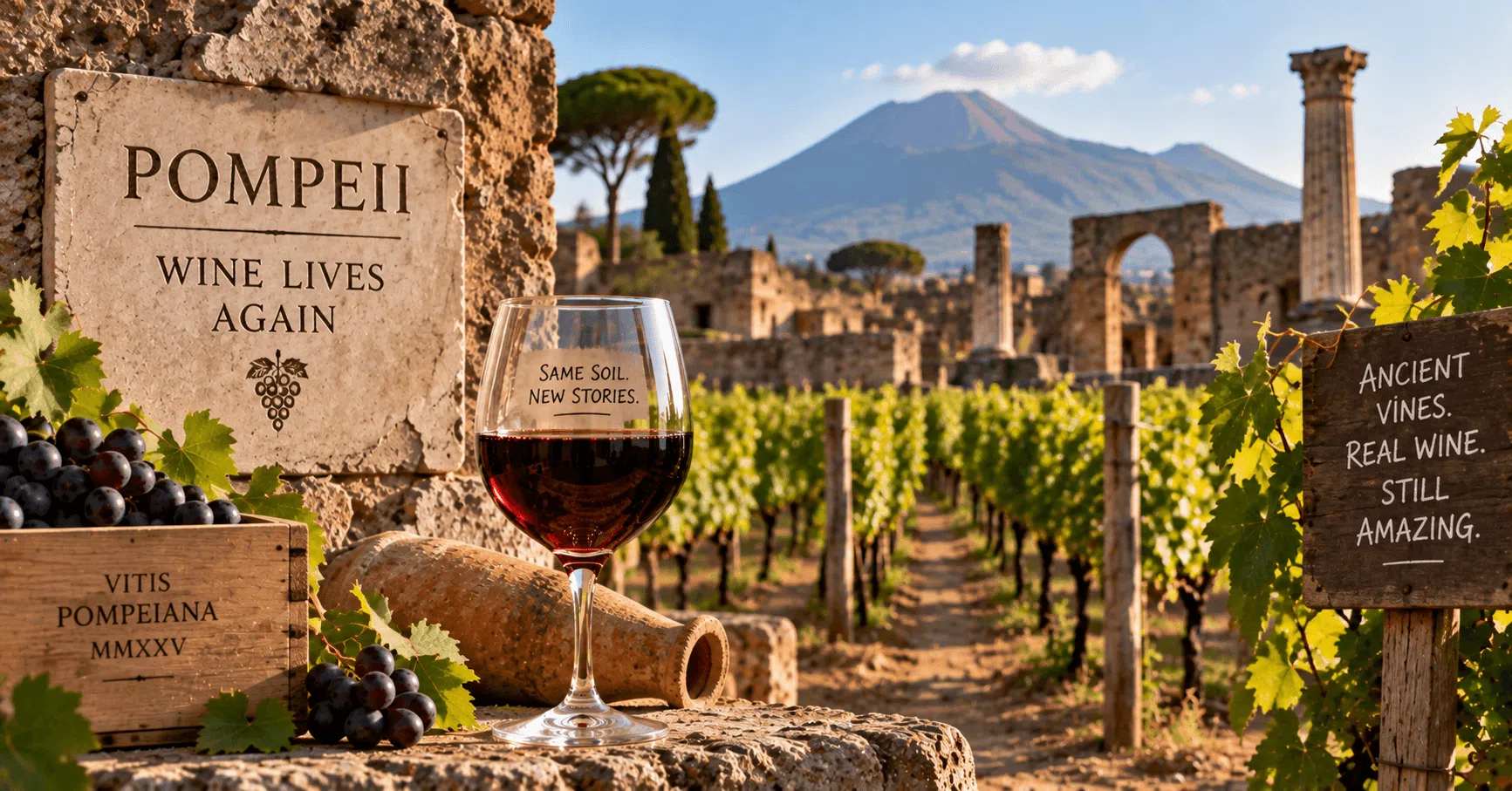
Picture walking through Pompeii. Ancient streets, ruined houses, frescoes that somehow survived a volcano, Vesuvius sitting in the distance looking far too calm considering what it did the last time. Then you turn a corner and there’s a vineyard. Not a reconstruction behind glass, not a handful of decorative vines planted for the photos. A genuine, working vineyard.
In September 2026, workers brought in the first grapes there in generations. Pompeii is growing wine grapes again, and there are serious plans for what eventually ends up in the bottle. Yes, that Pompeii.
14 Small Vineyards Among the Ruins
The September harvest took place across 14 small vineyard plots inside the Domus areas of the Archaeological Park of Pompeii, together covering just over one hectare. What makes them interesting isn’t only that they exist, it’s that they aren’t identical. Different exposures, different humidity levels, different training systems, and the ancient walls surrounding each plot creating their own small microclimates.
The grapes growing there are Aglianico, Piedirosso and Sciascinoso, red varieties deeply tied to Campanian wine culture. Nobody involved is treating this as a cute one-off. The Archaeological Park has partnered with Gruppo Tenute Capaldo, the group behind Feudi di San Gregorio and Basilisco, to build something considerably bigger. They expect the project to grow beyond six hectares. A winery, tastings and bottles for sale are all part of the plan eventually. Pompeii isn’t just showing us how people once grew grapes here. It’s putting the vineyards back to work.
Wine Was Never a Footnote in Pompeii
There’s a reason wine is the crop coming back first. It ran through everyday life here. Archaeologists have found evidence of vineyards, amphorae, storage spaces and places where people sold and drank wine. Pompeii also sat within Campania, one of the more important wine producing areas of the Roman world.
Then Vesuvius erupted in AD 79. The eruption destroyed the city and, in the same breath, preserved an extraordinary amount of ordinary Roman life, including the vineyards. Archaeologists later identified the original planting patterns and the exact spaces where vines had grown. Nobody planted these new vineyards beside Pompeii just because vines look good against old stone walls. They belong to the story of the place.
This Isn’t Pompeii’s First Attempt
Wine didn’t vanish from Pompeii in AD 79 and reappear in 2026 out of nowhere. The Archaeological Park previously worked with Mastroberardino on the Villa dei Misteri project, which revived vineyards on the site and produced a wine from Piedirosso and Sciascinoso, the same two varieties now back in the ground alongside Aglianico.
So what’s happening now isn’t the first modern attempt to reconnect Pompeii with wine. It’s a much broader chapter. The current partnership with Gruppo Tenute Capaldo and Feudi di San Gregorio aims to expand the vineyard area and deepen the archaeological and scientific research. It also wants to develop new planting sites and eventually build dedicated winemaking facilities. Pompeii isn’t rediscovering wine for the first time. It’s taking something already revived and making it far more ambitious.
They’re Not Pretending It’s Still AD 79
This is where I got suspicious at first. Whenever someone says they’re recreating a 2,000 year old drink, part of me expects a clay pot, some seawater, and a straight face insisting that’s authenticity. That’s not what’s happening here.
The project uses archaeology and historical evidence to understand ancient viticulture, but the wine itself relies on modern winemaking knowledge. Professor Attilio Scienza of the University of Milan is researching the ancient cultivation practices. Feudi di San Gregorio brings the modern agronomic and winemaking side. It isn’t “let’s pretend it’s still Roman times.” It’s closer to asking what a 2,000 year old wine landscape can teach us if we bring it back using what we know now. That’s a more interesting question, and a harder one to answer.
Pompeii Isn’t the Only Vineyard Coming Back
The project is already expanding beyond the ancient city’s Domus. At Stabiae, near Villa San Marco, growers planted a new vineyard in early 2026. The planting material came from century old vines that Feudi di San Gregorio has preserved in Irpinia. Nobody bought anonymous vines and dropped them next to some ruins. They’re using genetic material from Campania’s own viticultural history to build the next stage of the project.
The current Pompeii vineyards focus on red grapes. Stabiae should bring in some of Campania’s great whites too: Fiano, Greco and Falanghina. For the first time, I’m genuinely curious what a Roman era vineyard tastes like in white as well as red.
So When Can We Drink It?
Not tomorrow. Wine has, once again, reminded everyone that it doesn’t hurry just because people are excited about it. The new Stabiae vines are still young, and the team is building the project in stages. A dedicated winery for vinification and ageing is planned in the Stabiae area, aiming to be ready around the 2028 harvest. First wines from this new phase should arrive by 2029. At full scale, the ambition is around 30,000 bottles a year. Visitors should eventually be able to taste and buy the wine inside the Archaeological Park itself, with some ageing possibly happening inside the Domus.
One day you could walk through Pompeii, see where Romans once grew vines, watch vineyards growing there again, and then taste wine connected to that exact landscape. Wine tourism is getting a little ridiculous. In this case, I mean that as a compliment.
What Will It Taste Like?
This is the question I really want answered, and honestly, nobody should pretend to know yet. Several grape varieties, several microclimates and a winemaking programme still taking shape make it too early to guess with any confidence.
Aglianico tends to produce structured, deeply coloured wines with serious tannins and real ageing potential. Piedirosso is lighter on its feet, bringing freshness and red fruit character. Sciascinoso is another traditional Campanian grape that contributes freshness and softer fruit. Later, Fiano, Greco and Falanghina should bring a completely different side of Campania into the project.
But the most interesting ingredient might be the place itself. Researchers are studying how vines behave inside these small, walled vineyard plots, which makes the eventual bottles more than archaeological souvenirs. There’s a real chance we learn something from them.
Please Don’t Turn This Into a Gimmick
There’s one real danger here. Put the word Pompeii on a label and the marketing writes itself. That’s exactly why I hope critics and drinkers judge the wine on its own merits, not on novelty alone. A bottle shouldn’t be interesting only because the grapes grew next to famous ruins.
The real opportunity is bigger than that. Pompeii can show people that Italy didn’t recently invent wine, brand it nicely and ship it abroad. Wine has been part of this landscape for thousands of years. People grew it here, drank it here, traded it, built culture around it, and then an entire city disappeared under volcanic ash. Centuries later, vines are growing among its houses again. That story doesn’t need much marketing at all.
My Final Verdict
I’ve written about expensive Italian wines and the bottles people collect instead of drinking. This one feels different, because Pompeii’s wine project isn’t really about resurrecting some mythical Roman recipe. It’s about making history alive enough to touch, and eventually, to drink.
I don’t know if the new Pompeii wine will be brilliant. Nobody does yet. Maybe I’ll taste it one day and spend ten minutes discussing tannins like a responsible wine writer. Or maybe I’ll just sit there thinking: these grapes grew in Pompeii. I suspect it’ll be the second one.
Salute.
Kelly’s Wine Note
The Archaeological Park of Pompeii harvested grapes from 14 small vineyard plots (just over one hectare) inside its Domus areas in September 2026, growing Aglianico, Piedirosso and Sciascinoso. The project is a partnership with Gruppo Tenute Capaldo (Feudi di San Gregorio, Basilisco), with plans to expand beyond six hectares, including a new vineyard at Stabiae planted with century old vine material preserved by Feudi di San Gregorio in Irpinia. Plans call for a winery in the Stabiae area by around 2028, with first wines arriving by 2029 and a long term target of roughly 30,000 bottles a year. Professor Attilio Scienza of the University of Milan is researching ancient cultivation practices. An earlier project with Mastroberardino, Villa dei Misteri, previously revived vineyards on the site using a blend of Piedirosso and Sciascinoso.
Quick Questions
Is wine really being produced inside Pompeii?
The Archaeological Park of Pompeii is cultivating working vineyards again. The park harvested grapes in September 2026 from 14 small vineyard plots among the Domus, part of its expanding viticulture project.
Which grapes are grown in Pompeii?
The current Domus vineyards grow Aglianico, Piedirosso and Sciascinoso. The expanding project at Stabiae should also include Campanian white varieties such as Fiano, Greco and Falanghina.
Has Pompeii produced modern wine before?
Yes. The Archaeological Park previously worked with Mastroberardino on the Villa dei Misteri vineyard and wine project. The current partnership with Gruppo Tenute Capaldo and Feudi di San Gregorio is a new and significantly larger phase.
When will the new Pompeii wine be available?
The first wines from the new project are expected by 2029. Plans call for a dedicated winery in the Stabiae area around the 2028 harvest, with an eventual production goal of approximately 30,000 bottles a year.
Continue Exploring
Enjoy wine without the snobbery?
Make The Finest Italian Wine one of your Preferred Sources on Google.
Add The Finest Italian Wine to Preferred SourcesDiscover more from The Finest Italian Wine
Subscribe to get the latest posts sent to your email.