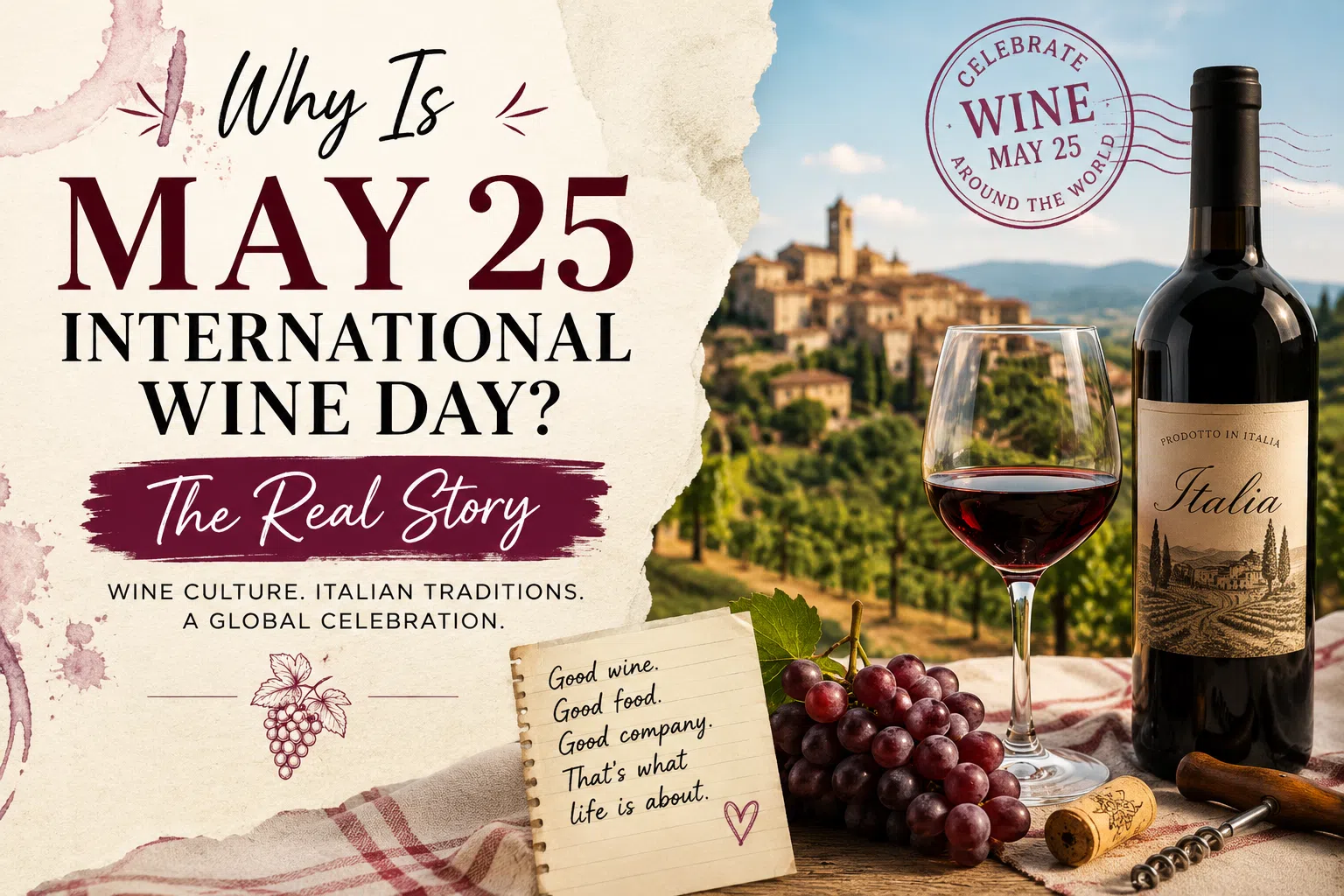
Why Is May 25 International Wine Day? The Real Story
Every year on May 25, social media suddenly turns into a vineyard.
Instagram fills up with glowing glasses of rosé, rooftop wine nights, and people confidently swirling wine like they trained in Tuscany for six months. Restaurants begin posting wine pairings nobody can pronounce properly. Somebody somewhere opens a bottle of Prosecco at 11am and calls it “celebrating culture.”
And all over the internet, one phrase appears again and again:
“Happy International Wine Day!”
But here’s the funny part.
Most people celebrating Wine Day have absolutely no idea why May 25 became Wine Day in the first place.
Including some wine lovers.
Including some wine pages.
Honestly? Probably including a few wineries too.
So naturally, I had to look into it.
Is International Wine Day Actually Real?
Yes… sort of.
May 25 is widely recognized online as International Wine Day or National Wine Day, especially among wine lovers, restaurants, bloggers, wineries, and the hospitality industry.
But unlike traditional holidays, there’s no dramatic historical event attached to it.
As romantic as it sounds, no ancient Roman emperor woke up on May 25 and declared it Wine Day.
No legendary vineyard discovery.
No historic wine treaty.
No centuries-old celebration passed down through generations.
In fact, one of the most interesting things about Wine Day is that nobody seems completely sure how May 25 officially became attached to it.
And somehow, that makes it feel even more internet-perfect.
So Why Are People Celebrating Wine on May 25?
Because wine quietly became more than just a drink.
It became:
- a lifestyle
- a travel experience
- a dinner ritual
- a luxury culture
- and for some people… an entire personality
You know the type.
The people who suddenly start saying things like:
“I’m getting notes of cherry, tobacco, and emotional complexity.”
Meanwhile the rest of us are just hoping it tastes expensive.
Over time, restaurants, wineries, bloggers, and wine brands embraced May 25 as a wine appreciation day, and eventually the internet did what the internet always does:
it turned it into a global celebration.
And honestly, wine might be one of the easiest things in the world to market.
People do not need much encouragement to romanticize a glass of wine.
Add candlelight, a vineyard view, soft music, and somebody whispering “pairing notes,” and suddenly everybody feels emotionally sophisticated.
Wine Has Always Been About More Than Drinking
Long before wine became social media content, it was already deeply connected to culture.
The ancient Greeks and Romans drank wine during:
- celebrations
- political gatherings
- family meals
- religious ceremonies
- trade discussions
Wine survived empires, wars, economic collapses, and thousands of years of history.
Which honestly says a lot about humanity’s priorities.
Civilizations collapsed multiple times, yet somehow people still protected the wine.
Respectfully, I understand.
Today, wine remains one of the strongest cultural symbols in countries like:
- Italy
- France
- Spain
And nowhere feels more emotionally connected to wine than Italy.
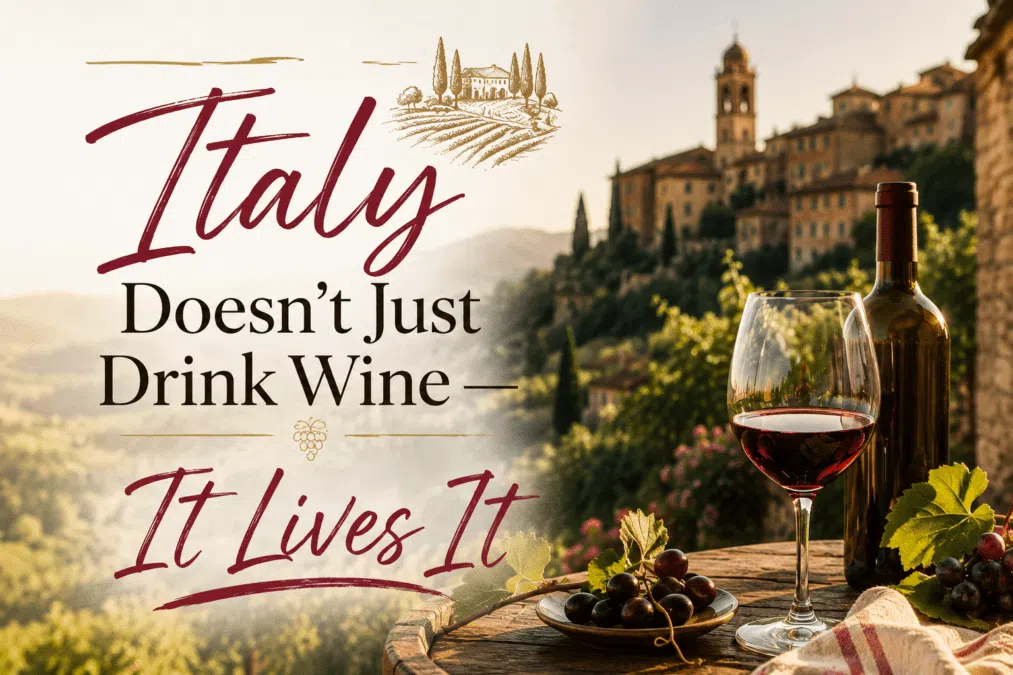
Italy Doesn’t Just Drink Wine — It Lives It
This is something many tourists don’t fully understand until they experience Italy for themselves.
In Italy, wine is not treated like some elite mysterious luxury product.
Living in Italy, I’ve realized wine here is treated less like a drink and more like part of everyday life.
It’s normal to see wine during:
- long family lunches
- summer dinners outside
- vineyard weekends
- village festivals
- slow Sunday meals that somehow last four hours
And unlike trendy wine culture online, Italian wine culture feels less performative.
People are not always trying to impress you with wine here.
Sometimes the best wine you drink in Italy comes from:
- a tiny countryside restaurant
- somebody’s grandfather
- an unlabeled bottle at a family gathering
Which, honestly, is both beautiful and slightly dangerous.
There’s something refreshing about the way Italians approach wine.
It feels less like:
“Let me show you how much I know.”
And more like:
“Sit down, eat something, pour a glass.”
The Italian Wines Perfect for International Wine Day
If you’re opening a bottle today, this is your sign to make it Italian.
Prosecco (Veneto)
Fresh, sparkling, and almost impossible to dislike.
Perfect for:
- brunch
- aperitivo
- celebrations
- pretending your balcony overlooks the Amalfi Coast
After two glasses, people suddenly start speaking with unnecessary hand gestures.
Chianti (Tuscany)
Bold, classic, and made for Italian food.
This is the wine that quietly transforms pasta night into an entire experience.
Barolo (Piedmont)
Barolo does not arrive gently.
It enters the room with confidence.
Deep, elegant, powerful, and slightly intimidating to beginners — like that one person at wine tastings who casually says:
“This vintage needed more oxygen.”
Nero d’Avola (Sicily)
One of Italy’s most underrated red wines.
Rich, smooth, warm, and usually far cheaper than people expect for the quality.
Honestly, Sicily deserves more attention in wine conversations.
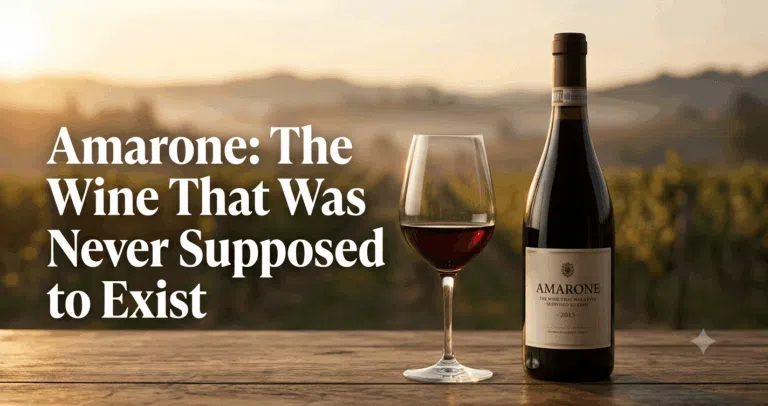
Amarone della Valpolicella (Veneto)
This is not your casual Tuesday wine.
Amarone is bold, luxurious, intense, and built for slow dinners and dramatic conversations.
One glass in and suddenly everyone starts discussing life decisions.
How Social Media Turned Wine Into an Entire Personality
At some point, wine stopped being just wine online.
Now it’s:
- aesthetic wine glasses
- vineyard vacations
- sunset reels
- “wine o’clock”
- luxury dinner photos
- couples clinking glasses in slow motion
Social media transformed wine into visual culture.
And to be fair… wine photographs extremely well.
Even people who know almost nothing about wine can recognize:
- a vineyard glowing at sunset
- a chilled glass of white wine
- a beautiful charcuterie board
It instantly feels romantic, relaxing, and slightly expensive.
Which explains why International Wine Day exploded online so quickly.
So… Is International Wine Day Just Marketing?
Technically? Probably yes.
But also… not entirely.
Because even if May 25 started as a modern promotional celebration, people connected with it for a reason.
Wine represents something many people are craving right now:
- slowing down
- gathering together
- conversation
- travel
- food
- culture
- experience
In a world where everything feels rushed, wine still asks people to pause for a moment.
And maybe that’s the real reason Wine Day survived.
Not because of history.
But because people genuinely enjoy what wine represents.
Final Thoughts
So no, there’s no dramatic ancient secret explaining why May 25 became International Wine Day.
The truth is far less cinematic.
The wine world simply chose a day to celebrate wine… and people happily accepted the assignment.
And honestly?
That may be the most wine-industry thing ever.
Still, whether you’re opening:
- a cheap supermarket Prosecco,
- a special Barolo,
- or simply pouring whatever bottle survived the back of your kitchen shelf,
International Wine Day is a pretty good excuse to slow down and enjoy the moment.
Preferably with pasta. And preferably in Italy. 🍷
Enjoy wine without the snobbery?
Make The Finest Italian Wine one of your Preferred Sources on Google.
Add The Finest Italian Wine to Preferred SourcesDiscover more from The Finest Italian Wine
Subscribe to get the latest posts sent to your email.