Why Champagne Is So Expensive (And What You’re Really Paying For)
I once watched a man spend nearly five minutes staring at a bottle of Champagne.
He picked it up.
Turned it around.
Read the label like it contained a secret.
Nodded slowly, as if the bottle had just explained itself.
Then he saw the price.
€98.
His expression changed immediately. Not anger. Not shock.
More like betrayal.
He put it back carefully… as though it might judge him on the way out.
Then he grabbed a €14 bottle of Prosecco and walked away looking emotionally recovered.
Same aisle. Same bubbles.
Very different reality.
And I couldn’t stop thinking about it.
Because nobody reacts like that to grapes.
They react to meaning.
The uncomfortable truth about Champagne
Here’s something people don’t like to admit:
Most of what you think you’re paying for isn’t inside the bottle.
It’s outside it.
In the story. In the patience. In the name. In the expectation.
And once you see it, you can’t unsee it.
The world’s most expensive waiting game
Champagne is basically wine with commitment issues… in reverse.
It refuses to rush anything.
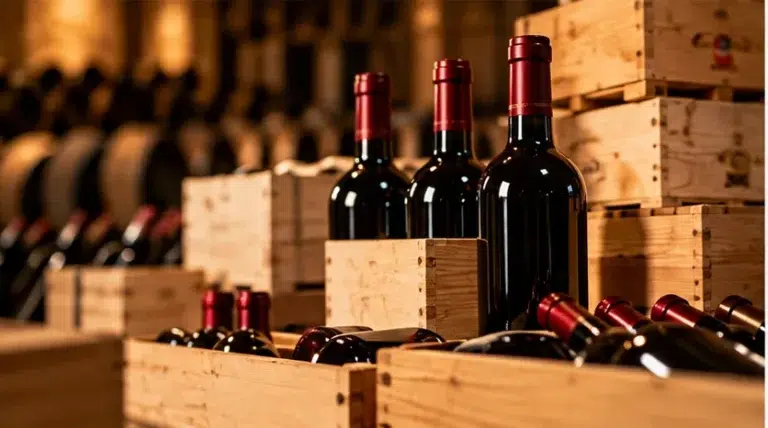
While other sparkling wines move through production relatively quickly, Champagne spends years aging quietly in cold, dark cellars.
No shortcuts.
No “good enough.”
Just waiting.
And waiting has a cost.
Workers still get paid.
Buildings still need maintenance.
Storage doesn’t become free just because the wine is asleep.
If wine were a business plan, Champagne would terrify investors.
The bottle does all the work itself
Here’s where it gets even more obsessive.
Each bottle creates its own bubbles.
Individually.
No big tank. No shared process. No shortcuts at scale.
It’s closer to handcrafted labour than mass production.
Imagine cooking a single pasta dish…
then repeating it 50,000 times…
each one slightly monitored, adjusted, and aged.
That’s Champagne.
Beautiful.
Inefficient.
Expensive.
You can’t copy the address
Not everything can be replicated.
Only sparkling wine produced in the Champagne region under strict rules can legally carry the name.
That matters more than people realise.
Because once something becomes geographically protected, supply stops being flexible.
And demand doesn’t.
So prices don’t just rise.
They settle into their position like they’ve earned it.
The part nobody says out loud
Let’s be honest.
If Champagne were sold without its history, its prestige, its weddings, its Formula 1 podiums, its movie scenes…
A lot of people would think differently.
Because part of what you’re buying is memory.
Not yours.
Theirs.
The world’s.
And that’s powerful.
A small truth about “better”
Here’s where things get interesting.
More expensive doesn’t automatically mean more enjoyable.
It just means more expensive.
There are bottles of Champagne that are technically flawless but emotionally forgettable.
And there are €14 sparkling wines that disappear faster than you intended because they simply feel right in the moment.
Wine doesn’t care about hierarchy.
People do.
So what are you actually paying for?
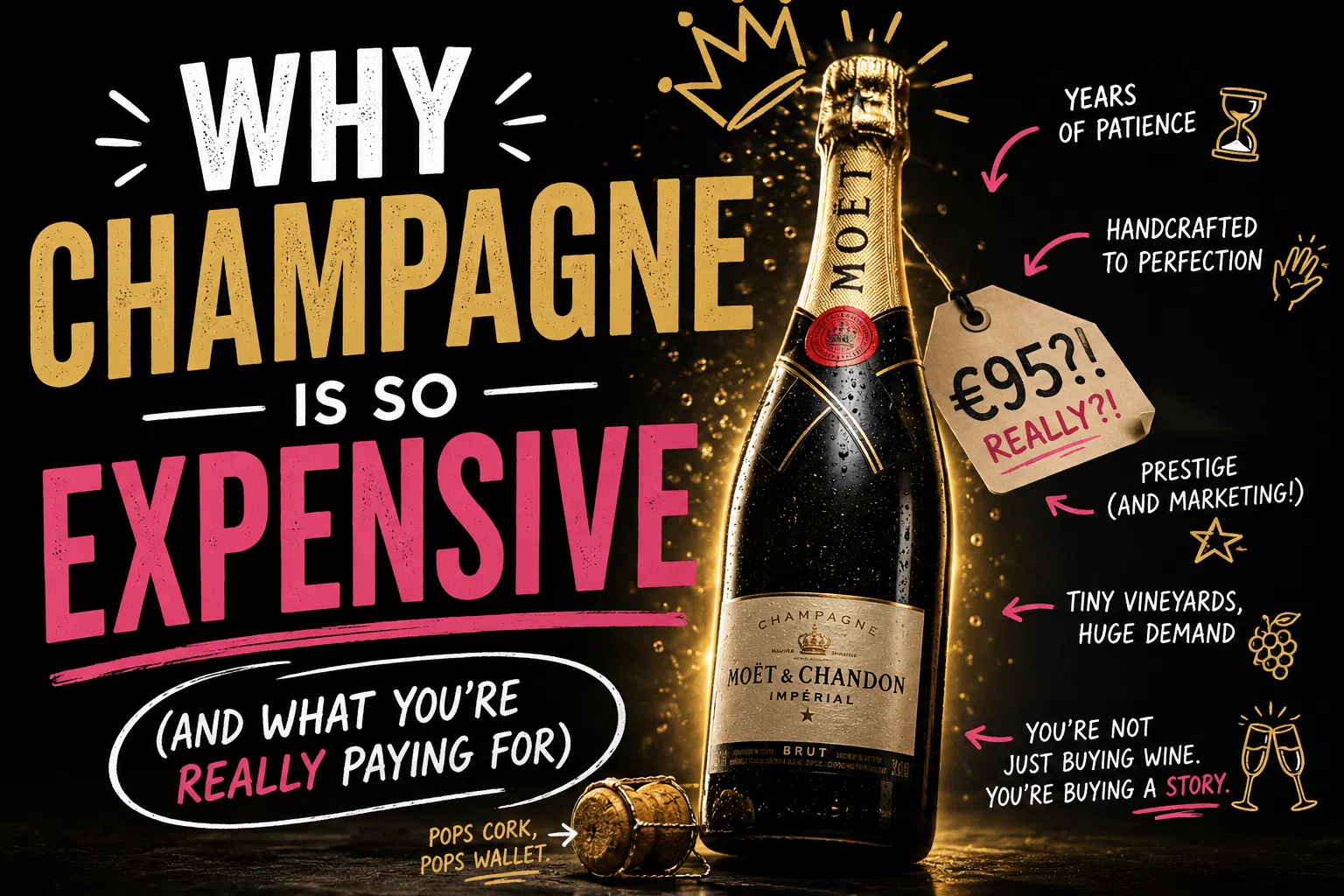
You’re paying for time that doesn’t rush.
For labour that doesn’t cut corners.
For land that cannot be multiplied.
For branding that has been building itself for centuries.
And yes—sometimes—for a feeling that only shows up when the cork leaves the bottle.
The real conclusion nobody expects
By now, you’ve probably realised something.
Champagne isn’t expensive because someone woke up one morning and decided to charge ridiculous prices.
It’s expensive because every bottle carries years of waiting, generations of craftsmanship, and a name the rest of the world has spent centuries turning into a symbol.
Whether that’s worth the money…
Well, that’s between you and your wallet.
But here’s the part I wish more people understood.
Some of the best wine memories I’ve ever had weren’t made with the most expensive bottle on the table.
They were made with people who laughed too loudly, stayed far longer than they planned, and kept saying, “Just one more glass,” until someone realised the bottle was empty.
That’s the funny thing about wine.
Nobody remembers what the bottle cost.
They remember who was there when the cork popped.
Living in Italy taught me something I’ll probably never forget.
People rarely open a bottle because it’s expensive.
They open it because Tuesday turned into a beautiful evening.
Because an old friend dropped by unexpectedly.
Because dinner smelled too good not to celebrate.
Because life quietly handed them a reason.
And somehow, that feels far more luxurious than any price tag ever could.
So yes, Champagne deserves its reputation.
It deserves the respect.
And sometimes, it even deserves the splurge.
But if you ever find yourself choosing a bottle based only on its price…
You’re probably paying for the wrong thing.
Enjoy wine without the snobbery?
Make The Finest Italian Wine one of your Preferred Sources on Google.
Add The Finest Italian Wine to Preferred SourcesDiscover more from The Finest Italian Wine
Subscribe to get the latest posts sent to your email.