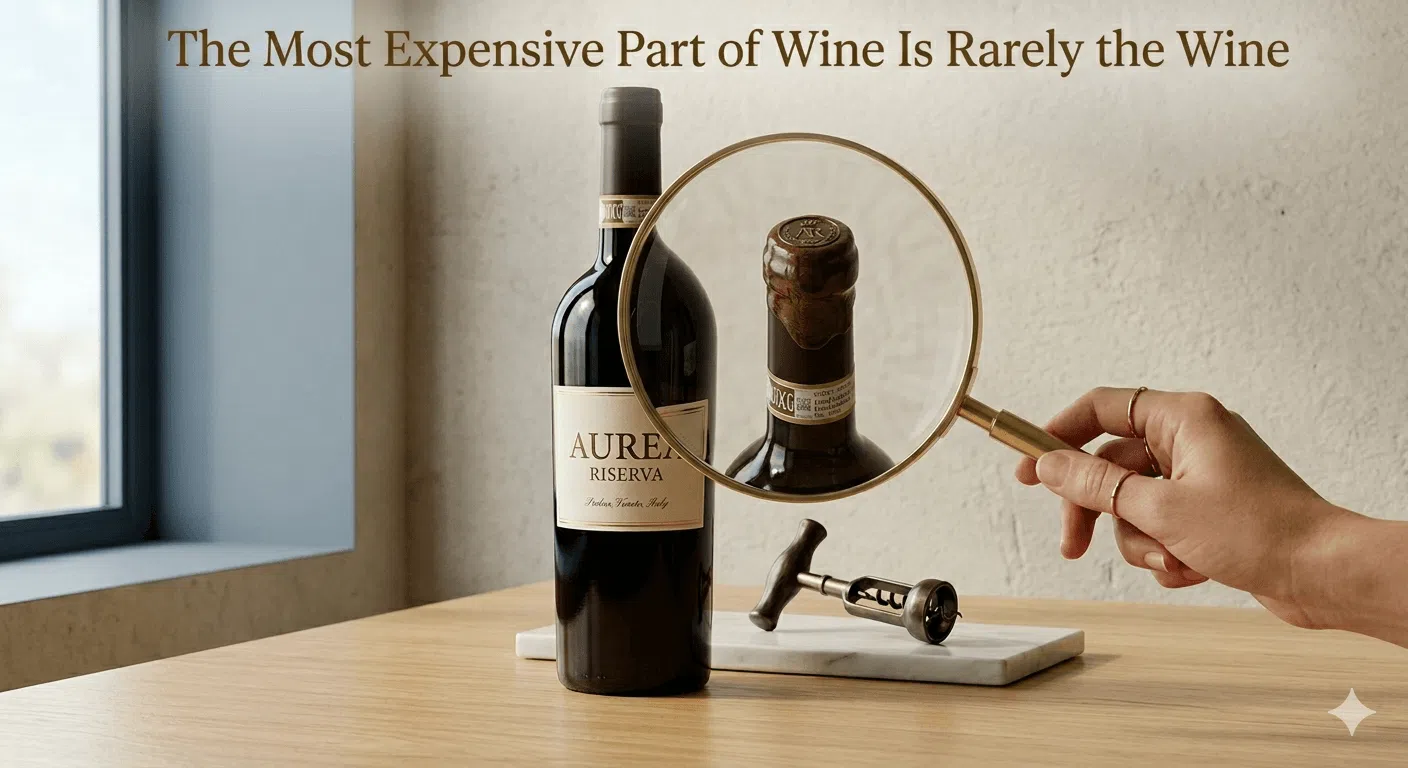
🍷 The Most Expensive Part of Wine Is Rarely the Wine
A few years ago, I watched a man order a bottle of wine that cost more than some people’s monthly car payment.
The waiter carried it to the table with the kind of care usually reserved for newborn babies and priceless artwork.
The label looked impressive.
The table looked impressed.
The bill would certainly be impressive.
Everything about the moment suggested this should become one of the greatest wine experiences of his life.
It didn’t.
A few months later, I found myself drinking a bottle that cost less than a pizza.
And somehow…
that was the wine everyone remembered.
For years, that bothered me.
How could one bottle cost hundreds of euros and disappear from memory, while another became part of family stories that were still being told long after the cork was gone?
The answer has very little to do with wine.
🍷 We Like to Pretend Wine Is About Wine
Wine lovers may not enjoy hearing this.
But most people don’t fall in love with wine because of tannins.
Or acidity.
Or fermentation techniques.
Nobody sits around a dinner table twenty years later saying:
“Remember that beautiful balance between the fruit and the oak?”
That’s not how memories work.
People remember what happened.
The wine is often just the supporting actor.
The moment gets top billing.
🌅 The Most Memorable Wine I’ve Ever Seen Wasn’t Expensive
It wasn’t served in a Michelin-starred restaurant.
There was no sommelier.
Nobody took photographs.
Nobody discussed tasting notes.
In fact, if you saw the bottle in a supermarket today, you might walk right past it.
But the setting?
That was unforgettable.
A long table.
Too much food.
Too many people talking at once.
A grandmother insisting everyone eat more.
Someone laughing so hard they nearly spilled their glass.
Children running around.
Stories being repeated for the tenth time.
The bottle itself was ordinary.
The evening wasn’t.
Years later, nobody remembers the label.
Everybody remembers the night.
🇮🇹 Italy Understands Something Many People Forget
One of the reasons wine feels different in Italy is because Italians rarely put all the attention on the bottle.
The bottle matters.
Of course it does.
But not as much as:
- the meal,
- the company,
- the conversation,
- the setting,
- and the time spent together.
Wine isn’t the main event.
Wine helps create the event.
That’s a very different mindset.
And honestly, it might be a healthier one.
🍝 A Great Meal Can Make an Average Wine Feel Extraordinary
This is one of wine’s least discussed secrets.
Imagine drinking a simple bottle of local wine while:
- eating fresh pasta,
- tearing warm bread,
- sharing stories,
- and watching the sun disappear behind a Tuscan hillside.
Now imagine drinking the exact same bottle while answering emails.
Same wine.
Different experience.
The bottle hasn’t changed.
Everything around it has.
And that’s the point.
😂 The Wine Industry Doesn’t Always Love This Conversation
Because it’s much easier to sell a bottle than it is to sell a feeling.
A winery can tell you:
- where the grapes came from,
- how long the wine aged,
- what awards it won.
What it can’t guarantee is the thing people actually remember.
The proposal.
The celebration.
The reunion.
The unexpected conversation.
The sunset that lasted just a little longer than usual.
Those moments are where wine earns its real value.
💶 Sometimes the Cheapest Bottle Wins
This is the part that frustrates wine snobs.
The bottle everyone remembers isn’t always the most expensive one.
Sometimes it’s the one opened:
- after good news,
- during a family gathering,
- on a spontaneous road trip,
- or at a dinner nobody expected to be special.
The emotional value becomes larger than the price tag.
And once that happens, comparisons become impossible.
How do you compete with a memory?
🍷 So What Is the Most Expensive Part of Wine?
It isn’t the vineyard.
It isn’t the label.
It isn’t the vintage.
It isn’t even the bottle.
The most expensive part of wine is the moment attached to it.
Because once a memory becomes meaningful enough, it becomes priceless.
That’s why people travel across countries to revisit wineries.
Why they save special bottles.
Why they tell stories about certain dinners decades later.
They’re not chasing the wine.
They’re chasing the feeling.
🥂 Final Thoughts
The next time you open a bottle of wine, pay attention to something other than the label.
Look around the table.
Listen to the conversation.
Notice the people.
Take in the moment.
Because years from now, there’s a good chance you’ll forget the tasting notes.
You may even forget the producer.
But if the evening is good enough, you’ll remember exactly how it felt.
And in the end, that was the most valuable thing in the bottle all along.
Enjoy wine without the snobbery?
Make The Finest Italian Wine one of your Preferred Sources on Google.
Add The Finest Italian Wine to Preferred SourcesDiscover more from The Finest Italian Wine
Subscribe to get the latest posts sent to your email.