Umbria Wine: The Italian Region Next to Tuscany

Umbria wine has a red that shows up to dinner and takes over the conversation. Sagrantino has famously firm tannins, and it comes from a region that often sits in Tuscany’s shadow.
But Umbria is not about one loud red. It also has an easygoing white, a whole DOCG built around one family’s wine, and hill towns made for long lunches. Here is a simple guide to the grapes, the labels worth knowing, and how to taste them in person. I’ll also tell you which bottle to buy first.
Quick Facts
- Where: central Italy, and the only landlocked region on the Apennine peninsula
- Vineyards: about 12,708 hectares under vine, according to Cellar Tours
- Labels: 2 DOCG and 13 DOC, according to Cellar Tours
- Names to know: Sagrantino (Montefalco), Grechetto and Procanico (Orvieto), Sangiovese (Torgiano)
- Fun fact: Sagrantino was long made as a sweet passito, and the dry version is a recent development
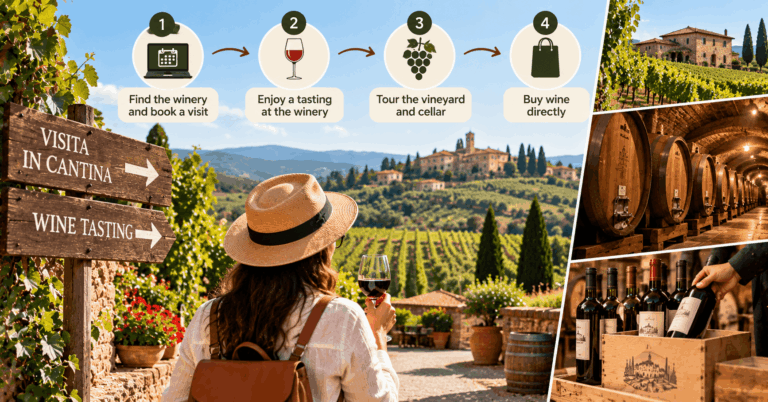
- Visiting: two wineries a day is plenty, and many need an appointment
Why Umbria Is Worth Your Attention
Umbria is green, hilly and still a little under the radar.
I live in Padova, so my glass is usually full of Veneto wine. When I see a bottle from Umbria on the shelf, my first thought is always the same: is it worth trying? Then I try it, and it makes a whole lot of difference. I accept it, I love it, and it has become a wine I can easily recommend.
Two stories explain why I think Umbria deserves more curiosity: a grape with famously hard tannins, and a region that took up vines when its farmers needed a new plan.
The Grape With Tough Tannins
For a long time, Sagrantino was made as a passito, a sweet wine. The dry version only arrived recently, and Decanter credits Marco Caprai of Arnaldo Caprai with putting it on the world map. Producer Filippo Antonelli calls its tannins “harsh and difficult to tame.” The thick skins are rich in phenolics, which is where that grip comes from.
Think of it as a red that wants a plate of food next to it. Pour it on its own and it can feel like an argument. Pour it with wild boar or aged cheese and it makes sense.
The Region That Swapped Wheat for Vines
In the 1970s, wheat and olive oil prices fell, and Umbrian farmers turned to vineyards. Many planted international grapes like Cabernet and Merlot, and plenty of producers still prefer the flexible IGT label. The local grapes never went away, though, and they are the reason to visit.
Where Is Umbria, and What Is Special About It?
Umbria sits in central Italy, south-east of Tuscany, with Perugia as its capital. It has no coastline and no foreign border, which makes it the only landlocked region on the Apennine peninsula. Lake Trasimeno, in the north, is Italy’s fourth-largest lake.
The wine map has two main stars. Montefalco in the middle is the home of Sagrantino, and Orvieto in the south-west is the home of the white that bears the town’s name. Torgiano, near Perugia, is the third name to know.
Sagrantino and Montefalco: The Tannic Star
Montefalco Sagrantino became a DOCG in 1992. It comes from the communes of Montefalco, Bevagna, Castel Ritaldi, Giano dell’Umbria and Gualdo Cattaneo, and it must be made from 100% Sagrantino.
The rules are strict. The wine needs 37 months of ageing before release, with at least 12 months in oak and 4 in the bottle. The minimum alcohol is 13% for the dry style. Expect a deep, dark and structured red, and serve it with a proper meal.
Two other wines from the same area are worth knowing:
- Montefalco Rosso, a softer way in. It is a blend of 60% to 80% Sangiovese and 10% to 25% Sagrantino, according to Cellar Tours.
- Sagrantino Passito, the traditional sweet version. Decanter describes it as a wine to sip on its own, and I’d put a piece of seasoned cheese next to it.
Torgiano and Lungarotti
Torgiano is a small area near Perugia, and one family put it on the map. Giorgio Lungarotti invested in vineyards in the early 1960s, and the Torgiano DOCG was created for his Rubesco Riserva.
Torgiano Rosso Riserva must contain at least 70% Sangiovese and be aged for at least three years, including six months in the bottle. If you’d like the family’s story today, I wrote about Chiara Lungarotti, Italy’s Winegrower of the Year. And if you visit, the Lungarotti wine museum (MUVIT) sells a €7 ticket that includes a glass of wine.
Orvieto: The Easygoing White
Orvieto is the white most people have met, even if they didn’t know it was from Umbria. The rules ask for at least 60% Grechetto and/or Procanico, which is the local name for Trebbiano Toscano. The zone crosses into Lazio, but only about 5% of it sits there, and the historic Classico area is entirely in Umbria.
Orvieto Superiore needs at least 12% alcohol. There is also a sweet side: autumn mists around Orvieto encourage noble rot, which makes the traditional sweet wine called muffa nobile. It’s a good answer if someone says Umbria is only about red.
Beyond the Big Three
Montefalco and Spoleto have two DOCs that overlap in the same basin. Trebbiano Spoletino is one of the white grapes Decanter lists for the area. Around Lake Trasimeno, Madrevite is a producer Decanter names. If you like discovering grapes most people skip, I covered more in Italy Has Hundreds of Wine Grapes.
What to Eat With Umbria Wine
Umbrian food is earthy, which is why the wines work so well at the table. Here’s what to look for on a menu:
- Black truffles from Norcia, and the Valnerina area around it, which produces about 45% of Italy’s truffles
- Strangozzi alla spoletina, a pasta with tomato, garlic and chilli
- Wild boar, slow-cooked in Sangiovese
- Sheep’s cheeses and cured meats
- Single-variety olive oils
My rule of thumb: Sagrantino with wild boar or aged cheese, Montefalco Rosso with pasta and truffles, and an Orvieto with lighter dishes and starters. If you want to compare it with Tuscany’s best-known red, my guide to what Chianti pairs with is a good place to start.
How to Visit Umbria’s Wine Country
Cellar Tours suggests three bases. Use Orvieto for the south-west, Perugia or Assisi for Torgiano and Lake Trasimeno, and Montefalco or Bevagna for Sagrantino. Don’t try to fit Orvieto and Montefalco into one day. Two wineries a day is plenty, and many estates only receive visitors by appointment. Summer temperatures can pass 35°C, so a morning tasting is kinder.
A few prices from Decanter’s 2025 guide:
- Cantine Neri (Orvieto): winery tours from €28
- Giampaolo Tabarrini (Montefalco): cellar tours from €25
- Arnaldo Caprai (Montefalco): tours from €65 to €200 per person, with simple tastings for walk-ins
- Lungarotti MUVIT (Torgiano): a €7 museum ticket that includes a glass of wine
For a big tasting day, look out for Cantine Aperte, the open-cellar weekend that usually falls in late May. I explained how it works in Cantine Aperte in the Colli Euganei. Montefalco also holds an Enologica festival in September. Check the organisers for this year’s dates.
If you plan to buy bottles at the cellar, pack them properly. A padded wine bottle travel bag costs far less than losing a Sagrantino to a suitcase. And for planning the rest of the trip, an Umbria guidebook is a handy companion.
Bottles to Look For
Decanter’s Umbria guide names these producers. It’s a tasting list, not a shopping order, and I haven’t checked prices or where to buy them:
- Sagrantino and Montefalco: Arnaldo Caprai, Giampaolo Tabarrini, Antonelli San Marco, Perticaia, Scacciadiavoli
- Orvieto: Palazzone, Cantine Neri, Madonna del Latte
- Torgiano: Lungarotti (Rubesco Riserva)
- Todi, Bevagna and Trasimeno: Iacopo Paolucci, Tenuta Bellafonte, Madrevite
Which Umbrian Wine Should You Buy First?
You don’t need a map. Pick the line that sounds like your evening:
- Easy white with a simple dinner: an Orvieto Classico
- Pasta night: a Montefalco Rosso
- Wild boar, aged cheese or a proper Sunday lunch: a Sagrantino
- You love Sangiovese and want to try something a step up: a Torgiano Rosso Riserva from Lungarotti
Pour them into proper wine glasses and the aromas have room to show up. And if you’d like to keep learning, the Wine Folly book is a friendly place to start.
Frequently Asked Questions
What is Umbria known for in wine?
Montefalco Sagrantino, a tannic red made from a local grape, and Orvieto, a white made mainly from Grechetto and Procanico. Torgiano and its Sangiovese-based Riserva are the third name to know.
Is Umbria the same as Tuscany?
No. Umbria sits south-east of Tuscany, and it has its own grapes, denominations and landscape. It is also landlocked.
What is Sagrantino?
A local red grape with thick skins and very firm tannins. Montefalco Sagrantino is made from 100% Sagrantino and needs 37 months of ageing before release.
Is Montefalco Rosso the same as Sagrantino?
No. Montefalco Rosso is a blend of 60% to 80% Sangiovese and 10% to 25% Sagrantino, so it is softer and easier to drink.
What is Orvieto wine?
A white wine from around the town of Orvieto, made from at least 60% Grechetto and/or Procanico. It can also be made into a sweet muffa nobile wine.
Is Umbrian wine expensive?
Cellar Tours says Umbria’s wines are seldom overpriced. I haven’t checked current bottle prices, so look at the shelf before you buy.
Can you visit wineries in Umbria?
Yes. Many estates need an appointment, so book ahead. Plan two wineries a day at most.
One Last Thing
I think Umbria suffers from being a good neighbour. Tuscany gets the postcards, and Umbria gets the people who took a wrong turn and stayed for lunch. But a region with a grape this stubborn, a white this friendly, and a family that built a whole DOCG around one wine is not a footnote. Next time a wine list offers you the usual Chianti, ask whether there’s a Sagrantino or an Orvieto on it.
Have you tried a Sagrantino? Tell me what you thought of the tannins.
— Kelly 🍷
#UmbriaWine #Sagrantino #Orvieto #ItalianWine #Montefalco
Continue Reading
- Chiara Lungarotti: Italy’s Winegrower of the Year
- Friuli Wine: The Italian White Wine Region You Shouldn’t Miss
- Puglia Wine: The Italian Region Behind Your Favourite Primitivo
Sources
- Decanter: Umbria, a wine lover’s guide
- Decanter: The essence of Umbria, regional profile
- Decanter: Sagrantino, small wonder
- Cellar Tours: Umbria
- Rules and background: Italian Wine Central, Montefalco Sagrantino DOCG, Italian Wine Central, Orvieto DOC, Wikipedia, Umbria and Wikipedia, Montefalco Sagrantino
Information checked in November 2026. Vineyard figures, rules, prices and opening times can change, so check with the producer or consortium before you go.
As an Amazon Associate I earn from qualifying purchases. Some links in this post are affiliate links, which means I may earn a small commission if you buy through them, at no extra cost to you.
Enjoy wine without the snobbery?
Make The Finest Italian Wine one of your Preferred Sources on Google.
Add The Finest Italian Wine to Preferred Sources