Someone Just Stole €5 Million Worth of Italian Wine. How Do You Even Sell That?
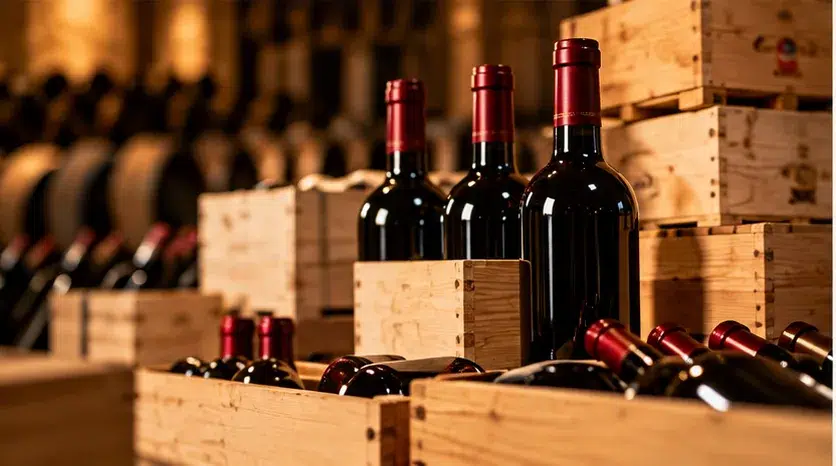
Thirty thousand bottles, two trucks and seven masked men. That’s the Antinori wine theft in one sentence, and I have questions. Who wakes up and decides to steal enough wine to stock a small town? How do you move 30,000 bottles without anyone noticing? And, my favourite, how on earth do you sell €5 million of stolen wine when the whole wine world knows exactly which bottles went missing?
This wasn’t supermarket plonk, either. The thieves went for Marchesi Antinori and walked off with Solaia, Tignanello and Guado al Tasso. If those names mean nothing to you, picture someone stealing thousands of luxury watches, except these ones come with corks.
Quick Facts
- About 30,000 bottles worth around €5 million were stolen from Marchesi Antinori’s logistics warehouse in Cortona, Tuscany, over the weekend before Monday 5 October 2026
- The wines were Solaia, Tignanello and Guado al Tasso. Reports say they were all 2023 vintage, and Antinori’s CEO says they typically retail for €150 to €500 a bottle
- Seven masked men reportedly disabled the alarm, loaded two trucks and drove away. Police and Carabinieri are investigating, and as of 11 October reports mention no arrests and no recovery
- Antinori has warned customers and distributors worldwide to be wary of offers outside official sales channels
A Very Expensive Weekend in Tuscany
The theft happened between Saturday and Sunday, and staff found out on Monday morning when they came back to work. By then, the thieves had disabled the alarm system, brought in two large trucks and, according to the CEO, loaded the wine using the company’s own forklifts. Surveillance cameras filmed it all, and prosecutors now have the footage.
The timing was not a coincidence. The wine was already crated for a shipment abroad that was due to leave that Monday morning. So the thieves didn’t have to hunt for the good stuff. Someone had kindly packed it for them.
Antinori made the news public on Friday 9 October. Renzo Cotarella, the company’s CEO, said a theft of this size and value has never happened in Italy before, and described the thieves as “professional thieves, but also wine connoisseurs.” I’m not sure that’s the compliment it sounds like.
Why These Particular Wines?

Because they’re the wine equivalent of a bank vault. Solaia is one of Antinori’s most sought-after reds. Tignanello helped change the reputation of Italian wine by breaking the rules, and I’ve told that story in How a “Table Wine” Became One of Italy’s Most Expensive Bottles. Guado al Tasso comes from Bolgheri, another Tuscan name that fine wine people say with a slightly reverent voice.
Reports put the number of stolen Solaia bottles at roughly 10,000, though the figures range from 8,000 to 12,000 depending on who you read. At €150 to €500 a bottle, you can see why the thieves got excited. Multiply that by thousands, and the €5 million estimate starts to look reasonable.
But there’s a catch, and it’s a big one.
The Problem With Stealing Famous Wine
Imagine walking into a wine shop and saying: “I have 500 bottles of Solaia 2023. Excellent condition. Great price. Please don’t ask questions.” I suspect the merchant might have a few.
In the fine wine world, provenance is everything. It’s simply a bottle’s documented history: where it came from, who sold it, how it travelled and how it reached you. It isn’t fancy wine language designed to make ordinary people feel uncomfortable. It’s how buyers know they’re getting what they paid for.
Antinori also made things harder for the thieves. Each premium bottle carries a scannable strip linked to the company’s website for authenticity checks. Cotarella says it isn’t a simple QR code but a more complex system. He added that anyone who buys the stolen bottles could face charges for handling stolen goods.
The stolen bottles may be perfectly genuine, and the wine inside may be brilliant. None of that makes them legal merchandise for whoever took them. I dug into a similar point in Can You Really Make Money Collecting Italian Wine?, because an expensive bottle with no trustworthy history is just an expensive headache.
Could the Stolen Wine Still End Up in Your Glass?
Potentially, yes, and that’s the uncomfortable part. A bottle of Tignanello 2023 looks like every other bottle of Tignanello 2023. It’s not a stolen painting that every collector would recognise on sight.
Nobody has publicly established where these bottles are going. Italian press reports that investigators are asking whether accomplices helped plan the job, and whether someone commissioned the theft to supply markets short on product, with Asia and Switzerland named as possible destinations. That’s a hypothesis reported by the Corriere della Sera, and investigators haven’t confirmed it.
Moving the wine is the other difficulty. Thirty thousand bottles is roughly 5,000 six-bottle cases, and you can’t exactly stash that in a spare room and hope nobody notices. Cotarella himself said two truckloads of goods can’t simply vanish into thin air. He has a point.
Can You Tell If an Expensive Bottle Is Stolen?
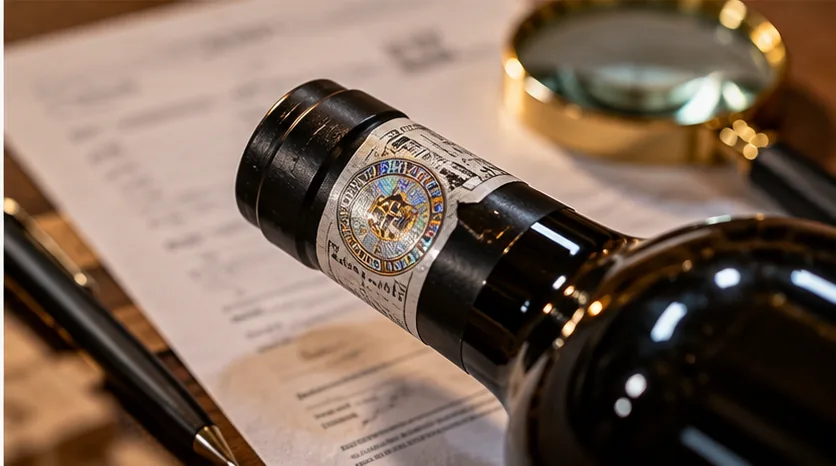
Not by looking at it. There’s a difference between authenticity, which asks whether the bottle is genuine, and provenance, which asks where it came from. A bottle can be authentic and still stolen.
If you’re buying expensive wine, a few habits help:
- Buy from reputable merchants. Established retailers and specialist auction houses have more formal sourcing checks.
- Ask about provenance. For a high-value bottle, the paperwork matters as much as the label.
- Be suspicious of extraordinary discounts. A bargain isn’t proof of theft, but a dramatically low price deserves questions.
- Keep your receipt. Proper purchase documentation helps if anyone asks questions later.
None of this is a guarantee. But if someone offers you a €400 bottle for €40 and wants cash in a car park, this probably isn’t the moment to congratulate yourself on your wine-buying skills.
This Isn’t Italy’s First Wine Robbery
In 2017, thieves took about 2,000 rare bottles worth €750,000 from a warehouse near Cervia, on the Adriatic coast. And the Antinori job isn’t a one-off this autumn either. In mid-September, more than 3,000 bottles of Barolo disappeared from Conterno Fantino in Piedmont.
Reports describe a shift toward larger stocks held at wineries, rather than smaller quantities lifted from restaurants or private cellars. The Antinori theft takes that to a new level: not a few precious bottles, but entire truckloads of premium wine.
Why Antinori Can’t Just Make More
Wine isn’t made like a pair of shoes. If a shoe company loses 10,000 pairs, it can make 10,000 more. A winery that loses thousands of bottles of a vintage can’t go back to the vineyard and ask for October 2023 again. The growers have picked the grapes, the cellar has made, aged and bottled the wine, and customers are waiting for it.
For a family business that goes back to 1385, there’s something almost personal about it. Centuries of reputation, years of work in the vineyard, and then someone turns up with a forklift and drives off with the finished product. I’d be furious. Actually, furious doesn’t cover it.
So Where Are the Bottles Now?
That’s the €5 million question. As of 11 October 2026, the reporting I reviewed showed no arrests and no recovery, and the investigation is ongoing.
Here’s what I keep coming back to. The thieves stole something incredibly valuable, but also something famous, traceable and sold through channels where buyers ask for paperwork. Maybe that makes the wine easier to find. Maybe it doesn’t. Nobody outside the investigation knows.
Frequently Asked Questions
How much wine was stolen from Antinori? About 30,000 bottles, valued at around €5 million, from a Marchesi Antinori warehouse in Cortona, Tuscany. Staff discovered the theft on Monday 5 October 2026.
Which wines were stolen? Solaia, Tignanello and Guado al Tasso. Reports say they were from the 2023 vintage, with roughly 10,000 bottles of Solaia.
Has the stolen wine been recovered? Not as of 11 October 2026, according to the reporting I reviewed. Investigators are still working, and reports mention no arrests.
Why is stolen fine wine hard to sell? Reputable merchants and collectors ask for documentation of a bottle’s origin. A large quantity of recently reported stolen wine also attracts attention, and Antinori has alerted its customers worldwide.
Can genuine wine still be stolen? Yes. Authenticity and lawful ownership are different questions, so a genuine bottle can still have an illegitimate history.
One Last Thing
Stealing €5 million of wine may have been the easy part. Selling it without anyone noticing could be a different challenge altogether. So if someone offers you a suspiciously cheap case of Solaia this weekend, please don’t come running to tell me you’ve found the wine bargain of the century. I may have a few questions.
— Kelly 🍷
#ItalianWine #Antinori #Solaia #Tignanello
Continue Reading
- How a “Table Wine” Became One of Italy’s Most Expensive Bottles
- Can You Really Make Money Collecting Italian Wine?
Enjoy wine without the snobbery?
Make The Finest Italian Wine one of your Preferred Sources on Google.
Add The Finest Italian Wine to Preferred SourcesDiscover more from The Finest Italian Wine
Subscribe to get the latest posts sent to your email.